Brent jumps to $126, deepening pressure on imports, inflation and growth
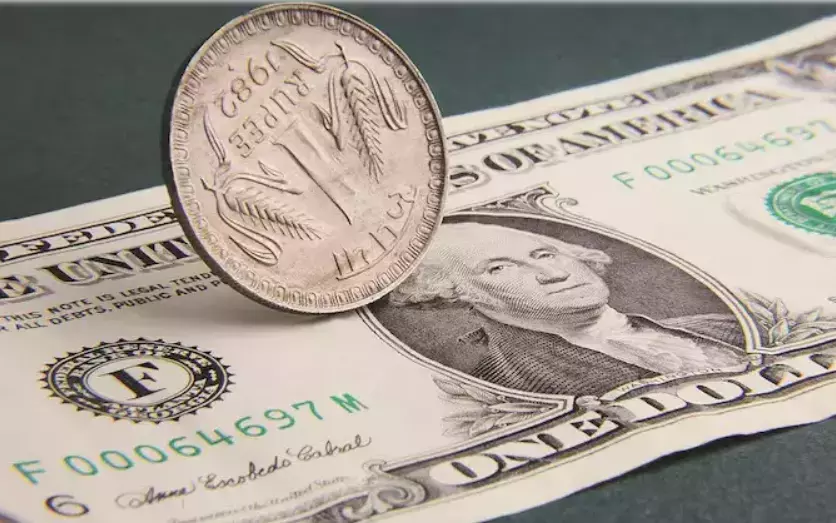
Mumbai: The Indian rupee on Thursday touched a historic low of 95.3425 to a dollar as Brent crude prices climbed the roof with June futures moving up to $ 126 per barrel, the highest in four years. The currency weakness adds to concerns around India’s import bill, inflation trajectory, and overall growth outlook, particularly at a time when energy prices are rising sharply. Oil companies and foreign portfolio investors continued to be buyers of dollars in the markets as the 10-year benchmark yields touched 7.06 per cent.
At the interbank foreign exchange market, the rupee opened at 95.02, it made a low of 95.34 level (loss of 46 paise), eclipsing its previous all-time low of 95.21 hit on March 30, before recovering to 94.86 on suspected RBI intervention. It finally closed the day at 94.91, marginally weaker compared to its previous closing of 94.84. Meanwhile, the US Fed kept rates unchanged amid strong inflation pressure triggered by high crude prices.
Anindya Banerjee, head of commodity and currency Research, Kotak Securities, said, “What we are witnessing is a textbook reflexive trade - rising oil prices triggering FII outflows, FII outflows compounding the dollar demand from oil importers, and the combination overwhelming whatever defence the RBI is putting up.”
April alone has seen FII outflows of $7.5 billion, taking calendar-year-to-date outflows past $20 billion, and that is sitting on top of an oil import bill that has expanded materially as Brent has moved from $72 in February to $126 during the day. The two channels - trade deficit and capital account - are pulling in the same direction, and the rupee has no natural buffer, said experts.
“The next important level we are watching is 96, and a sustained break above 96 opens the path to 97 - a level we see as achievable if Brent breaches $125 and the Hormuz situation deteriorates further," said Banerjee.
According to him, on the downside, 94.80 is now a meaningful support zone; anything between 94.50 and 94.80 should see strong dollar buying interest from importers who have been waiting on the sidelines, while anything below 94.50 would require a significant drop in oil prices, meaning a diplomatic breakthrough at Hormuz, which is not the base case today.
"The rupee, like every other Asian currency right now, is a high-beta play on Hormuz. Until the Strait reopens, the rupee remains under structural pressure,” added Banerjee.
Meanwhile, the dollar index, which gauges the greenback’s strength against a basket of six currencies, was trading slightly firmer at 98.82 level.
Among the Asian currencies, besides the rupee, the Indonesian Rupiah also hit a lifetime low, falling by 0.5 per cent for the day while the Philippine Peso also briefly touched that level. In the Japanese Yen, there was an intervention from the Bank of Japan that helped the Yen recover from a low of 160.73 to 159.30 against the dollar. The Korean Won also recovered from its lows and moved towards 1477. Gold prices also moved above $ 4600 levels while silver rose to $73.82 per oz this afternoon.
“With no solution emerging from the US-Iran standoff, we do not know when Donald Trump’s patience will run off and he will resume the attacks on Iran, moving out of the one-sided ceasefire. The rupee looks vulnerable unless some other steps are taken by RBI one of which could be reducing the Liberalised Remittance Scheme limit. We need inflows to counter the outflows happening on a daily basis mainly due to oil and FPIs. After tomorrow’s holiday, the rupee is expected to trade in the range of 94.50 to 95.50 on Monday,” said Anil Bhansali, head of treasury at Finrex Trading Advisors.