Harmony Foundation Flags Healthcare Denial to Destitutes Lacking Aadhaar

He pointed out the grave humanitarian crisis faced by the inmates at the Missionaries of Charity Jeevan Jyoti Ashram in Kharghar, Navi Mumbai.
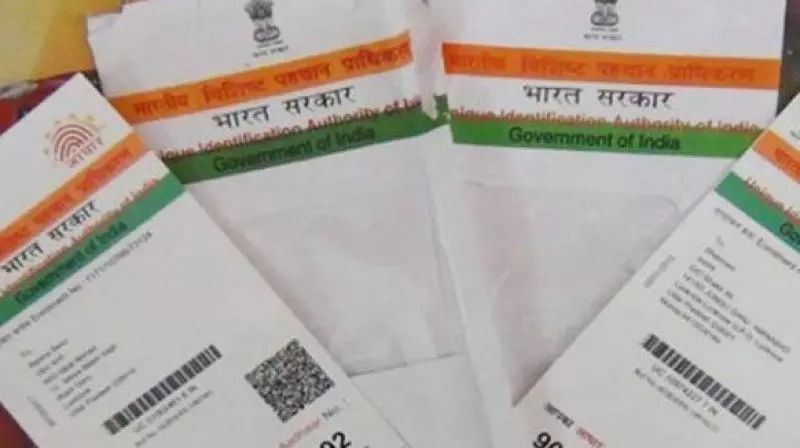
Pune: Harmony Foundation, a Mumbai-based NGO, has supported the Missionaries of Charity Jeevan Jyoti Ashram in their plea to the Unique Identification Authority of India (UIDAI) and the government to grant a special concession for sick, destitute and mentally challenged peoples under their care, who are unable to obtain Aadhaar cards due to lack of standard identity documents.
Dr. Abraham Mathai, founder-chairman of Harmony Foundation, asserted that denial of Aadhaar cards to such individuals is a violation of their right to life under Article 21 of the Constitution of India.
“These abandoned and mentally challenged people cannot be denied access to basic government medical treatment because they cannot get Adhaar cards for lack of residential proof,” Dr Mathai, also former chairman of Maharashtra State Minorities Commission, said in a statement.
He pointed out the grave humanitarian crisis faced by the inmates at the Missionaries of Charity Jeevan Jyoti Ashram in Kharghar, Navi Mumbai.
“At this ashram nearly 30 destitute residents have been repeatedly denied medical treatment in Government hospitals for lack of Aadhaar cards,” Dr Mathai noted.
These individuals were brought to the ashram by police or social workers. Many are elderly, mentally challenged or suffering from severe trauma. They cannot recall their names or personal details. Yet, without an Aadhaar card, they are denied basic hospitalization, and vaccination, he said.
“This is not a bureaucratic failure alone. It is a systematic exclusion that strikes at the very core of their right to life under Article 21 of the Constitution of India,” Dr. Mathai said.
He noted that the Supreme Court has consistently held that the right to life includes the right to health, medical care and dignity.
“When a destitute person cannot receive treatment because a piece of biometric data is missing, the State fails in its primary duty,” Dr Mathai asserted.
Recalling a successful intervention during the COVID-19 pandemic, he said that the then Panvel Collector Ms. Nidhi Chaudhary had taken the bold decision of having an Aadhaar camp at SEAL Ashram in Panvel, near Mumbai, after Dr Mathai pointed out to her that vaccination cannot be denied to destitutes as they too have a right to life as per the Constitution of India.
He said that camp enabled many forgotten individuals to obtain their Aadhaar cards. However, he stressed that such compassionate administration must become a permanent policy, not an exception.
However, tragically in recent times the rules have become stricter because of misuse of Aadhaar, and “we appreciate the government for taking strict measures to prevent misuse,” he said.
However, destitutes and vulnerable groups should be exempted from strict documentation in order to protect and save their lives, Dr Mathai stressed.
He urged the UIDAI and the Union government to issue a standing concession for the sick, destitute and mentally challenged persons sheltered at ashrams without proof of address.
Dr Mathai has proposed that a simplified, paperless and biometric-only enrolment process be made available at all charitable homes and ashrams free of cost, without mandatory document uploads.
“The government must recognize that right to life comes before right to documentation. A special concession for destitutes waiving the usual documentary requirements is not a favour but a constitutional duty,” Dr Mathai said.
He also called upon the Ministry of Social Justice and Empowerment and the National Human Rights Commission to issue directives to all district authorities to conduct regular Aadhaar camps at shelter homes for the sick and abandoned.
“No human being, especially the one already abandoned by family and society, should be denied care for lack of any document,” Dr. Mathai said.
He said the conscience of civil society will be judged “by how we treat the most vulnerable. If we do not act now to ensure that every destitute person receives identity documents and medical care, we will have failed the most basic test of our shared humanity,” Dr Mathai added.
