Robots Dance to Kpop Songs in SK’s New Robot Theme Park

25 May 2026 4:36 PM IST25 May 2026 4:36 PM IST
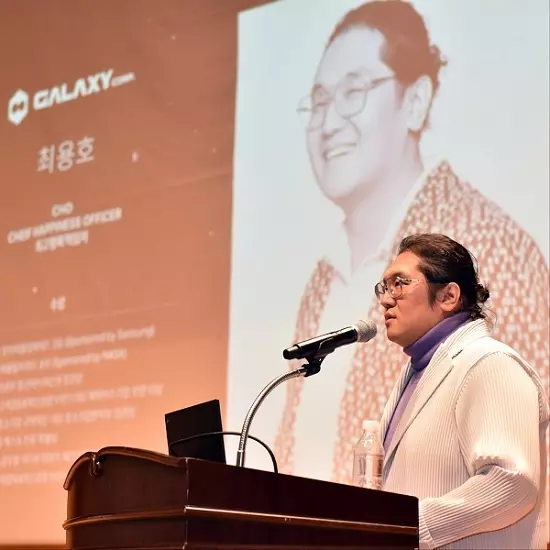
Choi Yong-Ho, the founder and CEO of the South Korean entertech company, Galaxy Corporation
What if the next K-pop concert you attend features robots performing instead of humans?
“It will be the starting point of robot culture expansion,” said Choi Yong-Ho, the founder and CEO of the South Korean entertech company, Galaxy Corporation. Spanning across 4.1 acres in Gangdong district, eastern Seoul, the company launched, what they claim to be, the world's first robot theme park. But as robots enter the world of K-pop, an industry rooted in ‘emotional economy’ of fans, the real question is can they really recreate the human connection which is the core of fandom culture.
The media company, which manages popular K-icons like G-Dragon, Taemin and Song Kang Ho, is looking to strengthen their competitive edge in the market by maximising user experience through AI-metaverse technology.
At the launch event on May 15, the company showcased humanoid robots from the Chinese robotics company, Unitree, dressed in ornate costumes inspired from G-Dragon’s stage outfits, while they danced to well-known songs like G-Dragon's Home Sweet Home and Taemin’s Advice and Idea.
The company is planning three to six K-pop concerts daily, and by the end of this year, they even have quite the ambitious vision to take the robots on a world tour, as stated by Galaxy’s CEO.
While K-pop has always been a site of futuristic experimental entertainment, be it SM Entertainment’s Aespa having virtual avatars for every member, or fully virtual kpop groups like PLAVE or MAVE.
An industry known for razor-sharp choreographies, precision training systems and highly controlled public personas, K-pop may seem like the ideal genre for robotic performers. Online discussions about K-pop frequently compare idols to machines because of the industry’s perfection standards. However, experts and fans might beg to differ on this view, as they argue that the real essence of K-pop was never glamourous performances but the fandom culture associated with it.
Modern K-pop thrives on the emotional connection between the fans and the idols, through various fan-service elements like livestreams, fan meets, shared online communities of specific fandoms, behind-the-scenes sketches and social media interactions. Fans don't merely consume the music, but also form a culture of fandom participation through stan accounts on social media, fancams, fanfictions, alternate universe theories and streaming campaigns.
So, while AI robots can execute choreographies flawlessly, perform without fatigue, and avoid scandals, it cannot possibly recreate the parasocial relationship that fans develop with actual idols, taking away from the human aspects of vulnerablilty, relatability, authenticity and emotional reciprocity, that helps maintain the bond.
This futuristic initiative may therefore represent less of a replacement for human idols and more of a testing ground for the future of entertainment itself, where AI, fandom culture and immersive technology increasingly blur together, arguably to amplify human creativity and emotional expression to their fullest potential, as industry experts predict.
Apart from the arena, the park also offers other robotic experiences, from robot valets, robotic dogs, a robotic hand that can draw potraits, to humanoid fighters who are controlled by visitors through a mirroring system that replicates human movements in real time. Galaxy also plans to host a robot fashion show, followed by the launch of a robot fashion label in the near future.
(This article is written by Rocheta Chakraborty, a student of The English and Foreign Languages University, currently interning at Deccan Chronicle).

Next Story