A tribute to the legendary singer through ten unforgettable melodies
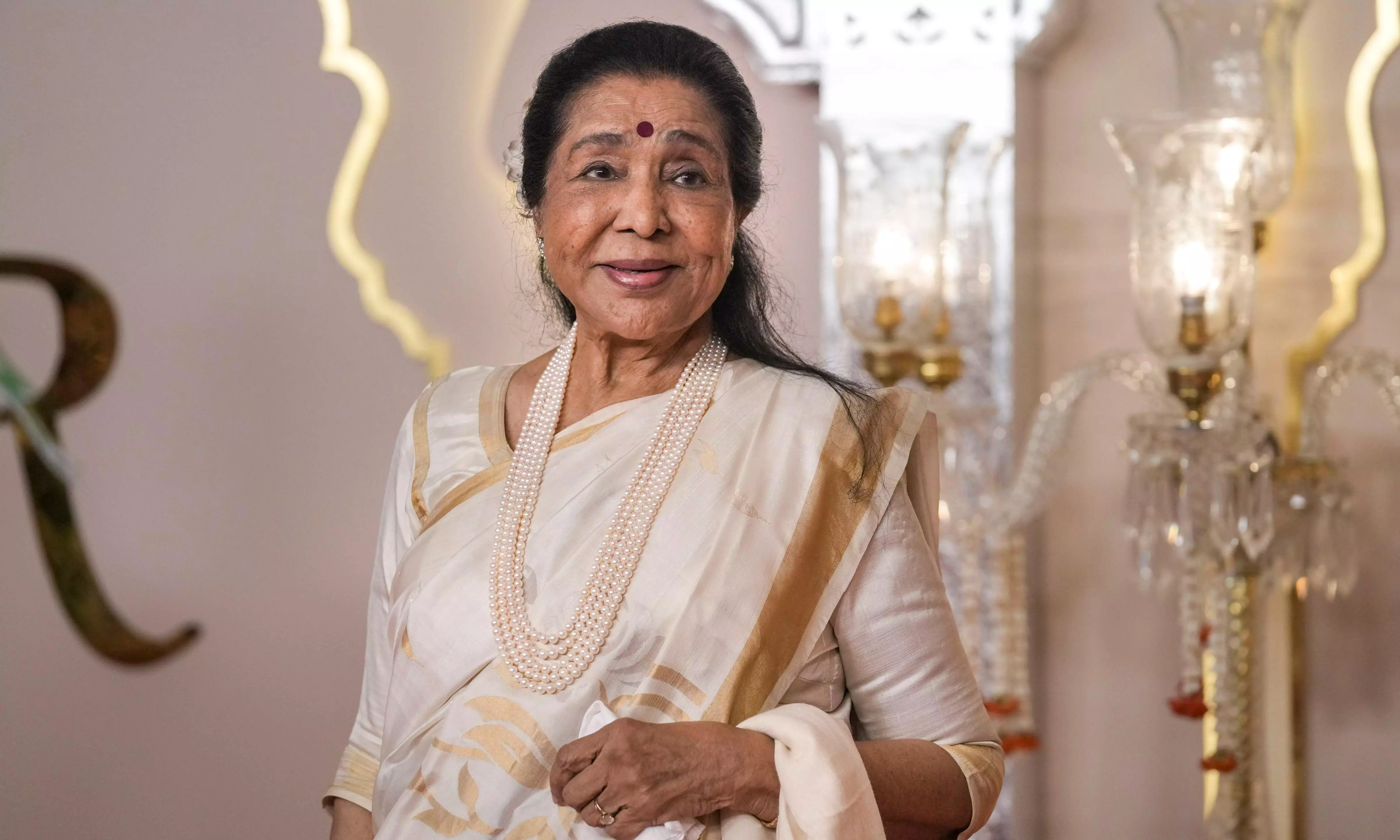
The towering doyen of the Hindi film music industry has kept her tryst with time and moved to the ultimate frontier. Asha Bhosle moved from the world of enormous work that she had left behind to the other, disturbing the remains of rhythm and melody that ruled our cinema, our lifestyle, our homes, our culture and life for decades.
The most approachable Mangeshkar sibling with oodles of talent, who for over a couple of initial decades had to fight for her own space in Hindi cinema, stayed long enough to establish her niche and, more importantly, even nudge a debate as to who among the siblings was the better singer — a topic for the debater, not for the connoisseur.
Deccan Chronicle pays homage to the legendary artiste by picking 10 gems from her countless melodies.
Aayiye Meherbaan Baithiye Jaane Jaan (1958): This song is figuratively an invitation to the Lata Fan Club to come and take their seats and listen to the sibling who was brilliant in her own right. This early number in her career with O.P. Nayyar in the film 'Howrah Bridge' is still hummed and sung by amateur and trained singers alike. It is rehashed too, minus the magic of the O.P. Nayyar, Asha and Madhubala. An all-time great from the stables of the two-some.
Saakhiya Aaj Mujhe Neend Nahin (1962): As Geeta Dutt, for multiple reasons, started fading, particularly from the Burman and Nayyar camps, the music directors stopped at the doorstep of Asha. And did she deliver!! If ever you need proof, go to the S.D. Burman's great 'Sahib Biwi aur Ghulam' album, which has both vying for attention. While the film itself has other gems of Asha, this is special for the haunting that Asha brings to the voice in perfect tandem with the feel Guru Dutt wanted in the film.
Mujhe Gale Se Laga Lo (1963): If Lata with her Madan Mohan bhai gave us 'Lag Ja Gale', here is Asha giving you an equally pathos-filled rendition for Ravi from the film 'Aaj Aur Kal'. This came at a time when the myth in the industry was that Asha could only render cabaret numbers or western-style or foot-tapping songs like 'Eena Meena Deeka'. This showcased her range. It was, if ever needed, a declaration of her range and repertoire.
Aage Bhi Jaane Na Tu (1965): The Chopra camp invariably had more songs from Asha than Lata. This is probably because Asha was the preferred voice for their music directors like N. Dutta and Ravi. Songs in the 60s were also more popular when they were picturised on the heroine. This timeless melody picturised on Erica Lal in an extremely important scene of the film not only showcases Yash Chopra as a master of his craft but also reiterates how Ravi and Asha hold the attention of the audience beyond the dramatics of the scene in this 1965 hit.
Raat Akeli Hai (1967): Vijay Anand was among the very best in using songs in the course of storytelling. The musical hit 'Jewel Thief' not only had fans talking about the Rafi vs Kishore study, but also the Lata, Asha combo. S.D. Burman used Lata for the great 'Rula Ke Gaya Sapna Mera' on Vyjayanthimala and Asha for 'Raat Akeli Hai' for the full-of-beans Tanuja. The style is typically Asha, and when she throws her voice to the higher octaves with 'Jo Bhi Chahe Kahiye', the listener is left speechless.
Dum Maaro Dum (1971): This is a cult. This was not just a song in its time. It was a near anthem of protest, a reflection of a youth in protest against social norms. The R.D. Burman-Asha combination set the charts on fire, and decades later, its poor imitations only reiterate what a class act the original was. Asha gave Zeenat Aman a complete identity with this number an identity with which she sailed through a major part of her career.
Naina Hai Pyasa Mere (1974): This song for Kanu Roy is, in a way, a tribute to the two for Geeta Dutt. The uninitiated could well think this is Geeta and not Asha. Geeta had rendered her swan song for Kanu Roy in 'Anubhav'.
This time, Kanu Roy in 'Aavishkar' got Asha to render one of her best songs.
May not be in every list, certainly conspicuous by its absence in her list of popular songs, this is among her very, very best.
Chain Se Hum Ko Kabhi (1974): It was a disastrous year for the fans of the exclusive O.P. Nayyar-Asha school. They had parted ways. It left so much bitterness between them that when Asha won a popular award for the song, she did not receive it, and the "lady" was literally thrown away by O.P. Nayyar.
The memory of the combination still haunts the lovers of music. Yes, the parting also coincided with Asha growing closer to another musical genius, R.D. Burman, and O.P. Nayyar treading past his prime. In a way, this sad melody is akin to the Thorn Bird singing its last, having chosen its thorn tree.
Yeh Kya Jage Hai Doston (1981): Khayyam made his informed choice when he went to Asha for the ghazal of 'Umrao Jaan'. Asha was the 'jaan' of the film. She was the perfect voice for the ethereal Rekha. A film that a generation will see, revisit and wonder if true. The film gave Asha not just box office acceptance in a huge way but also a national award. Khayyam was an underrated music director. The fact that a musical went to him is a compliment to the filmmaker. His choice of Asha over other ghazal singers of
repute, including Lata, was just as bold. The rest is summed up in a cliché: the rest is history.
Mera Kuch Saman Tumhare Paas (1987): A Gulzar-R.D. Burman song in any list adds credibility to the list. A list of the Asha-Gulzar-R.D. Burman Trinity would be one in itself, a collection of melodies. This emotional laundry list that Gulzar makes for Anuradha Patel in 'Ijaazat' is alongside some more gems. This is very, very special in the Asha list filtered from the thousands to the ten. Again, the range, the subtle mood changes alongside the rhythm from its master Burman and the play of words — a Gulzar signature, Asha takes them both head-on and delivers beyond question a masterpiece not just from her but in the all-time greats of Hindi films.
Asha did not do much, or at least as much as we would have liked for Shanker Jaikishan, but this tribute must recall a song from the combo when, amidst her oodling, she said, 'Maut Aane Hai Ayegi Ek Din, Jaan Jayegi, Jayegi Ek Din'
Rest well, Asha tai.

