SC Grants Pensionary Benefits to Women Officers Denied Permanent Commission

24 March 2026 1:31 PM IST24 March 2026 1:31 PM IST
The judgment came on a batch of petitions, including those filed by Wing Commander Sucheta Edan and others, challenging the denial of Permanent Commission (PC) based on policy changes in 2019 and previous Armed Forces Tribunal (AFT) rulings
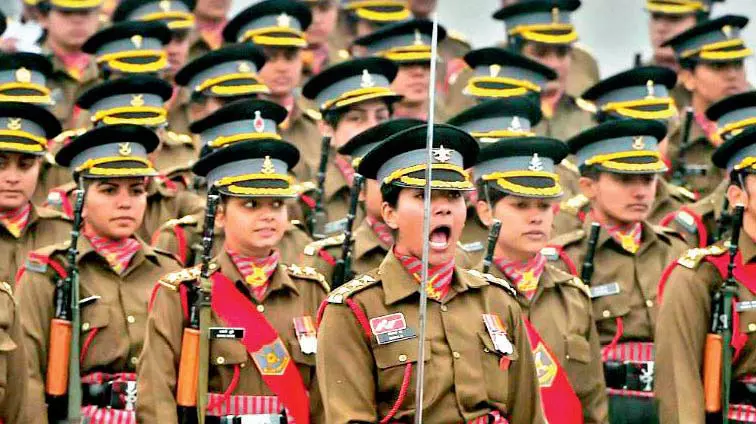
Reading the operative parts of the judgment, the CJI said the Annual Confidential Reports (ACRs) for women officers were often graded "casually" under the assumption that they would not be eligible for career progression or PC. (File Image)
NEW DELHI: Flagging the denial of permanent commission (PC) to women officers in the armed forces as a consequence of a systemic framework rooted in entrenched assumptions, the Supreme Court on Tuesday ruled that women Short Service Commission (SSC) officers in the Army, Navy and Air Force, who were denied PC due to "systematic disparity", are entitled to full pensionary benefits.
The top court delivered three separate judgments addressing challenges to the denial of PC based on the 2019 policy changes and earlier Armed Forces Tribunal (AFT) rulings concerning the Army, Navy and Air Force.
In the Navy case, arising from a plea by Yogendra Kumar Singh, a bench comprising Chief Justice of India Surya Kant and Justices Ujjal Bhuyan and N. Kotiswar Singh granted permanent commission to several groups of SSC officers, primarily women, as a one-time measure. The court dispensed with the requirement of a fresh selection board, noting that the officers had already undergone prolonged litigation spanning over 15 years.
The dispute centred on the Navy's evaluation process. Around 25 officers argued that their annual confidential reports (ACRs) were "casually graded" during a period when they were considered ineligible for PC. The court observed that assessments made under the assumption that officers had no long-term future in service inevitably affected appraisal outcomes from the outset, creating a cycle where earlier ineligibility translated into perceived unsuitability for career progression.
As a one-time measure, the court directed the grant of PC to in-service SSC women officers inducted before January 2009, as well as those inducted after January 2009 in eligible branches, excluding law, education and naval architecture.
In the Army case, based on a plea by Lt Col Pooja Pal, the court ordered grant of PC to several batches of women officers and directed the government to extend pensionary benefits to those released during the course of litigation. It held that the Army's evaluation process was "marred by inequality of opportunity" and rooted in systemic discrimination.
The judgment examined cases of around 73 SSC officers, mostly women, commissioned between 2010 and 2012. It found that for nearly a decade, these officers were treated as ineligible for PC, leading to ACRs being recorded on the assumption of a limited 14-year tenure. This resulted in "casual" or average gradings, while male counterparts were assessed for long-term progression.
The court rejected the Army's argument of a fixed cap of 250 PC vacancies per year, stating that the limit was neither sacrosanct nor immutable and had been exceeded in exceptional situations such as the Kargil war.
Invoking its powers under Article 142 to ensure complete justice, the court directed that all serving women officers who met the 60 per cent cut-off in the 2020 and 2021 selection boards be granted PC, subject to medical and disciplinary clearances. It further held that those released during litigation would be deemed to have completed 20 years of qualifying service and would be entitled to full pension with arrears from January 1, 2025.
The court also directed the Army to review its evaluation methods, including ACRs and cut-offs, to eliminate any disproportionate impact on women.
In the Air Force case, the court granted pensionary benefits to a batch of SSC women officers and criticised the force's performance assessment methods as "casual" and "arbitrary". The case involved women officers commissioned in 2007 who were denied PC under the 2019 policy that lifted restrictions on women seeking permanent roles.
The court noted that their ACRs had been prepared during a period when they were expected to serve only short tenures, resulting in assessments that did not reflect long-term potential.
While declining reinstatement on grounds of maintaining operational effectiveness, the court held that all SSC women officers considered for PC between 2019 and 2021 would be deemed to have completed 20 years of service and be eligible for full pension and consequential benefits.
The court also took note of the Indian Air Force's failure to adequately accommodate officers on maternity leave, observing that some appellants were denied fair consideration for PC due to lower gradings during pregnancy or inability to attend selection boards owing to childbirth.
( Source : Deccan Chronicle )

Next Story