SC Says Right to Dignity Includes Freedom From Threat of Dogs

The bench said implementation of the Animal Birth Control (ABC) framework largely remains sporadic, underfunded and uneven across jurisdictions
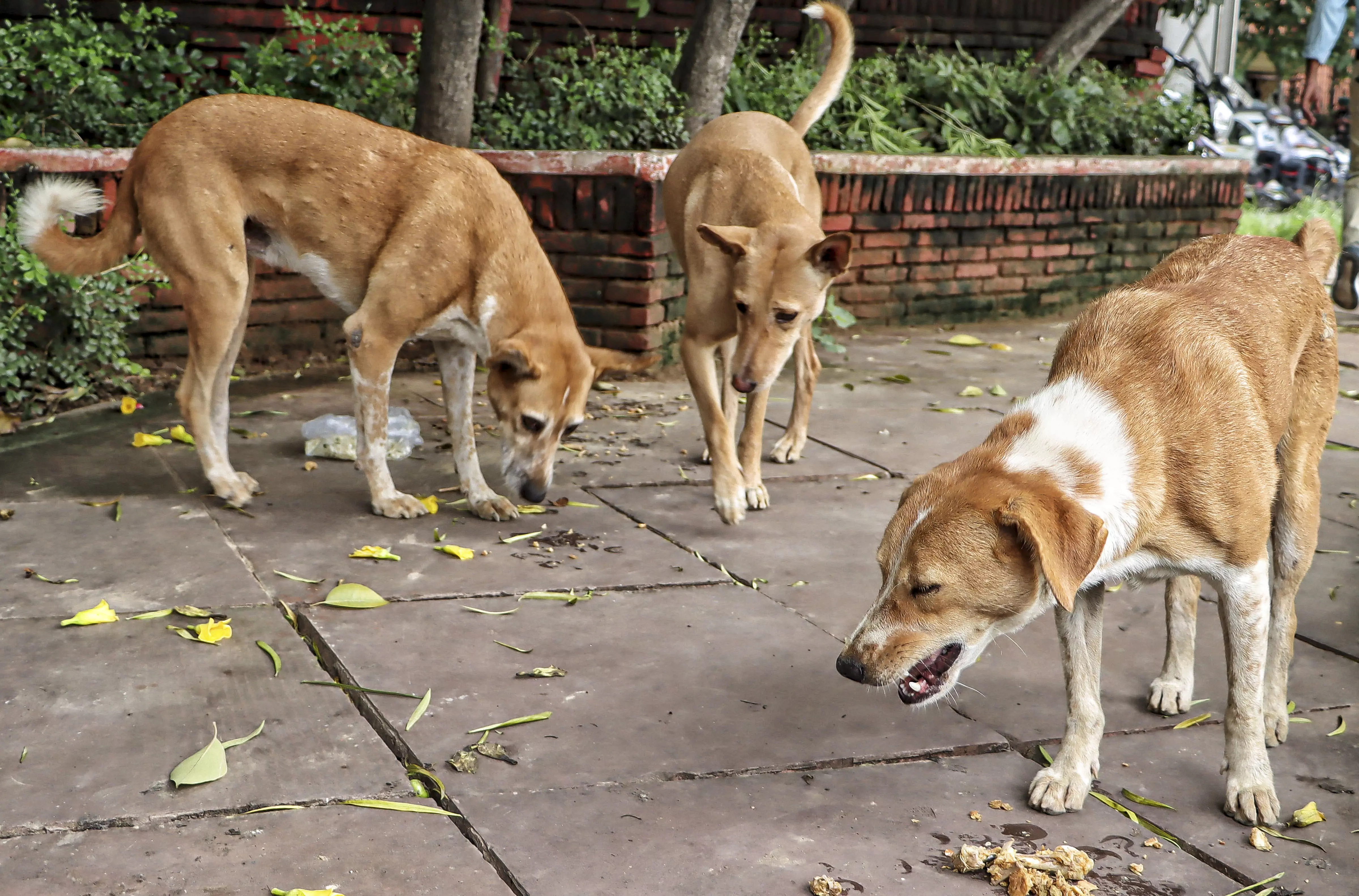
NEW DELHI: The Supreme Court on Tuesday stressed that the right to live with dignity encompassed the right to move freely without the threat of harm from dog bites, and dismissed pleas seeking a recall of its earlier order on the relocation and sterilisation of stray canines.
Underscoring that the court could not remain oblivious to harsh ground realities where even children, international travellers and senior citizens have fallen victim to dog bite incidents, the apex court issued a slew of directions to states, Union Territories and statutory bodies to augment infrastructure to deal with rising population of stray dogs.
In a first, the top court allowed euthanasia for rabid, incurably ill, or demonstrably dangerous stray dogs to curb the threat to human life. The bench also directed all High Courts to file compliance reports of hits directions every four months, starting November 1.
A three-judge bench of Justice Vikram Nath, Justice Sandeep Mehta and Justice N.V. Anjaria which was hearing pleas by animal rights activists and others, said that ordering the euthanasia of stray dogs was the most important direction it is issuing to authorities and officials of civic bodies.
The top court said the civic authorities may resort to euthanasia in areas where the stray dog population has reached alarming proportions and where frequent dog bites or dangerous/aggressive attacks pose a continuing threat to public safety.
It said euthanasia and other legal measures may be taken after an assessment by veterinary experts and in strict accordance with the provisions of the Prevention of Cruelty to Animals Act 1960, the Animal Birth Control Rules 2023 and other applicable statutory protocols.
On November 7 last year, the top court took note of the "alarming rise" in dog-bite incidents in areas such as educational institutions, hospitals and railway stations and directed that stray dogs be relocated to designated shelters after sterilisation and vaccination. Stray dogs picked up shall not be released back to their original place, it had said.
Flagging a "discernible absence" of sustained efforts on the part of states and Union Territories to build infrastructure to deal with the rising population of stray dogs, the apex court on Tuesday rejected petitions challenging the validity of standard operating procedures on dealing with stray animals issued by the Animal Welfare Board of India.
It directed the states and Union Territories to ensure the implementation of its earlier direction to not return dogs picked up from public places to the same spot after vaccination/sterilisation.
It said implementation of the Animal Birth Control framework — including sterilisation, vaccination, sheltering, and overall scientific management of the canines — was largely sporadic, under-funded and uneven across jurisdictions. Prolonged inaction coupled with the absence of institutional commitment to the effective implementation of the ABC framework has led to aggravation of the problem, which has now assumed dimensions "warranting urgent and systemic intervention", the top court said.
Underlining that states and Union Territories were under continued constitutional obligation to ensure the protection of the fundamental right to life and safety of citizens under Article 21, the top court said, "This obligation is not very passive in nature, but casts an affirmative duty upon the states and union territories to take all necessary and effective measures to prevent conditions that pose a threat to public safety, health, and well-being."
The top court said in its three-part order that after reserving judgment on January 29 in the present matter, it has been informed of multiple reports indicating that the incidence of dog bites and stray dog attacks continue to occur across the country with alarming frequency and severity.
It also referred to media reports on dog bite incidents in Rajasthan and other places and said they highlighted deeply disturbing incidents in which young children suffered serious injuries, including mauling of the faces and limbs by the street dogs.
"Ensure establishment of at least one fully functional ABC centre in each district duly equipped with requisite infrastructure and trained personnel, surgical facilities and supporting logistics. The court cannot remain oblivious to harsh ground realities where children, international travellers and old age people have fallen victim to dog bite incidents," it said.
In its 131-page judgment, the top court directed the states and Union Territories to undertake comprehensive capacity-building measures, including training of personnel, augmentation of veterinary services, strengthening of vaccination drives and creation of adequate shelter facilities, in coordination with relevant departments and agencies besides ensuring adequate availability of anti-rabies vaccines and immunoglobulin in all Government medical facilities, and shall put in place effective public health response mechanisms to deal with cases of dog bites.
It also observed that the responsibility of ensuring compliance with the directions issued by the court must cascade across all levels of administration, from the state governments down to district, municipal authorities, panchayati raj institutions and local bodies.
All High Courts have been directed to register a suo moto writ petition, in the name and style of ‘In Re: Compliance with the directions issued by the Supreme Court in Suo Motu Writ Petition (Civil) No(s). 5 of 2025’ for monitoring compliance with the top court directions.
The chief secretaries and the secretaries of the relevant departments of all the states and Union Territories shall file their updated affidavits of compliance before the respective jurisdictional High Courts on or before August 7. Likewise, the Centre and the National Highways Authority of India shall also file their respective affidavits of compliance before the jurisdictional High Courts, within the aforesaid period, clearly indicating the measures undertaken in compliance with the directions issued by the top court.
The High Courts must forward a consolidated report to the apex court every four months, summarising the status of compliance by States and Union Territories, the progress achieved, best practices identified, and persistent gaps requiring policy or judicial intervention. “The first such consolidated report shall be placed on record before this court at least one week prior to the next date of hearing, i.e., 17th November, 2026,” the apex court said.
Senior BJP leader and an active campaigner against the stray dog menace in the national capital, Vijay Goel welcomed the top court order. The former Union minister blamed a "handful of so-called dog lovers and dog feeders" who kept people scared by lodging police complaints whenever anyone protested against stray dog attacks.
In her reaction, former Union minister and animal rights activist Maneka Gandhi said the apex court has merely reiterated its earlier directions, without addressing the widespread failure in implementation over the last six months.
Meanwhile, People for the Ethical Treatment of Animals (PETA) India said it was committed to exploring legal remedies and appealing to authorities for resources to be focused on the implementation of the Animal Birth Control Rules and for better sense to prevail regarding the Animal Welfare Board of India SOP and any killing of dogs.
