SIR Is Must For Fair Polls, SC Backs EC

27 May 2026 11:20 AM IST27 May 2026 11:20 AM IST
On January 29, the top court reserved its verdict on the pleas, including one filed by the NGO Association for Democratic Reforms
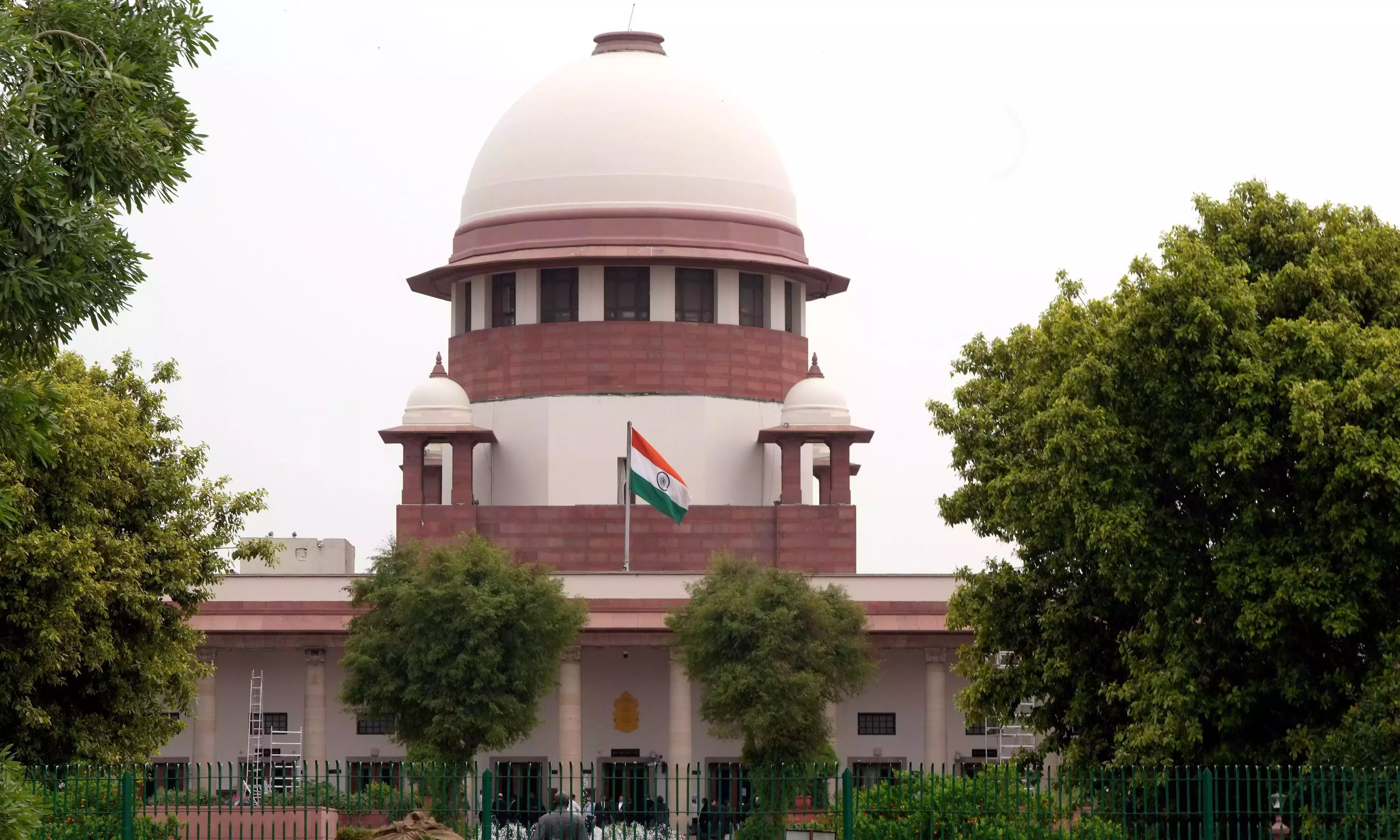
Supreme Court (PTI file image)
NEW DELHI: Upholding the power of the Election Commission to conduct a special intensive revision (SIR) of electoral rolls and the legality of the process, the Supreme Court on Wednesday ruled that the exercise "advances the constitutional imperative of free and fair elections".
The apex court said, "The process (SIR) that may initially appear exclusionary can, through appropriate safeguards, be rendered constitutionally compliant." Underscoring that the impugned SIR exercise meets requirements of proportionality and the poll panel acted within its statutory mandate, the top court also ruled that the EC has the power to examine the questions bearing upon citizenship for the purpose of inclusion in the electoral roll. The negative determination of the EC, however, does not result in a conclusive finding that the person is not an Indian citizen, it said.
The Supreme Court verdict on the intensely debated issue comes as a major victory for the poll panel, as a two-judge bench of Chief Justice of India Surya Kant and Justice Joymalya Bagchi underlined that the SIR of voter rolls "breathes life" into the constitutional mandate for fair elections.
The top court held that the EC is empowered under Article 324 of the Constitution and Section 21(3) of the Representation of the People Act (RPA) to carry out special revisions.
Disposing of a clutch of petitions challenging the SIR exercise in Bihar, the apex court held that deletion from the voter list does not amount to a legal declaration that an individual is not a citizen.
Highlighting that the credibility of the democratic process rests on the accuracy of the voter list, the top court said, "We are unable to conclude that the impugned exercise is a process resorted solely for administrative convenience."
Stressing that free and fair elections do not rest merely upon the mechanics of polling, the apex court said, "They equally depend upon the integrity, accuracy, and purity of the electoral roll which forms the foundation of the democratic process. The SIR breathes life into the constitutional mandate for fair elections."
The Supreme Court rejected arguments that the poll panel had overstepped its statutory powers.
In the first phase, the poll panel initiated the SIR in Bihar, where 65 lakh names were removed from electoral rolls on grounds of rapid urbanisation and large-scale migration over the last four decades. The post-exercise data placed on record does not disclose a level of disenfranchisement so widespread or systemic as to indicate a constitutional infirmity in the design of the exercise, the top court said.
The top court examined three questions -- whether the EC has the power to conduct an exercise like SIR, whether the inquiry under the SIR is founded on a legitimate purpose, and if the procedure adopted was contrary to or in violation of the provisions of the Representation of People Act.
Concurring with the EC's grounds for the SIR, the verdict said: "Having examined the statutory scheme and the relevant constitutional provisions, we may now proceed to answer the important question formulated earlier by us, namely whether the impugned SIR is in direct conflict with the RPA and the rules framed thereunder, and whether it supplants the statutory framework governing revision of electoral rolls. Both these questions, in our view, must be answered in the negative."
The Supreme Court noted that the statute itself authorises a special revision at any time, for reasons to be recorded and in such a manner as the Election Commission may deem fit. The exercise therefore cannot be invalidated merely because it does not conform in every respect to the ordinary modalities contemplated for routine revision, the top court held.
The apex court added: "In our considered opinion, the impugned SIR does not supplant the RPA and the rules. Rather, it breathes life into the constitutional mandate under Article 324 within the precise statutory contours provided by Section 21(3). Therefore, it cannot be said that the Commission has acted in excess of its statutory powers."
The top court said it was satisfied that the object sought to be achieved by the SIR is directly connected to the constitutional goal of free and fair elections. "The reasons recorded by the EC, namely the passage of more than two decades since the last intensive revision, large-scale additions and deletions over the years, rapid urbanisation, migration and the resulting possibility of repetition and inaccuracies in the electoral rolls, are clearly directed towards preserving that foundational integrity," it said.
Holding that the measures adopted in the exercise were not manifestly excessive and accompanied by sufficient procedural safeguards to prevent arbitrary exclusion, the apex court said the SIR met the requirements of proportionality and the measures adopted bore a reasonable nexus to the objectives sought to be achieved.
A key objection raised by the petitioners, including the NGO Association for Democratic Reforms (ADR), was that the SIR functioned as an "NRC-like process" with poll panel allegedly verifying citizenship, a power they argued vests solely with the Centre.
The top court held that the EC has the authority to examine citizenship status only for the limited purpose of determining eligibility for the electoral roll. While an entry in the roll carries a presumption of citizenship, that presumption is rebuttable through a "proper and appropriate inquiry", it said.
To prevent disenfranchisement, the court asked the poll panel to refer all cases of names being deleted on citizenship grounds to the competent authority under the Citizenship Act within four weeks.
The CJI said the competent authority must conclude the citizenship determination before the next Assembly or local body elections. If the authority confirms the individual's citizenship, the name must be immediately restored to the electoral rolls, the verdict said.
Domiciles of Bihar, whose names were erroneously deleted due to "absence" (migration) but who still reside in the state, are entitled to submit representations for restoration, it said.
The CJI-authored 124 judgment said: “…We are satisfied that the Impugned SIR bears a direct and proximate nexus with the objective of ensuring the purity and accuracy of the electoral roll. The integrity of elections is inextricably linked to the correctness of the electoral roll, and any systemic distortion therein strikes at the very root of representative governance.
The constitutional guarantee under Articles 325 and 326 ensures universality and equality of franchise, but the operationalisation of that guarantee necessarily contemplates a framework of verification, identification, and periodic revision, the verdict held.
The integrity of the franchise is as much dependent upon the inclusion of eligible voters as it is upon the exclusion of those who are not so entitled.
The petitions were filed last year after the EC notified the SIR in Bihar ahead of the 2025 Assembly elections. The top court had reserved its verdict on January 29 this year after extensive hearings.
The verdict evoked sharp political reactions from across the political spectrum. Commenting on the top court's verdict, BJP national spokesperson Sudhanshu Trivedi said, "This is a complete defeat of the Congress, particularly Rahul Gandhi. The Congress and the Opposition parties have collapsed across all three dimensions 'ethical, political, and constitutional'."
With the Supreme Court's judgment in the matter, all the allegations that Gandhi levelled against the SIR to cover his "indolence and political incapacity" have failed and stand "completely neutralised", Trivedi said at a press conference at the party headquarters in the national capital, adding, "I will ask the Congress, especially Gandhi, to do introspection after this decision of the court and abandon the use of abusive language."
Alleging that Gandhi was peddling "lies" with regard to the SIR exercise, Trivedi said the top court's judgment has exposed the "real face" of the Congress.
Congress senior spokesperson Abhishek Singhvi said: "The SIR is always a matter of substance, never merely a matter of form. The issue was never about the power to conduct SIR. What was being questioned was the mode, manner, timing, and style in which it was being carried out."
Singhvi, also a senior advocate, raised several shortcomings on the part of the Election Commission in conducting the exercise, which were challenged in the Supreme Court, and lamented that it was unfortunate that the Supreme Court made no comments on them.
Senior Trinamul Congress leader Kalyan Banerjee, who is a senior advocate, said, "The Supreme Court judgment was only for the Bihar case. The court repeatedly emphasised that its observations were limited to the Bihar matter." He, however, highlighted what he described as the most significant aspect of the judgment -- "the court's observation that the Election Commission does not have the authority to decide questions of citizenship".
Psephologist and activist Yogendra Yadav, who is one of the litigants in the case, said he deliberately stayed away from court because the outcome had been apparent long before the formal verdict. "The news is not that the Supreme Court has today declared the Election Commission's SIR to be constitutional. The real news is that now in this country, the BJP will decide who can vote and who cannot. The news is that the part of the constitution of this country, which was perhaps the last pillar to save it, some parts of it have broken and fallen today," Yadav claimed in his X post.
The Supreme Court verdict on the intensely debated issue comes as a major victory for the poll panel, as a two-judge bench of Chief Justice of India Surya Kant and Justice Joymalya Bagchi underlined that the SIR of voter rolls "breathes life" into the constitutional mandate for fair elections.
The top court held that the EC is empowered under Article 324 of the Constitution and Section 21(3) of the Representation of the People Act (RPA) to carry out special revisions.
Disposing of a clutch of petitions challenging the SIR exercise in Bihar, the apex court held that deletion from the voter list does not amount to a legal declaration that an individual is not a citizen.
Highlighting that the credibility of the democratic process rests on the accuracy of the voter list, the top court said, "We are unable to conclude that the impugned exercise is a process resorted solely for administrative convenience."
Stressing that free and fair elections do not rest merely upon the mechanics of polling, the apex court said, "They equally depend upon the integrity, accuracy, and purity of the electoral roll which forms the foundation of the democratic process. The SIR breathes life into the constitutional mandate for fair elections."
The Supreme Court rejected arguments that the poll panel had overstepped its statutory powers.
In the first phase, the poll panel initiated the SIR in Bihar, where 65 lakh names were removed from electoral rolls on grounds of rapid urbanisation and large-scale migration over the last four decades. The post-exercise data placed on record does not disclose a level of disenfranchisement so widespread or systemic as to indicate a constitutional infirmity in the design of the exercise, the top court said.
The top court examined three questions -- whether the EC has the power to conduct an exercise like SIR, whether the inquiry under the SIR is founded on a legitimate purpose, and if the procedure adopted was contrary to or in violation of the provisions of the Representation of People Act.
Concurring with the EC's grounds for the SIR, the verdict said: "Having examined the statutory scheme and the relevant constitutional provisions, we may now proceed to answer the important question formulated earlier by us, namely whether the impugned SIR is in direct conflict with the RPA and the rules framed thereunder, and whether it supplants the statutory framework governing revision of electoral rolls. Both these questions, in our view, must be answered in the negative."
The Supreme Court noted that the statute itself authorises a special revision at any time, for reasons to be recorded and in such a manner as the Election Commission may deem fit. The exercise therefore cannot be invalidated merely because it does not conform in every respect to the ordinary modalities contemplated for routine revision, the top court held.
The apex court added: "In our considered opinion, the impugned SIR does not supplant the RPA and the rules. Rather, it breathes life into the constitutional mandate under Article 324 within the precise statutory contours provided by Section 21(3). Therefore, it cannot be said that the Commission has acted in excess of its statutory powers."
The top court said it was satisfied that the object sought to be achieved by the SIR is directly connected to the constitutional goal of free and fair elections. "The reasons recorded by the EC, namely the passage of more than two decades since the last intensive revision, large-scale additions and deletions over the years, rapid urbanisation, migration and the resulting possibility of repetition and inaccuracies in the electoral rolls, are clearly directed towards preserving that foundational integrity," it said.
Holding that the measures adopted in the exercise were not manifestly excessive and accompanied by sufficient procedural safeguards to prevent arbitrary exclusion, the apex court said the SIR met the requirements of proportionality and the measures adopted bore a reasonable nexus to the objectives sought to be achieved.
A key objection raised by the petitioners, including the NGO Association for Democratic Reforms (ADR), was that the SIR functioned as an "NRC-like process" with poll panel allegedly verifying citizenship, a power they argued vests solely with the Centre.
The top court held that the EC has the authority to examine citizenship status only for the limited purpose of determining eligibility for the electoral roll. While an entry in the roll carries a presumption of citizenship, that presumption is rebuttable through a "proper and appropriate inquiry", it said.
To prevent disenfranchisement, the court asked the poll panel to refer all cases of names being deleted on citizenship grounds to the competent authority under the Citizenship Act within four weeks.
The CJI said the competent authority must conclude the citizenship determination before the next Assembly or local body elections. If the authority confirms the individual's citizenship, the name must be immediately restored to the electoral rolls, the verdict said.
Domiciles of Bihar, whose names were erroneously deleted due to "absence" (migration) but who still reside in the state, are entitled to submit representations for restoration, it said.
The CJI-authored 124 judgment said: “…We are satisfied that the Impugned SIR bears a direct and proximate nexus with the objective of ensuring the purity and accuracy of the electoral roll. The integrity of elections is inextricably linked to the correctness of the electoral roll, and any systemic distortion therein strikes at the very root of representative governance.
The constitutional guarantee under Articles 325 and 326 ensures universality and equality of franchise, but the operationalisation of that guarantee necessarily contemplates a framework of verification, identification, and periodic revision, the verdict held.
The integrity of the franchise is as much dependent upon the inclusion of eligible voters as it is upon the exclusion of those who are not so entitled.
The petitions were filed last year after the EC notified the SIR in Bihar ahead of the 2025 Assembly elections. The top court had reserved its verdict on January 29 this year after extensive hearings.
The verdict evoked sharp political reactions from across the political spectrum. Commenting on the top court's verdict, BJP national spokesperson Sudhanshu Trivedi said, "This is a complete defeat of the Congress, particularly Rahul Gandhi. The Congress and the Opposition parties have collapsed across all three dimensions 'ethical, political, and constitutional'."
With the Supreme Court's judgment in the matter, all the allegations that Gandhi levelled against the SIR to cover his "indolence and political incapacity" have failed and stand "completely neutralised", Trivedi said at a press conference at the party headquarters in the national capital, adding, "I will ask the Congress, especially Gandhi, to do introspection after this decision of the court and abandon the use of abusive language."
Alleging that Gandhi was peddling "lies" with regard to the SIR exercise, Trivedi said the top court's judgment has exposed the "real face" of the Congress.
Congress senior spokesperson Abhishek Singhvi said: "The SIR is always a matter of substance, never merely a matter of form. The issue was never about the power to conduct SIR. What was being questioned was the mode, manner, timing, and style in which it was being carried out."
Singhvi, also a senior advocate, raised several shortcomings on the part of the Election Commission in conducting the exercise, which were challenged in the Supreme Court, and lamented that it was unfortunate that the Supreme Court made no comments on them.
Senior Trinamul Congress leader Kalyan Banerjee, who is a senior advocate, said, "The Supreme Court judgment was only for the Bihar case. The court repeatedly emphasised that its observations were limited to the Bihar matter." He, however, highlighted what he described as the most significant aspect of the judgment -- "the court's observation that the Election Commission does not have the authority to decide questions of citizenship".
Psephologist and activist Yogendra Yadav, who is one of the litigants in the case, said he deliberately stayed away from court because the outcome had been apparent long before the formal verdict. "The news is not that the Supreme Court has today declared the Election Commission's SIR to be constitutional. The real news is that now in this country, the BJP will decide who can vote and who cannot. The news is that the part of the constitution of this country, which was perhaps the last pillar to save it, some parts of it have broken and fallen today," Yadav claimed in his X post.
( Source : Deccan Chronicle )

Next Story