Beyond Relief and Rescue: India’s Proactive Disaster Management Ecosystem

27 July 2026 8:34 PM IST27 July 2026 8:34 PM IST
The NDRF is now present at 68 strategic locations, including 28 regional response centres and 24 tactical pre-positioning locations.
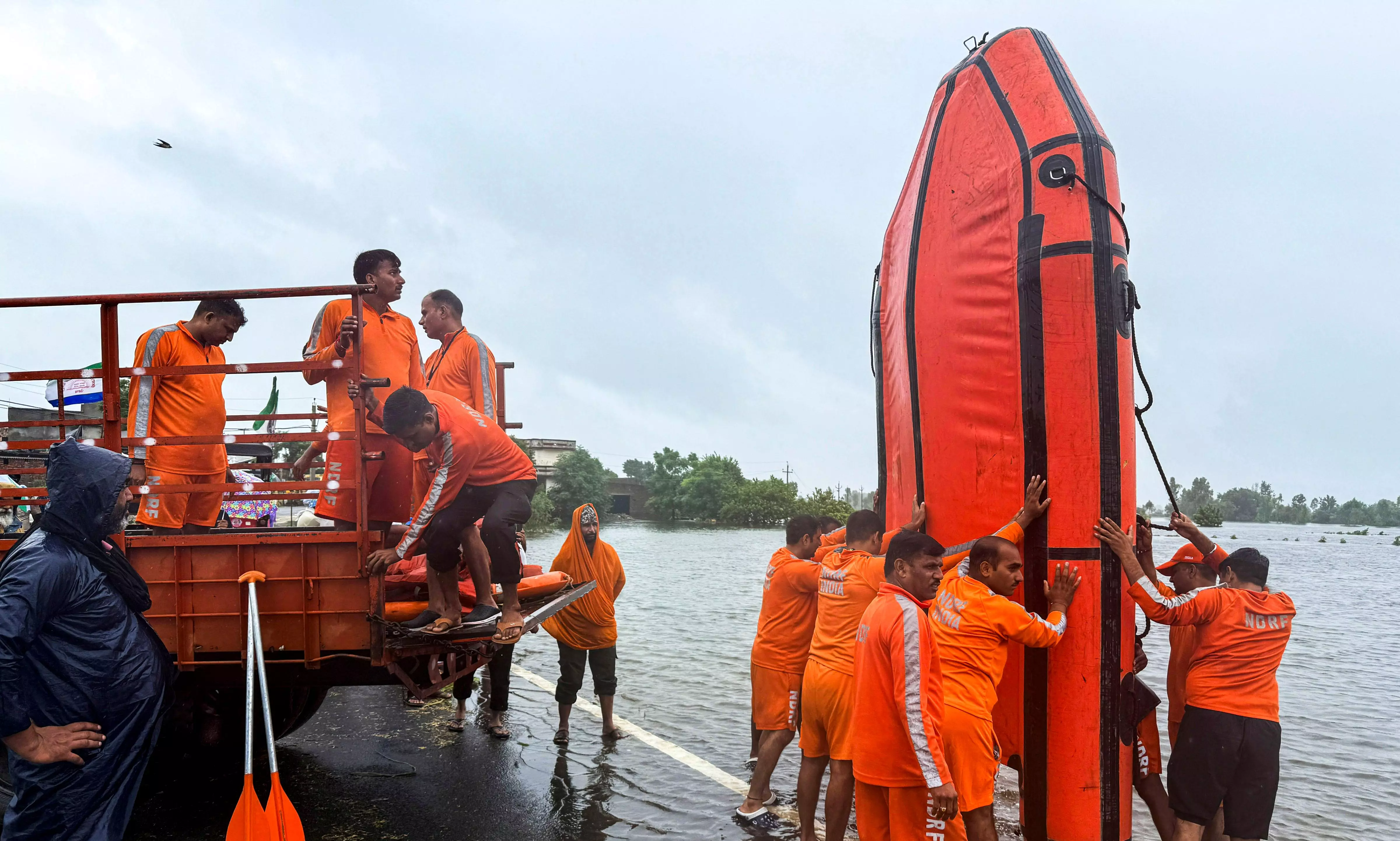
In 2024, NDRF conducted a record of 1038 operations across the country, saving more than 4,000 lives and evacuating 63,000 people to safer locations. (PTI File Photo)
For much of independent India’s history disaster management has followed a similar track, natural calamity, emergency teams rushed in, relief followed and reconstruction began. The state’s role was largely measured by how quickly it responded after destruction has already occurred. But climate change has intensified extreme weather events, urbanization has increased vulnerabilities and fragile ecosystems are facing unprecedented pressure.
Over the past decade, India has attempted a profound shift in this philosophy. What was once largely a reactive apparatus, mobilized after a tragedy has struck, is steadily evolving into an ecosystem that prioritizes anticipation over improvisation, mitigation over relief and resilience over recovery.
Under the leadership of Prime Minister Narendra Modi and Union Home Minister Amit Shah categoan ambition that places saving lives before managing losses.
The significance of this cannot be overstated. India is amongst the most disaster prone nations. From Himalayan glacial lake outburst floods to coastal cyclones, urban inundation, cloud bursts and recurring river floods the country confronts an extraordinary range of natural hazards. Climate change has only amplified these risks, compressing response windows and exposing the limitations of governance models that solely rely on post-disaster intervention.
A key element of this has been strengthening coordination between Centre and States. Disaster management is a shared responsibility and Amit Shah has emphasized direct coordination with state governments during crises to ensure faster deployment of resources.
During recent flood and extreme weather events, including situations in Maharashtra, Gujrat, Kerala, Assam and Arunachal Pradesh, the Centre coordinated with the state leadership to assess ground conditions and provide assistance. The Indian Army, the Indian Air force, National Disaster Response Force (NDRF), State Disaster Response force and local administration has increasingly operated as one integrated response network. This “whole-of-goverment” approach has become the foundation of India’s evolving disaster management model.
A decade ago, weather warnings often provided limited preparation time. Today, India’s Common Alert Protocol (CAP) launched in 2021 with an investment of INR 354 crore, enables geo-targeted, real time emergency alerts. The government has also expanded monitoring of vulnerable ecological zones. Recognising the growing risks associated with climate change, authorities have focused on strengthening surveillance of high risk Himalayan lakes and glaciers across regions including Jammu and Kashmir, Ladakh, Uttrakhand, Himachal Pradesh and Sikkim. The objective is clear - to identify danger before it becomes a disaster. A proactive disaster management system does not measure success only by the number of people rescued but its greatest achievement lies in the fact that it never reaches a point needing rescue. Earlier, disaster response was largely dependent on mobilising forces after an emergency occurred. Today, the NDRF follows a pre-deployment strategy, positioning teams closer to vulnerable regions to reduce response time.
The NDRF is now present at 68 strategic locations, including 28 regional response centres and 24 tactical pre-positioning locations. Since 2014, the NDRF has expanded with the establishment of six additional battalions taking its strength to 16 operational battalions equipped to respond to multiple disaster scenarios.
In 2024, NDRF conducted a record of 1038 operations across the country, saving more than 4,000 lives and evacuating 63,000 people to safer locations.
A disaster management ecosystem cannot depend only on government agencies. Communities are often the first responders and through initiatives such as community volunteer programs around 1 lakh communities across 350 multi-hazard disaster prone districts are being trained to respond during emergencies.
Technology platforms such as Mausam, Meghdoot and Damini Applications, available in multiple languages have further strengthened access to weather and lightning alerts.
The India Disaster Resource Network, a national electronic database of disaster response resources, has also expanded significantly, with more than 5 lakh new records updated between June 2016 to July 2026.
A strong domestic disaster management system has also enabled India to extend humanitarian assistance beyond its borders. Through operations such as Operation Dost after the Turkey - Syria earthquake and humanitarian assistance mission in neighboring countries, India has demonstrated that disaster resilience is not only a national priority but also a global responsibility.
This emerging capability has strengthened India’s position as a contributor to international disaster risk reduction efforts, including through the Coalition for Disaster Resilient Infrastructure (CDRI) which includes 58 countries and 12 multinational organizations.
However, the challenge before India is enormous. Climate change will continue to test governance systems and extreme weather events will become unpredictable. The evolution of India's disaster management architecture under Amit Shah’s leadership reflects a broader governance shift from responding to emergencies after they happen to building resilience before they arrive. The journey from relief and rescue to prevention and preparedness is still underway. But the foundations of proactive disaster management systems have been laid, one where technology, institutions and communities work together with one single objective of protecting human life.
In disaster management the greatest victory will always be ensuring that fewer needs rescuing than the speed of recovery.
The article is authored by Akhilesh Sinha, columnist.
( Source : Guest Post )


Next Story