Major J&K Seminary Declared Unlawful Entity Under UAPA

However, the trust managing the school and two other institutions in the area had denied any organisational links to JeI or its subsidiary Falah‑e‑Aam Trust (FAT).
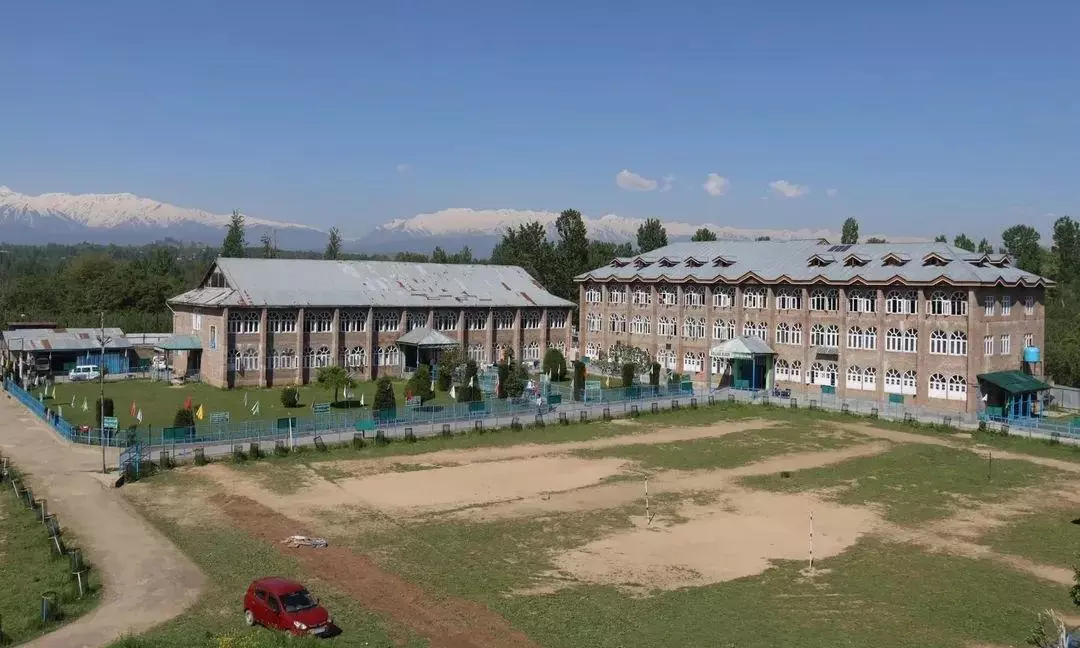
Srinagar: The Jammu and Kashmir administration has formally declared Darul Uloom Jamia Siraj‑ul‑Uloom, a major Islami seminary located in the Imam Sahib area of southern Shopian district, as an unlawful entity under the Unlawful Activities (Prevention) Act (UAPA), 1967.
The decision, issued through an order by Divisional Commissioner Kashmir Anshul Garg under Section 8(1) of the Act, follows allegations of the institution’s links with a proscribed organisation, financial irregularities, and concerns over the misuse of its premises.
According to the order, the action was initiated after the Senior Superintendent of Police, Shopian, submitted a detailed dossier on March 24. Upon examining the material on record, authorities concluded that although the institution functioned outwardly as a religious educational centre, it was “marred by serious legal, administrative and financial irregularities.” These concerns included questionable land acquisition processes, absence of mandatory registration with competent authorities, and what officials described as deliberate attempts to evade statutory oversight mechanisms.
The order further states that credible inputs indicated sustained and covert linkages between the institution and Jamaat‑e‑Islami (JeI), Jammu and Kashmir which was banned by the Government of India in February 2019. Investigators alleged that individuals affiliated with the proscribed organisation continued to exercise de facto control over the institution, occupying key administrative and academic positions. Authorities also flagged concerns over opaque financial practices, suspicious fund‑handling, and abrupt changes in financial control structures, raising fears of diversion or misuse of institutional resources.
Security agencies additionally reported that the environment within the institution had, over time, become conducive to radicalisation. Several former students were allegedly found to have joined militant ranks or engaged in activities prejudicial to national security. Citing these cumulative factors, the order notes that intelligence inputs and field verification provided sufficient grounds to believe that the premises were being used for the purposes of an unlawful association.
The administration emphasised that due process was followed in accordance with principles of natural justice. A show‑cause notice was issued to the institution’s Chairman on March 31, seeking an explanation as to why the premises should not be declared unlawful. After objections were submitted, the Divisional Commissioner sought comments from the SSP Shopian, who reported that the objections were “misconceived, factually untenable, and devoid of legal merit.” The order clarifies that proceedings under Section 8(1) of the UAPA are preventive in nature and do not require proof beyond reasonable doubt, as would be necessary in a criminal trial.
Authorities concluded that the institution’s plea of innocence could not be sustained, stating that available material suggested awareness of the alleged activities and a failure to take adequate steps to prevent misuse of the premises. With the formal notification now issued, competent authorities are empowered to seal the premises, freeze financial assets, and undertake further action. Sources indicated that enforcement measures, including possible seizure, may occur within a couple of days. The institution reportedly had several hundred students enrolled at the time of the order.
The move has drawn criticism from some political quarters. Former Chief Minister and president of the People’s Democratic Party (PDP), Mehbooba Mufti, wrote on ‘X’ that the decision represented an injustice to underprivileged communities who relied on the institution for affordable education. She stated that the school had produced professionals who served the country and argued that banning such institutions without what she described as “solid evidence” reflected prejudice.
Concerns over the institution’s activities are not new. In October 2020, the J&K Police booked three teachers of a private school affiliated with the seminary under the Public Safety Act (PSA) after investigations revealed that thirteen of its students had joined militant ranks over time. One of these students, Sajjad Bhat, was accused in the February 2019 Pulwama attack on a CRPF convoy. Police officials, including the then Inspector General of Police (Kashmir Range), had stated that the Siraj-ul-Uloom had seen 13 of its alumni join various militant outfits. The three detained teachers were identified as Abdul Ahad Bhat, Rouf Bhat, and Mohammad Yusuf Wani.
However, the trust managing the school and two other institutions in the area had denied any organisational links to JeI or its subsidiary Falah‑e‑Aam Trust (FAT). The trust’s chairman, Muhammad Yusuf Mantoo, acknowledged his personal association with JeI but maintained that the detained individuals were not part of the school’s faculty.
Police sources noted that many students enrolled at the institution hailed from districts such as Kulgam, Pulwama, Anantnag, and Shopian—areas that had witnessed heightened militant recruitment, particularly after the killing of Hizb‑ul‑Mujahideen commander Burhan Wani in July 2016. The schools previously attracted students from states such as Uttar Pradesh, Kerala, and Telangana, though their numbers reportedly declined sharply after the revocation of J&K’s special status in August 2019.
The latest declaration under UAPA marks a significant escalation in the administration’s scrutiny of educational and religious institutions suspected of links with banned organisations. Official sources said that the coming days are expected to see further administrative and legal action as authorities move to enforce the notification.
