The elections for West Bengal and Tamil Nadu will be conducted in phases from April 23
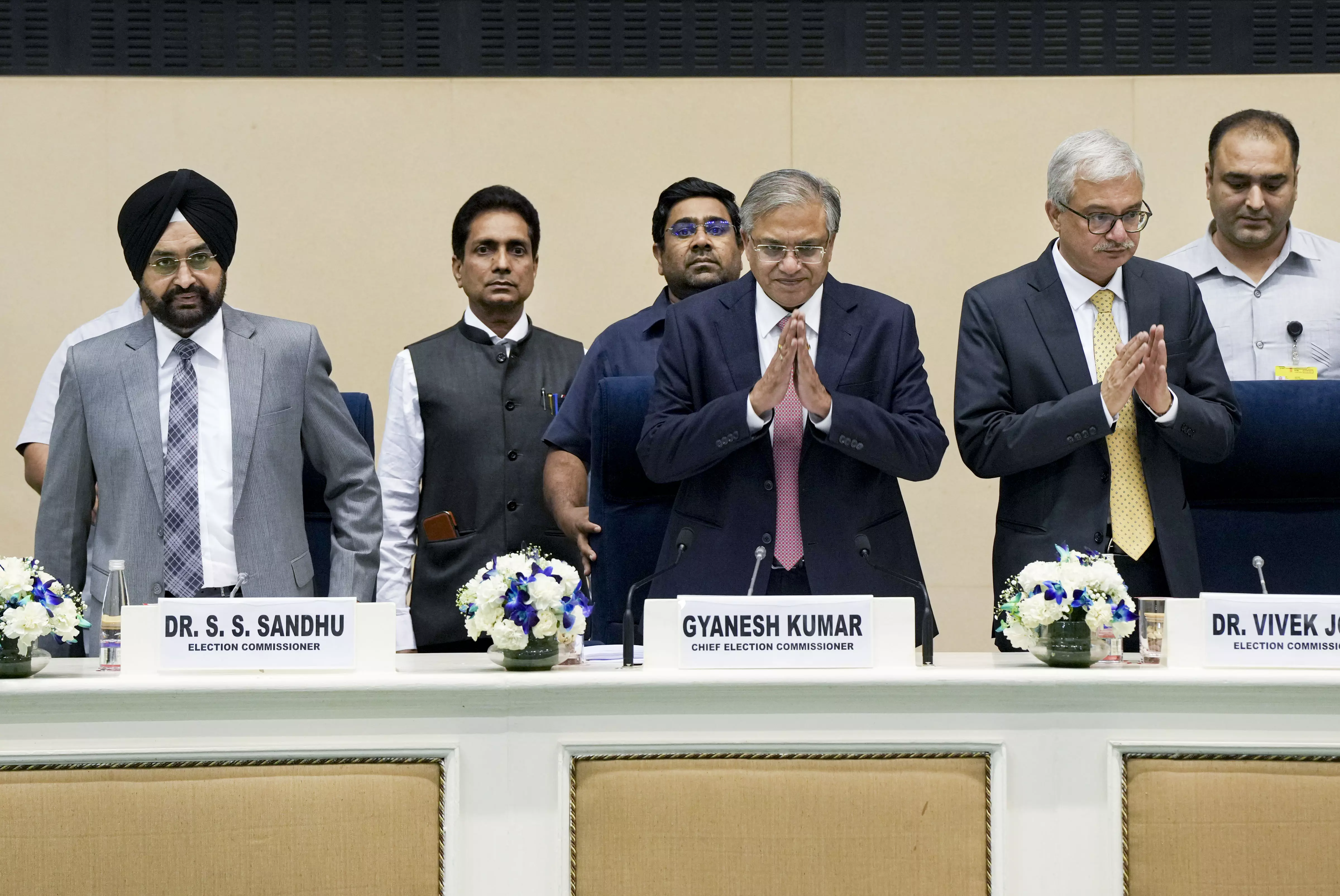
New Delhi: Chief Election Commissioner Gyanesh Kumar, centre front, with Election Commissioners S S Sandhu, left, and Vivek Joshi, right front, during a press conference to announce the Assembly election schedule for West Bengal, Tamil Nadu, Kerala, Assam and Puducherry, at Vigyan Bhawan in New Delhi, Sunday, March 15, 2026. (PTI Photo/Arun Sharma)
New Delhi: The Election Commission on Sunday announced the Assembly election schedule for four states and one Union territory. The polling will be held in single phase in Assam, Kerala and Puducherry on April 9, in Tamil Nadu on April 23 and in two phases in West Bengal on April 23 and 29.
Addressing a press conference here, chief election commissioner Gyanesh Kumar said the counting of votes for all 824 seats across four states and one UT will be held on May 4.
He also announced that byelections to five Assembly seats in Goa, Karnataka, Nagaland and Tripura will be held on April 9 and in another three constituencies of Gujarat and Maharashtra on April 23. The counting of votes for the byelections will also be held on May 4.
Compared to the eight voting days spread across almost a month in 2021, there will be three polling days in a 20-day period in these elections, which will see the BJP trying to retain power in Assam, while it will be pitted against ruling parties in West Bengal, Kerala and Tamil Nadu. Puducherry is governed by NDA partner All India N.R. Congress.
A total of 17.4 crore voters are eligible to vote in the elections to five Assemblies with 824 constituencies, Kumar said.
Voting for all seats in Assam will be held on April 9. Voting in West Bengal will take place in two phases on April 23 and April 29. “The voting for all seats in Kerala and Puducherry will take place on April 9, while all Tamil Nadu seats will go to the polls on April 23,” said Kumar, who was flanked by two election commissioners Sukhbir Singh Sandhu and Vivek Joshi.
The model code of conduct has come into effect immediately with the announcement of the poll schedule.
The CEC said the elections must remain free from violence or inducements and warned that the EC will take strong action against any violation.
Asked about the announcement made by the West Bengal chief minister, barely minutes ahead of the scheduled announcement of the Assembly polls, about the clearance of DA arrears of its employees and a hike in honorarium of purohits and muezzins, Kumar said whatever has happened has happened, but the model code of conduct comes into effect immediately and no such announcements could be made henceforth.
For Assam, Kerala and Puducherry, the notification for the elections will be issued on March 16, and the last date for filing nominations is March 23. Scrutiny of nominations will take place on March 24 and the last date for the withdrawal of candidatures is March 26.
For Tamil Nadu, the notification for the polls will be issued on March 30 and the last date for filing nominations is April 6. The date for the scrutiny of nominations is April 7 and the last date for the withdrawal of candidatures is April 9.
In the first phase elections in West Bengal, notifications will be issued on March 30, while for the second phase on April 2. The last date for filing nominations for the first phase is April 6 and for the second phase is April 9.
The scrutiny of nominations for the first phase of the elections in West Bengal will take place on April 7 and for the second phase on April 10. The last date for withdrawal of candidates for the first phase is April 9 and for the second phase is April 13.
“The Election Commission will ensure greater transparency in the counting of votes and announcement of results. The Election Commission has asked all enforcement agencies to ensure elections are impartial and violence-free," he said.
The Opposition parties had raised questions on the voter turnout data after the last few Assembly elections.
The term of the Assembly will come to an end in West Bengal on May 7, in Tamil Nadu on May 10, in Assam on May 20, in Kerala on May 23, and in Puducherry on June 15.
There are 6.4 crore voters in West Bengal, 5.67 crores in Tamil Nadu, 2.7 crores in Kerala, 2.5 crores in Assam and 9.44 lakh in Puducherry.
There will be 2,18,807 polling stations in all four states and one UT -- of which 31,486 booths are in Assam, 30,471 in Kerala, 75,032 in Tamil Nadu, 80,719 in West Bengal and 1,099 in Puducherry.
A total of 25 lakh election officials will be deployed, out of which 15 lakhs are polling personnel, 8.5 lakh security personnel, 49,000 micro-observers for polling, 1,444 observers, 40,000 counting officials, 21,000 sector officers and 15,000 micro-observers for counting.
The byelections in all eight constituencies were necessitated due to the death of sitting MLAs. The eight constituencies are: Ponda in Goa, Bagalkot and Davnagere South in Karnataka, Koridang in Nagaland, Dharmanagar in Tripura, Umreth in Gujarat, and Rahuri and Baramati in Maharashtra.
In West Bengal, polling will be held in 152 Assembly constituencies in the first phase and in 142 seats in the second phase. Tamil Nadu, West Bengal and Kerala are currently ruled by the Opposition DMK, Trinamul Congress and Left Front, respectively.
There are 234 Assembly seats in Tamil Nadu, where DMK leader M.K. Stalin has been the chief minister since 2021. West Bengal has a total of 294 Assembly seats with Trinamul leader Mamata Banerjee has been in power since 2011.
Kerala has 140 seats and Left leader Pinarayi Vijayan has been the chief minister since 2016, leading the Left Democratic Front (LDF) government.
In Assam, there are 126 Assembly seats, and the BJP has been in power in the northeastern state since 2016 and Himanta Biswa Sarma has been the chief minister since 2021.
Kumar also said the presiding officers at all polling booths will upload voter turnout data every two hours and immediately after voting ends.
He also announced that byelections to five Assembly seats in Goa, Karnataka, Nagaland and Tripura will be held on April 9 and in another three constituencies of Gujarat and Maharashtra on April 23. The counting of votes for the byelections will also be held on May 4.
Compared to the eight voting days spread across almost a month in 2021, there will be three polling days in a 20-day period in these elections, which will see the BJP trying to retain power in Assam, while it will be pitted against ruling parties in West Bengal, Kerala and Tamil Nadu. Puducherry is governed by NDA partner All India N.R. Congress.
A total of 17.4 crore voters are eligible to vote in the elections to five Assemblies with 824 constituencies, Kumar said.
Voting for all seats in Assam will be held on April 9. Voting in West Bengal will take place in two phases on April 23 and April 29. “The voting for all seats in Kerala and Puducherry will take place on April 9, while all Tamil Nadu seats will go to the polls on April 23,” said Kumar, who was flanked by two election commissioners Sukhbir Singh Sandhu and Vivek Joshi.
The model code of conduct has come into effect immediately with the announcement of the poll schedule.
The CEC said the elections must remain free from violence or inducements and warned that the EC will take strong action against any violation.
Asked about the announcement made by the West Bengal chief minister, barely minutes ahead of the scheduled announcement of the Assembly polls, about the clearance of DA arrears of its employees and a hike in honorarium of purohits and muezzins, Kumar said whatever has happened has happened, but the model code of conduct comes into effect immediately and no such announcements could be made henceforth.
For Assam, Kerala and Puducherry, the notification for the elections will be issued on March 16, and the last date for filing nominations is March 23. Scrutiny of nominations will take place on March 24 and the last date for the withdrawal of candidatures is March 26.
For Tamil Nadu, the notification for the polls will be issued on March 30 and the last date for filing nominations is April 6. The date for the scrutiny of nominations is April 7 and the last date for the withdrawal of candidatures is April 9.
In the first phase elections in West Bengal, notifications will be issued on March 30, while for the second phase on April 2. The last date for filing nominations for the first phase is April 6 and for the second phase is April 9.
The scrutiny of nominations for the first phase of the elections in West Bengal will take place on April 7 and for the second phase on April 10. The last date for withdrawal of candidates for the first phase is April 9 and for the second phase is April 13.
“The Election Commission will ensure greater transparency in the counting of votes and announcement of results. The Election Commission has asked all enforcement agencies to ensure elections are impartial and violence-free," he said.
The Opposition parties had raised questions on the voter turnout data after the last few Assembly elections.
The term of the Assembly will come to an end in West Bengal on May 7, in Tamil Nadu on May 10, in Assam on May 20, in Kerala on May 23, and in Puducherry on June 15.
There are 6.4 crore voters in West Bengal, 5.67 crores in Tamil Nadu, 2.7 crores in Kerala, 2.5 crores in Assam and 9.44 lakh in Puducherry.
There will be 2,18,807 polling stations in all four states and one UT -- of which 31,486 booths are in Assam, 30,471 in Kerala, 75,032 in Tamil Nadu, 80,719 in West Bengal and 1,099 in Puducherry.
A total of 25 lakh election officials will be deployed, out of which 15 lakhs are polling personnel, 8.5 lakh security personnel, 49,000 micro-observers for polling, 1,444 observers, 40,000 counting officials, 21,000 sector officers and 15,000 micro-observers for counting.
The byelections in all eight constituencies were necessitated due to the death of sitting MLAs. The eight constituencies are: Ponda in Goa, Bagalkot and Davnagere South in Karnataka, Koridang in Nagaland, Dharmanagar in Tripura, Umreth in Gujarat, and Rahuri and Baramati in Maharashtra.
In West Bengal, polling will be held in 152 Assembly constituencies in the first phase and in 142 seats in the second phase. Tamil Nadu, West Bengal and Kerala are currently ruled by the Opposition DMK, Trinamul Congress and Left Front, respectively.
There are 234 Assembly seats in Tamil Nadu, where DMK leader M.K. Stalin has been the chief minister since 2021. West Bengal has a total of 294 Assembly seats with Trinamul leader Mamata Banerjee has been in power since 2011.
Kerala has 140 seats and Left leader Pinarayi Vijayan has been the chief minister since 2016, leading the Left Democratic Front (LDF) government.
In Assam, there are 126 Assembly seats, and the BJP has been in power in the northeastern state since 2016 and Himanta Biswa Sarma has been the chief minister since 2021.
Kumar also said the presiding officers at all polling booths will upload voter turnout data every two hours and immediately after voting ends.
( Source : Deccan Chronicle )


Next Story