Justice Datta said the independence of the Election Commission was a facet of the basic structure of the Constitution, as free and fair elections depended on it.
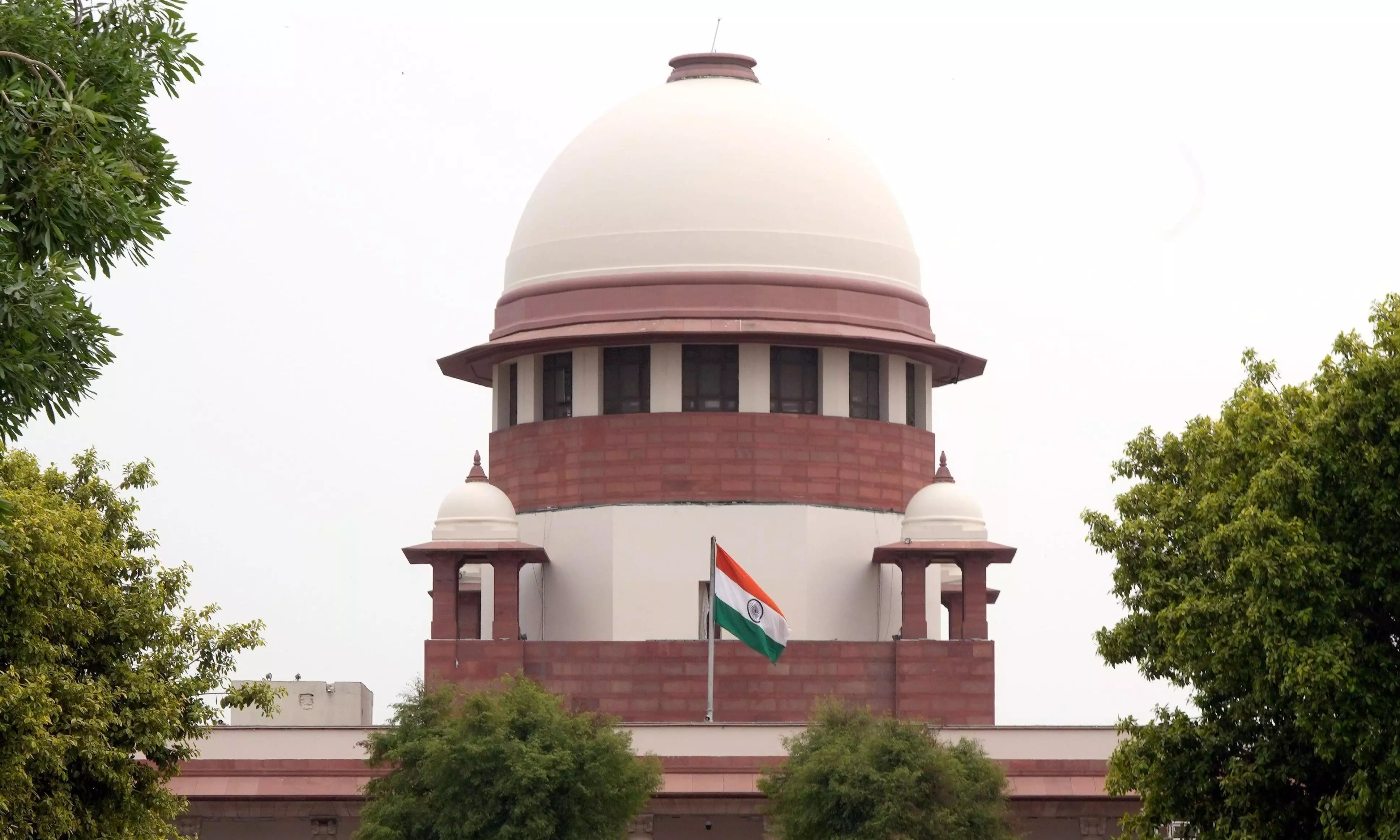
NEw Delhi: The Supreme Court on Thursday observed that the independence of the Election Commission is a facet of the “basic structure” of the Constitution, as free and fair elections depend on it. The apex court said free and fair elections cannot be ensured unless the poll panel is independent and also appears to be independent.
A two-judge Bench of Justices Dipankar Datta and Satish Chandra Sharma made the observations during the final hearing on a batch of six pleas challenging the constitutional validity of a new law governing the appointment of the Chief Election Commissioner and Election Commissioners.
The Chief Election Commissioner and Other Election Commissioners (Appointment, Conditions of Service and Term of Office) Act, 2023, which came into force on January 2, 2024, provides that the CEC and ECs will be appointed by the President on the recommendation of a Selection Committee comprising the Prime Minister, a Union Cabinet minister and the Leader of the Opposition in the Lok Sabha.
The law replaces the Chief Justice of India with a Union Cabinet Minister on the three-member Selection Committee.
While hearing the submissions of Attorney General R. Venkataramani on behalf of the Centre, Justice Datta said, “It is not sufficient for the Election Commission to be independent; it has to appear to be independent.”
Justice Datta said the independence of the Election Commission was a facet of the basic structure of the Constitution, as free and fair elections depended on it.
“The level of confidence must be to that degree, as if there had been a third neutral person in the Selection Committee. Why should it be a minister from the Cabinet?” the Bench asked.
Referring to the Attorney General’s submissions on judicial overreach, Justice Datta underlined the need for mutual respect between the organs of the state. “Parliament may attribute anything to the judiciary, but we know our Lakshman Rekha. We will never do that,” he said.
Venkataramani argued that Parliament had the absolute right to legislate and was not bound to follow the “stop-gap” arrangement suggested by a five-judge Bench in the Anoop Baranwal judgment.
He said the Baranwal judgment was an exercise of Article 142, which gives the Supreme Court discretionary power to do complete justice, and did not constitute binding law under Article 141 that could override an Act of Parliament.
The Attorney General said the apex court should not strike down a law on the basis of hypothetical bias.
“We have to eat the pudding to know if it is bad. Unless the ECs demonstrate a lack of independence in their actual functioning, the law cannot be held invalid,” he said.
Cautioning the Bench against entering the legislative arena or acting as a “second chamber of Parliament”, Venkataramani said, “Their first prayer is against the validity of the law. If that fails, no other prayer survives.”
“The question whether the Election Commission is independent cannot be answered in the abstract. It is a question of fact and evidence,” he argued.
“If the court decides what the best manner to appoint Election Commissioners is, then the court enters the legislative arena,” he said.