CII Flags Supply Disruptions for Indian Firms Due to West Asia Tensions

CII asserts that India is now better prepared for external shocks despite Middle East conflict challenges.
New Delhi: Flagging concern over the West Asia war, Indian Inc on Sunday said that they are facing disruptions ranging from shipment delays to shortages of key raw materials due to the ongoing West Asia conflict, highlighting growing stress across sectors dependent on global trade flows.
“With the supply chain disruption due to the West Asia conflicts, now, Indian industry is adapting to the shocks by accelerating energy diversification, optimising supply chains and protecting jobs,” a leading industry body said.
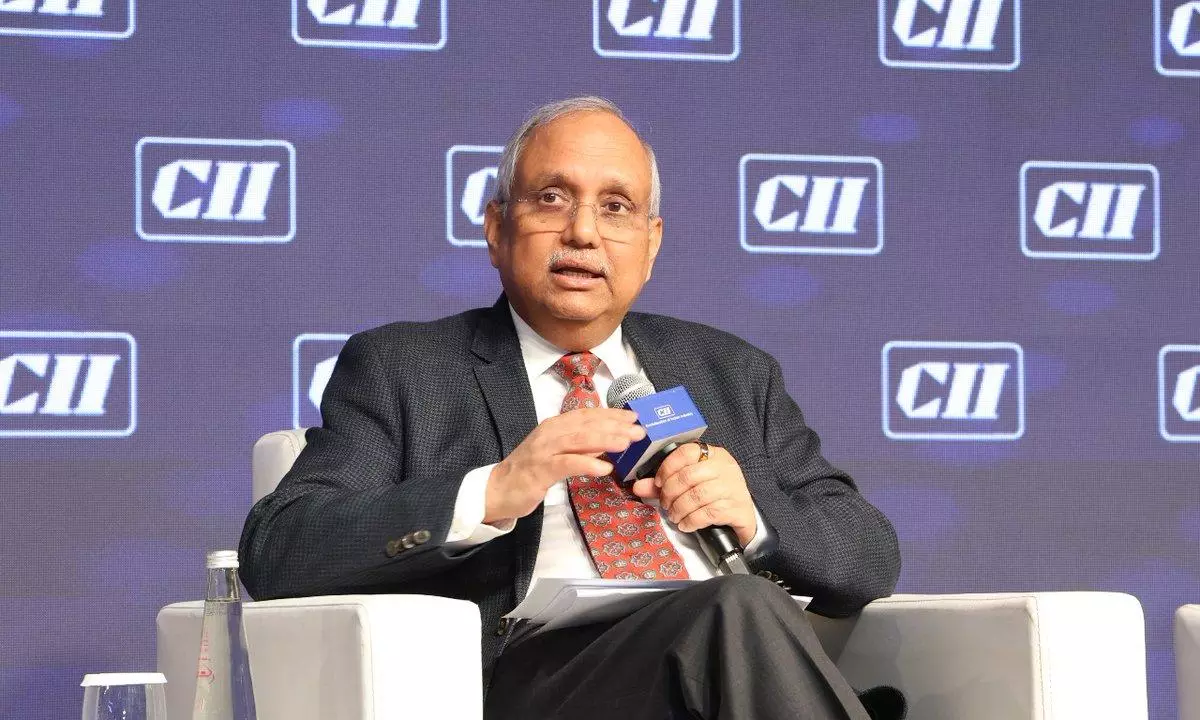
Issuing a statement, Confederation of Indian Industry (CII) said that many Indian companies are already seeing ‘downstream effects’ as the conflict disrupts key maritime routes and tightens global supply chains. “Indian companies are experiencing downstream effects, from shipment delays to constraints in key energy inputs, as well as emerging shortages in essential raw materials and intermediates across several sectors that rely heavily on timely cross-border flows,” said CII director general Chandrajit Banerjee.
The CII also said that disruptions have also placed pressure on energy markets and trade, affecting both imports and exports, with ripple effects being felt across manufacturing and other industries. “The conflict in the Middle East has disrupted critical maritime routes and placed pressure on global supply chains, energy markets, and both imports and exports,” Banerjee stated.
Despite emerging challenges, CII also underscored that India is better placed than in the past to absorb external shocks. “The country entered this phase from a position of strength, supported by structural reforms and the government's push for Atmanirbhar Bharat, which has strengthened domestic resilience,” Banerjee said.
The industry lobby also said that the government’s response has been quick, calibrated and continuous, with measures, including crude oil diversification, maximisation of LPG production, export facilitation and currency stabilisation.
According to CII, the Indian industry is adapting to the shocks by accelerating energy diversification, optimising supply chains and protecting jobs. The CII also highlighted the importance of ongoing investments in renewable energy, green hydrogen, biofuels, and energy efficiency, calling them strategic imperatives to reduce vulnerability to geopolitical energy shocks.
“While the situation remains challenging, we are confident that the government's approach, combined with its partnership-driven engagement with all stakeholders, will help India withstand this shock and preserve its forward-economic momentum,” Banerjee stated.
