SC Status Lost On Religious Conversion: Apex Court

24 March 2026 12:19 PM IST24 March 2026 12:19 PM IST
APHC had held that a Christian convert can’t be regarded as member of SC community
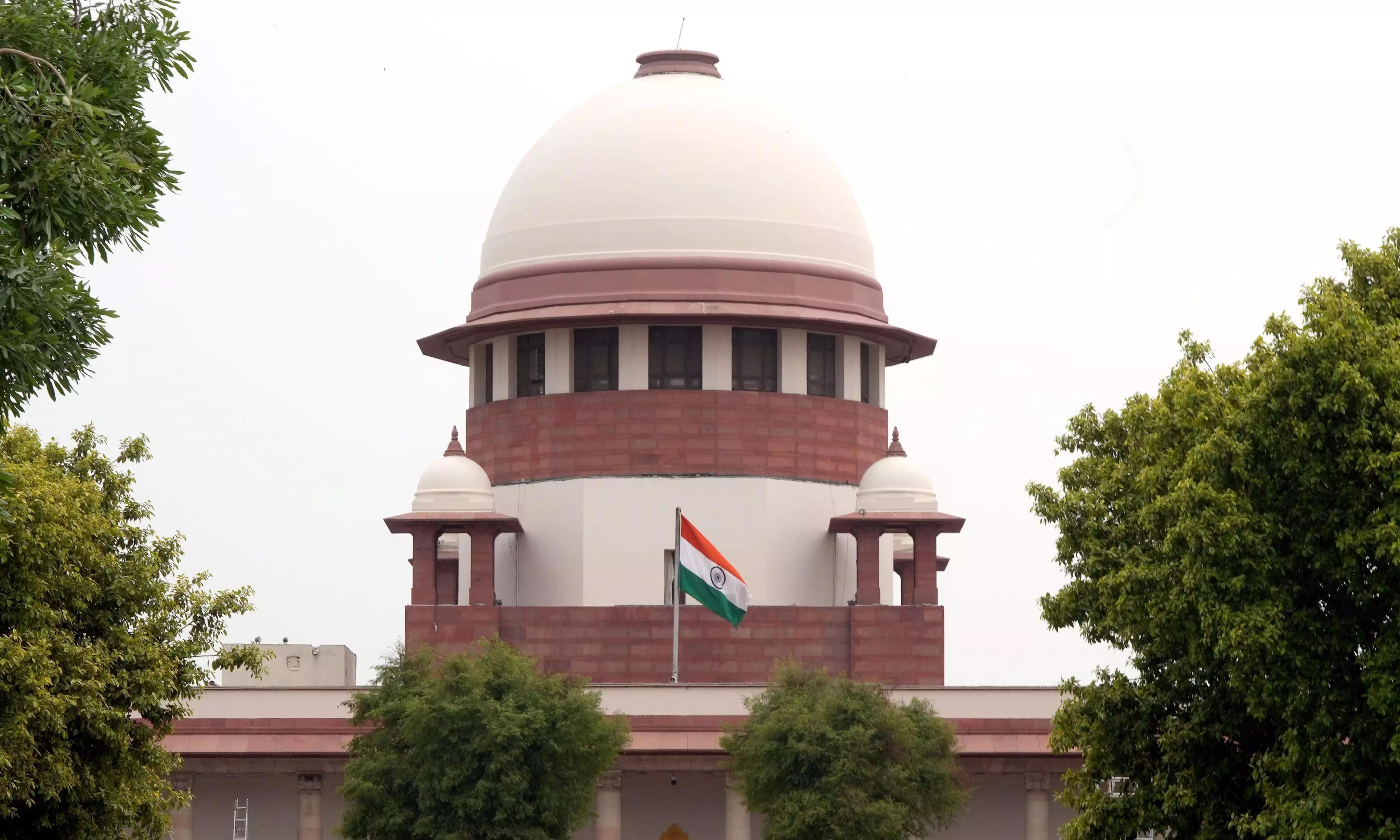
Supreme Court of India
Who Qualifies as SC?
- Hindu
- Sikh
- Buddhist
- No reservation benefits
- No SC/ST Act protection
- No statutory entitlements
- Constitution (SC) Order, 1950 – Clause 3
- Applies religion-based eligibility
- Binding across laws and benefits
NEW DELHI: The Supreme Court on Tuesday held that no person professing a religion other than Hinduism, Sikhism or Buddhism can be treated as a member of a Scheduled Caste (SC). The court also ruled that a person belonging to an SC community loses such status immediately upon conversion to another religion.
Upholding an order of the Andhra Pradesh High Court, a Bench of Justices Prashant Kumar Mishra and N.V. Anjaria observed that no statutory benefit, protection, reservation or entitlement under the Constitution or any law can be extended to a person who is not deemed to be a member of a Scheduled Caste under Clause 3 of the Constitution (Scheduled Castes) Order, 1950. The court said this bar is absolute and admits no exception, adding that a person cannot simultaneously profess a religion outside those specified in Clause 3 and claim SC status.
On April 30, 2025, the Andhra Pradesh High Court had held that once a person converts to Christianity and actively professes and practises the faith, he cannot be regarded as a member of a Scheduled Caste community. It further observed that the caste system is alien to Christianity and, therefore, such a person cannot invoke provisions of the Scheduled Castes and Scheduled Tribes (Prevention of Atrocities) Act.
The High Court had quashed charges filed by a complainant who had converted to Christianity but invoked the SC/ST (Prevention of Atrocities) Act in a criminal case.
Challenging the order, the complainant, a pastor, approached the Supreme Court.
The apex court noted that the 1950 Order clearly provides that conversion to a religion not specified in Clause 3 results in immediate loss of SC status, irrespective of birth, and reiterated that this bar is absolute.
The court observed that the petitioner had neither reconverted to his original religion nor been accepted back into his community. Instead, the evidence showed that he continued to profess Christianity and had been functioning as a pastor for over a decade, conducting regular Sunday prayers in the village.
It further noted that at the time of the alleged incident, he was conducting prayer meetings at a house in the village. These facts, the court said, clearly established that he continued to be a Christian at the relevant time.
The case arose from a complaint filed in 2021 by pastor Chinthada Anand against one Akkala Rami Reddy, alleging assault and abuse while he was conducting prayers in a village in Andhra Pradesh. The complainant had invoked provisions of the Indian Penal Code and the SC/ST (Prevention of Atrocities) Act, alleging that he and his family were assaulted, threatened and abused in the name of caste.
( Source : Deccan Chronicle )

Next Story