Historic Mandate: Amaravati Declared Andhra Pradesh’s Sole Capital

Education minister Nara Lokesh, along with Lok Sabha MPs and senior leaders, watched the proceedings from the visitors’ gallery. As the bill was passed, they expressed their delight with a round of applause.
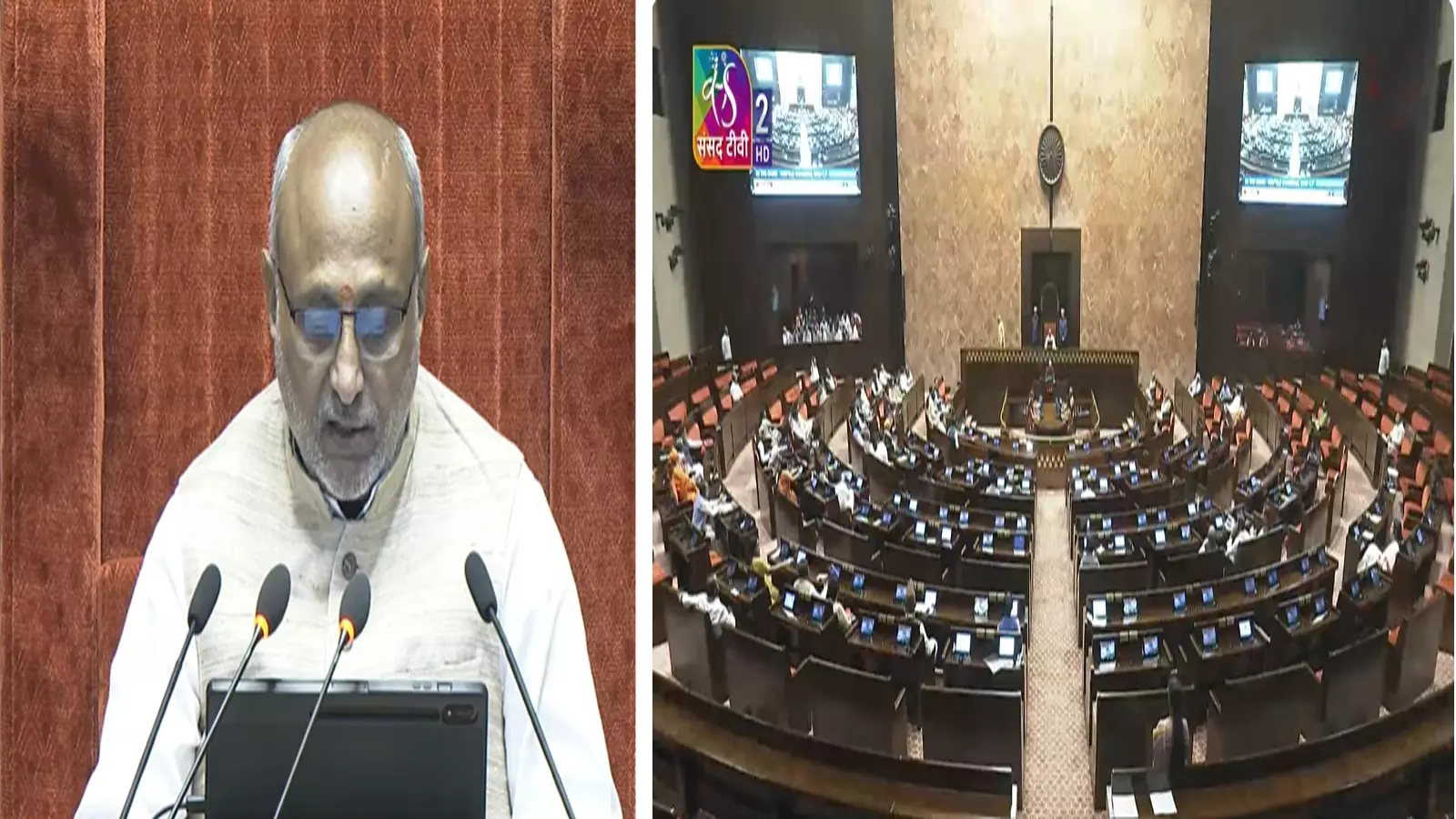
Vijayawada: In a landmark development, the Rajya Sabha on Thursday approved the Andhra Pradesh Reorganisation (Amendment) Bill, 2026, formally paving the way for Amaravati to be recognised as the sole and legitimate capital of Andhra Pradesh.
The passage of the bill, a day after it was cleared in the Lok Sabha, marks a decisive moment in the state’s post-bifurcation history.
Education minister Nara Lokesh, along with Lok Sabha MPs and senior leaders, watched the proceedings from the visitors’ gallery. As the bill was passed, they expressed their delight with a round of applause.
The bill, introduced by the central government, was passed by voice vote in the upper house amid brief disruptions. YSRC members stalled proceedings thrice before the legislation was tabled by minister of state for home, Nityanand Rai.
Despite the interruptions, the house proceeded to debate and adopt the bill, with several members terming it a “historic mandate” for the Telugu people.
With the Rajya Sabha’s approval, the bill will now be placed before the Union Cabinet for post facto ratification and then be sent to the President for assent. Once notified in the official gazette, Amaravati’s status as the state capital will receive full statutory backing.
Participating in the debate, Union minister Kinjarapu Ram Mohan Naidu described this as a happy end to long years of uncertainty. He noted that Amaravati, envisioned as a “people’s capital”, stands as a symbol of resilience. He highlighted the role of farmers and women, who led sustained campaigns in support of Amaravati’s full capital status.
He criticised the YSRC government’s three-capital proposal, alleging that it created confusion and deterred investments.
Emphasising the emotional and historical significance of Andhra Pradesh’s capital, Rajya Sabha member Sana Satish Babu described Amaravati as “the heartbeat of five crore Andhras”. Satish Babu said “Amaravati is not merely a city but a powerful symbol of the hopes and aspirations” of the state’s people. He highlighted the unprecedented sacrifice made by farmers, noting that nearly 29,000 agriculturists voluntarily pooled around 33,000 acres of land for the capital’s construction — a gesture he termed unparalleled in global history.
Honouring this sacrifice, he said, is a collective responsibility.
During the debate, Y.V. Subba Reddy of the YSRC raised several objections, alleging that the bill lacked clarity on key issues affecting farmers who had parted with their lands for the capital project. “There is no clarity in the bill on when plots will be allotted to capital region farmers. The government must specify timelines. The bill also makes no mention of special category status for Andhra Pradesh, which the ruling party has long forgotten,” he said.
Subba Reddy said his party would continue its struggle for special category status.
Following his remarks, members of the YSRC staged a walkout. A total of 17 members from 11 parties participated in the debate, with 10 parties extending support to Amaravati, barring the YSRC. The bill was passed in both houses without any amendments.
Union minister Nityanand Rai, replying to the debate, congratulated the people of Andhra Pradesh on securing a new capital in Amaravati. He expressed the hope that Amaravati would play a key role in achieving the goals of a developed India.
With unanimous consent from members present, Rajya Sabha chairman CP Radhakrishnan approved the bill. The house echoed with slogans of “Jai Amaravati” and “Jai Bharat.” The chairman also prayed for the prosperity of Amaravati and the people of Andhra Pradesh.
