Kozhikode Man Battles Nipah Virus as Kerala Remains on High Alert

The health authorities have begun preparing the patient’s route map by gathering information from his relatives, close acquaintances, and others in the area
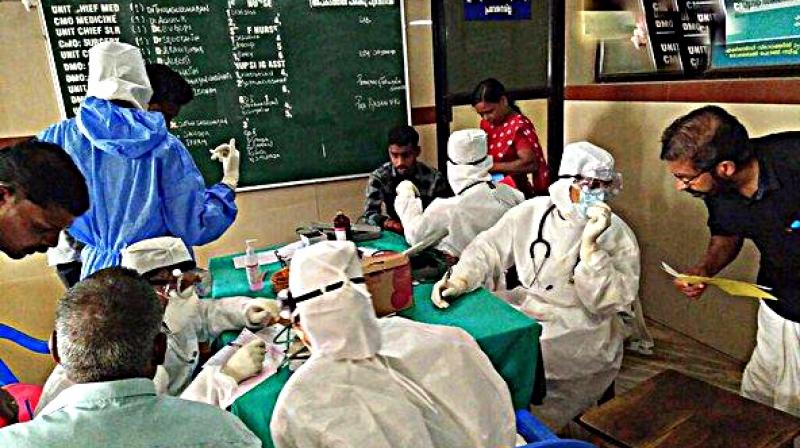
Kozhikode: The condition of the 43-year-old man being treated for a Nipah virus infection at Kozhikode Medical College Hospital remains critical, prompting state health authorities to issue an alert in the district.
He is currently in a designated isolation ward, with a team of doctors and nurses closely monitoring his status. Preliminary tests conducted at the hospital on Wednesday detected the virus, and samples have been sent to the National Institute of Virology (NIV) in Pune for confirmation. The final results are expected by Thursday.
Health authorities said the patient is on ventilatory support and under close monitoring. They suspect that the patient might have contracted the virus while doing cleaning work at a godown reportedly inhabited by birds and bats, which are considered potential carriers of the disease.
The district health authorities have begun preparing the patient’s route map by gathering information from his relatives, close acquaintances, and others in the area. Officials are also assessing details of people who might have come into contact with the patient at the de-addiction centre where he first sought treatment, as well as at the private hospital in Kozhikode city where he was later admitted.
Nipah symptoms and preventive measures
Medical experts note that symptoms include high fever, vomiting, nausea, headache, drowsiness, and fainting. These may last for 10 to 12 days, and the disease can become fatal if it progresses to encephalitis or brain fever (inflammation of the brain). The mortality rate among those infected can be as high as 74.5 percent.
The virus is transmitted from fruit bats to animals through bites, from animals to other animals via fluids, from bats to humans if fruits by bats are consumed, from animals to humans through body fluids, and from humans to humans through body fluids.
Preventive measures include avoiding fruits that have been bitten by birds or animals, washing hands thoroughly after contact with infected individuals, wearing masks and gloves when caring for patients, and not consuming toddy from areas with large bat populations.
The Nipah virus was first identified in 1998 in Kampung Sungai Nipah, Malaysia, during a brain fever outbreak that spread among workers in pig breeding centers.
Kerala On High Alert
