All Parties Accept Silent Voters Will Be X-Factor

Considered as the group which consciously avoids revealing its electoral preferences, the silent voters are often seen spoiling the prospects of many contestants in several constituencies.
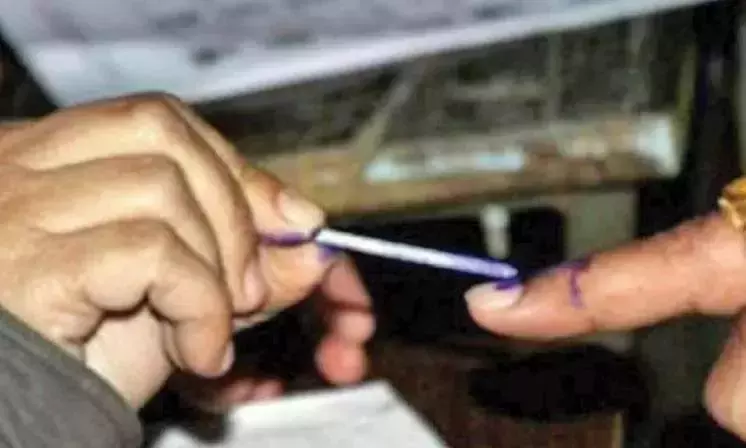
Chennai:As campaigns for the Assembly elections have reached their peak in the state, the silent voters, a less visible but potentially decisive group, have become a reason for keeping many candidates on edge across party lines. Considered as the group which consciously avoids revealing its electoral preferences, the silent voters are often seen spoiling the prospects of many contestants in several constituencies.
From the urban areas to rural segments, many voters are choosing discretion over disclosure, even in casual conversations. Unlike vocal supporters seen at rallies or on social media, these voters remain guarded, often deflecting questions about whom they intend to vote for.
“I listen to everything, but I don’t tell anyone my vote,” said M. Karunanidhi, a voter in Villivakkam constituency. “Even within my family, I keep it to myself. It’s better that way,” he said.
Such reluctance is not entirely new to elections, but analysts suggest its scale may be increasing in states like Tamil Nadu. Several factors appear to be at play that include rising political polarisation and growing awareness of privacy and social repercussions.
“There is a perception among some voters that expressing a political choice could invite judgment or conflict, especially in some communities,” said political analyst C. Sivakumar. “In other cases, it may reflect uncertainty or a late decision-making process.”
In residential colonies and apartment complexes, where discussions often mirror social affiliations, silence can sometimes signal discomfort. “People don’t want arguments,” said Vivek, a private professional in Porur. “So, they just say ‘let’s see’ and move on.”
Some observers believe that voters dissatisfied with the ruling Dravida Munnetra Kazhagam (DMK) government may prefer not to openly criticise it, particularly in environments where political leanings are assumed or socially-sensitive. Others argue that silence cuts both ways, masking support as much as dissent.
“It’s a mistake to assume all silent voters are against the ruling party,” said Sivakumar. “In fact, they are often the most unpredictable segment. Their decisions are shaped late and influenced by multiple factors: local candidates, last-minute campaigns, even personal experiences,” he added.
In rural and semi-urban belts, silence may also stem from a different dynamic. It comes as fear of being identified or targeted, especially in areas where political competition is intense. While overt coercion is rare, the perception of pressure can still influence how openly voters speak.
Election officials maintain that the secret ballot ensures complete freedom of choice. “Whatever discussions happen outside, the voting process itself is confidential and secure,” an official noted.
Political party functionaries, while publicly confident, acknowledge the challenge posed by silent voters in private conversations.
“Not every supporter speaks openly, especially in the urban areas. We believe many beneficiaries of our schemes are quietly backing us, even if they don’t express it in public. There will be 10 per cent of voters in this category. These sections are always the deciding factors. Psychologically, many of them are introverts. They won’t open up to strangers, even though they had a clear idea about which candidate to vote for,” observes K. Kannan, a DMK functionary in K.K. Nagar.
From the Opposition All India Anna Dravida Munnetra Kazhagam (AIADMK), a ward-level functionary offered a different interpretation: “There is definitely a section of voters who are unhappy but hesitant to speak out. This silent mood, in our assessment, reflects underlying anti-incumbency that may show up on polling day,” he said.
The AIADMK functionary also observed that the growing presence of silent voters adds a layer of unpredictability. “Whether their silence reflects hidden discontent or cautious support, or simple indecision, may only become clear when the ballots are counted,” he added.
A functionary from Tamilaga Vetri Kazhagam (TVK) said many voters who had preferred to be silent would support Vijay as they are fed up with traditional parties. Silence does not always mean dissatisfaction. It can also reflect careful evaluation. We believe a large section of these silent voters, especially the youth, are looking for credible alternatives, said the functionary.
Among younger voters too, silence is becoming a form of expression. Some see it as a way to avoid being boxed into ideological camps. “Everyone expects you to take a side publicly,” said Karthik, a college student. “But voting is personal. I don’t think I need to explain it to anyone.”
As polling day approaches, political parties are attempting to decode this quiet electorate through booth-level feedback and internal surveys. Yet, by their very nature, silent voters resist easy categorisation.
