While opinions differ, one thing is clear: AI is here to stay in the culinary world. From casual home cooks seeking a taste of nostalgia to commercial establishments striving to streamline operations, the technology offers endless possibilities. Whether it can ever perfectly mimic a mother’s touch or the flair of a seasoned chef is still up for debate.
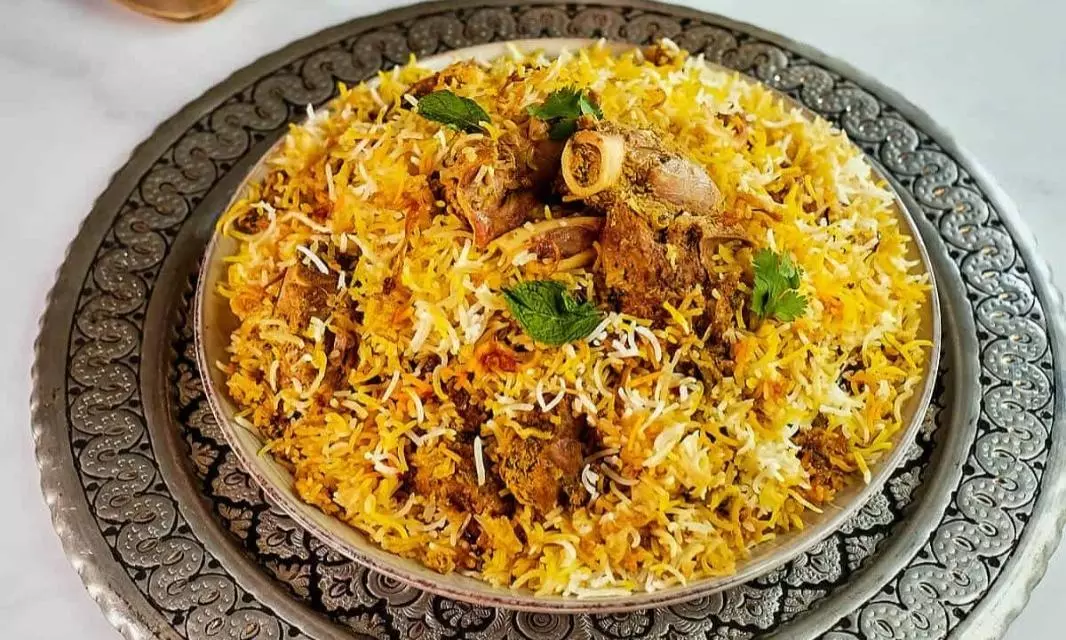
Hyderabad:In a city celebrated for its diverse cuisine — ranging from the trademark Hyderabadi biryani to traditional haleem and double ka meetha — artificial intelligence (AI) is quietly transforming how people cook. It’s a shift that promises to bring cherished tastes from halfway around the world, right into local kitchens.
But the question remains: if AI can’t “taste,” can it truly replicate the magic of a master chef or a mother’s home-cooked meals?
N.V. Pruthvidhar Raju, a school teacher based in South Carolina (USA) who recently visited Hyderabad, says he experimented with AI-generated instructions for recreating his mother’s recipes.
“They did not turn out to have the exact taste,” he admits, “but for someone like me — living far from home — AI is a boon. In the old days, we relied solely on grandma’s handwritten notes. Now, AI tailors dishes to specific dietary needs.”
Raju’s experience underscores a broader trend: technology is increasingly bridging gaps in culinary expertise, offering recipe customisations and step-by-step guidance for those who lack formal cooking skills or simply miss home-cooked comfort food.
Globally, there are an estimated 18,000 distinct dishes. With changing consumer preferences, restaurateurs are leveraging AI to analyse vast recipe databases and customer feedback, aiming to produce optimised menus that cater to evolving tastes.
M. Surya Narayana Reddy, managing director of a local software firm, is a self-professed early adopter of gadgets and apps. He says AI has “transformed the kitchen” through AI-powered cooking assistants that help with recipes, substitutions, and meal planning. Smart refrigerators track inventory, suggest recipes, and reduce waste. Robotic kitchen systems, like the Moley Robotic Kitchen, can prepare entire meals.
“AI can even perform nutritional analyses,” Narayana Reddy explains. “It can recommend healthier alternatives and measure ingredients with AI-integrated scales to help reduce waste.”
Hemanth Satyanarayana, founder and CEO of Imaginate XR, notes that AI-driven engineering and simulation software have been used for years in large-scale food manufacturing—such as confectioneries—to perfect product consistency. Now, this technology is available to everyday users.
“AI is data-driven,” he observes. “Even without ‘tasting,’ it can refine recipes based on global information. Each outcome may still differ slightly, but the aim is to reproduce a consistent dish, whether it’s haleem in Hyderabad or bunny chow in South Africa.”
In professional settings, however, AI faces a different set of obstacles. Akshay Kulkarni, head of department at a culinary institute with three decades of experience, points out the complexity of a busy commercial kitchen.
“AI might be more suitable for domestic kitchens. In high-end hotels, guests have varied demands and special orders. Still, with staffing shortages and changing attitudes toward work-life balance — new chefs don’t want 15-hour days anymore — AI could be a viable solution.”
Not everyone is convinced. Syed Samiullah Hussaini, a third-generation cook from Moinpura in the Old City, is part of a family that caters weddings using closely guarded heirloom recipes.
“We don’t know about AI,” he says. “The real taste lies in the hands of the cook. Some people have posted our recipes online, but at the end of the day, it’s about skill, intuition, and experience.”