Mercury Zooms 8.5°C in Just 6 Hours: Suryapet Sizzles at 45.48°C as Heatwave Grips Telangana

District-wise data showed that Nizamabad recorded the highest temperature in the state at 46°C, while Nalgonda, Nirmal and Siddipet also touched 45.9°C.
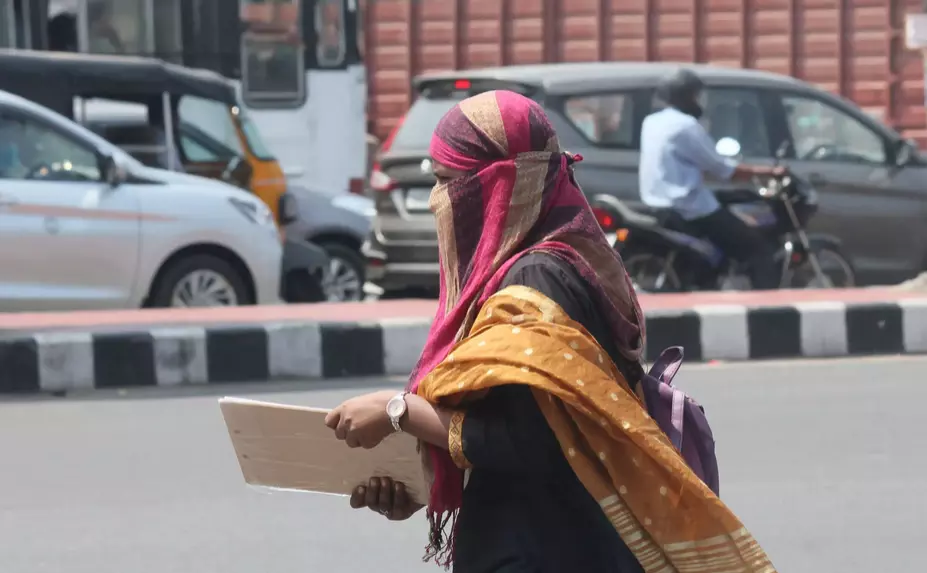
Hyderabad: In a matter of six hours, the mercury zoomed by a massive 8.5º Celsius in Suryapet district, showing the sheer intensity of summer heat. Till late night, the mercury was still lodged at a warm 28ºC, giving little respite for the residents.
Hourly data showed how quickly the heat built up at Munagala in Suryapet. It was already a warm 36.9°C at 9 am and the mercury rose to 42.8°C by noon. It crossed 44.6°C at 1 pm and peaked at 45.48°C around 3 pm.
The drop after sunset was gradual, with temperatures still around 33°C at 8 pm and above 28°C even past midnight.
A similar pattern was seen in the city. At Asifnagar, the temperature rose from 34°C at 9 am to 40.1°C by 1 pm, peaking at 42.4°C around 3 pm before easing slowly into the evening. Night temperatures remained high, staying close to 30°C.
In Begumpet (Medchal-Malkajgiri), the maximum temperature increased from 33.6°C at 9 am to nearly 40.5°C by 4 pm.
District-wise data showed that Nizamabad recorded the highest temperature in the state at 46°C, while Nalgonda, Nirmal and Siddipet also touched 45.9°C. Peddapalli and Adilabad were close behind at 45.8°C. Suryapet recorded 45.5°C, placing it among the hottest districts.
Heatwave conditions were officially observed in multiple mandals, including Antargaon and Peddapalle in Peddapalli district, and Garidepalle and Munagala in Suryapet, where temperatures crossed 45°C.
Within Hyderabad, several areas recorded highs between 42°C and 42.6°C, with Amberpet, Musheerabad and Chandrayangutta among the warmer pockets. The city’s average maximum stood at 41.8°C, with Himayatnagar touching 42.6°C.
Forecasts suggested a slight easing over the next three days, with maximum temperatures in Hyderabad expected to fall to around 39°C, though conditions will continue to remain in the alert category. The data showed a clear pattern of daytime spikes, prolonged evening heat, and limited night-time relief, keeping heat stress levels high across various districts and the city.
