The project will be constructed at a cost of Rs 700 crore in eight acres
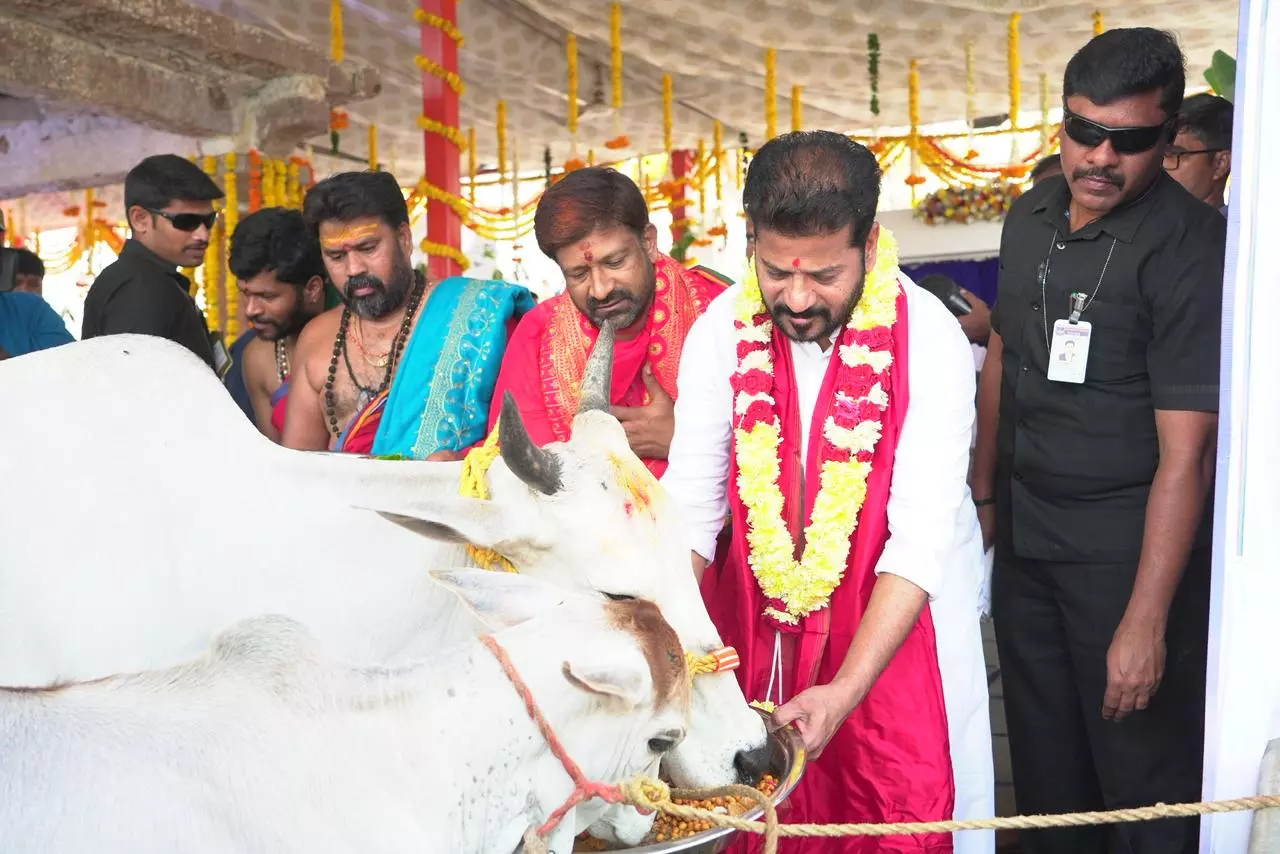
Hyderabad: Chief Minister A. Revanth Reddy announced that ‘Dakshina Kasi’ would be developed on the Musi banks by constructing Shiva temples as part of the ambitious Musi river rejuvenation project. The initiative would restore both spiritual and ecological significance to the region, he said.
Speakin after laying the foundation stones for the Omkareshwara Swamy and Veerabhadra Swamy temples at Manchirevula on Saturday, the Chief Minister described the occasion as historic and said the temples would be developed over an eight-acre site at a cost of ₹700 crore. “With the divine blessings of Lord Shiva, we have begun the construction of these renowned today,” he said.
Revanth Reddy vowed that the government would complete the Musi project despite the hurdles being created by Opposition parties. He remarked that people would symbolically “perform Shiva Tandavam” against those obstructing development. Emphasising religious harmony, he announced that a mosque and a church would also be constructed in the Musi catchment area at Nagole, calling it a testament to the government’s sincerity and commitment to the people.
Highlighting the region’s rich heritage spanning over 1,400 years, the Chief Minister said the government had taken up the responsibility of preserving its history for future generations. He noted that several previous governments had attempted to revive the Musi river but failed, adding that his government considered it a privilege to undertake the riverfront development and expressed hope that all obstacles would be overcome.
The Chief Minister also appreciated public representatives from the Musi region for extending support beyond political lines, while sharply criticising certain leaders for opposing the project. Referring to a case filed in the National Green Tribunal, he questioned whether those hindering development had the moral authority to serve as public representatives and urged them to withdraw the petition.
Reiterating the government’s commitment to fulfilling people’s aspirations, Revanth Reddy observed that civilisations flourished along river basins and economic growth thrived along coastlines. As Telangana is a landlocked state, he said the objective of the project was to rejuvenate the polluted Musi and Esa rivers, which had turned into dump yards due to human negligence.
Warning that Hyderabad’s historical legacy was under threat, he said rising pollution levels in the Musi had severely impacted public health, particularly in Nalgonda district. Drawing parallels with pollution challenges in major cities like Delhi, he stressed the need to act decisively on air and water pollution and accused Opposition parties of obstructing such efforts.
Revanth Reddy further revealed plans to divert Godavari waters to ensure perennial flow in the Musi. “Work to divert 20 tmc ft of Godavari waters began eight months ago. This will ensure year-round flow in the Musi, provide drinking water to Hyderabad and release 2.30 tmc ft each into Osmansagar and Himayatsagar,” he said, adding emphatically, “Come what may, this project will be completed. This is our vow. This is our Shiva Diksha.”
The government has set up a Cabinet sub-committee chaired by Deputy Chief Minister Mallu Bhatti Vikramarka, and ministers Duddilla Sridhar Babu and Ponnam Prabhakar as members, to oversee the planning, coordination and execution of the Musi river rejuvenation project. Musi River Development Corporation Limited (MRDCL) managing director E.V. Narsimha Reddy will be the convene.
The order issued by the general administration (Cabinet) department said the government had accorded high priority to the “comprehensive development, rejuvenation and management of the Musi river, with a view to ensuring ecological restoration, flood management, urban transformation and sustainable development of the riverfront.”
The order laid out a wide mandate for the panel, stating that it would provide overall policy direction and strategic guidance for the Musi rejuvenation and review progress across components such as river cleaning, sewage management, flood mitigation and riverfront works. The committee would also facilitate coordination among departments and agencies and addressing issues related to land matters, rehabilitation and financing.
The district collectors of Hyderabad, Rangareddy and Medchal-Malkajgiri, along with commissioners of Greater Hyderabad, Cyberabad and Malkajgiri municipal corporations have been asked to attend meetings as required. The HMWS&SB managing director will also be invited. The order allows other officials to be called based on need.
The committee meet periodically and the convener has been asked to monitor follow-up action on decisions taken.