Opposes using population alone for increasing seats
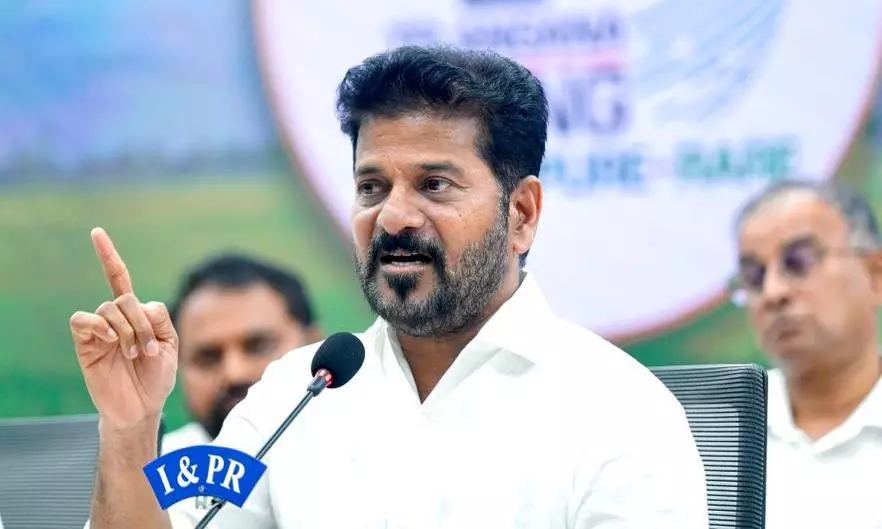
Chief Minister Revanth Reddy points out Centre is planning to increase the existing 543 Lok Sabha seats by 50 per cent, adding 272 seats.
If the increase was carried out on a pro-rata basis, LS seats in southern states would rise from 130 to 195.
In the northern states, 413 seats at present would increase to 621.
The difference would rise to 208 seats.
Delimitation was carried out thrice in the past, with the Lok Sabha seats increased to 520 in 1967, 542 in 1976, and 543 with the addition of a seat for Sikkim.
Southern states effectively implemented family planning measures, resulting in lower population growth, unlike in the north
Then-PM Minister Indira Gandhi imposed a freeze on seat redistribution for 25 years to maintain regional balance and prevent population-based disparities.
Constitutional amendment introduced in 2001 under then-Prime Minister Atal Behari Vajpayee extended the freeze on delimitation until 2026.
As a result, in 2009, Telangana was allocated 17 Lok Sabha seats and Andhra Pradesh 25 seats.
Gap between Kerala (20 seats) and Uttar Pradesh (80 seats) currently 60 seats, it would widen to 90 seats. Kerala seats will rise to 30, Uttar Pradesh to 120.
Gap between Telangana and Uttar Pradesh will widen to 94 seats.
Southern states with 130 seats, would have 195, non-southern states with 413 seats will go up to 621.
Smaller northern states such as Punjab and those in the Northeast could also lose political relevance.
Hyderabad: Chief Minister A. Revanth Reddy on Monday proposed a "hybrid model" for the upcoming delimitation of Lok Sabha seats, suggesting that 50 per cent of the increase be allocated on a pro-rata basis and the remaining 50 per cent could be based on each state's Gross State Domestic Product (GSDP).
Revanth Reddy cautioned that relying solely on the population — as per the Census 2011 — as the criterion for increasing Lok Sabha seats would create major inequalities between southern and northern states, which he warned could lead to a "major disaster" in the long term.
Terming the proposed delimitation of constituencies by the BJP-led Union government as a "dangerous move," Revanth Reddy reiterated that a blanket 50 per cent increase in Lok Sabha seats as the sole criterion would disproportionately benefit northern states and risk undermining national integrity by leaving southern states feeling marginalised in their own country.
Revanth Reddy made it clear that the Congress was in favour of the women's quota, but against the delimitation formula of a 50 per cent blanket hike in the Lok Sabha seats solely based on population. He said the Centre should wait for data from the Census 2027, hold consultations with all stakeholders before implementing new delimitation for the 2029 general elections.
Addressing a press conference at the Secretariat on the issue of reservations for women and delimitation of constituencies and enhancement of seats in Lok Sabha and Legislative Assemblies, the Elaborating on his hybrid model, Revanth Reddy suggested that economic performance data from the past 10 to 25 years be considered to determine seat allocation based on states' contributions to the national economy through GSDP, alongside the 50 per cent pro-rata increase.
Drawing a parallel with the Supreme Court's cap of 50 per cent on reservations, he argued that a similar principle could be applied in the allocation of Lok Sabha seats. "When 50 per cent reservation is given on merit, why can't it be replicated in increasing Lok Sabha seats to reward states based on their contribution to the nation's economy," he asked.
He said while southern states had emerged as 'economic capitals', northern states have emerged as 'political capitals'. Political capitals will completely dominate economic capitals in the new delimitation model; not only southern states, but even smaller states will also become "politically irrelevant". He said northern states will decide which party should come to power, and southern states will have no role.
The Chief Minister remarked that southern states, being major contributors to India's economy, were "tired of paying taxes and then saying 'salaam' in Delhi." He also proposed that southern states be given increased Lok Sabha representation as a special case, similar to the consideration extended to northeastern states and Union Territories, where seat allocation is not strictly based on population.
"Reward the southern states for their contribution to the country's economy. We will not agree to losing out politically and being marginalised while continuously contributing to the nation's growth. This is not a BJP issue, but an issue concerning all political parties and the people," he said.
He emphasised that southern states had expressed strong opposition to population-based redistribution and have conveyed their concerns to Prime Minister Narendra Modi, making it clear that they would not accept such a formula. "Only after we opposed it, they are now talking about a pro-rata approach and proposing a 50 per cent increase in seats," he remarked.
Calling for a broad-based consultative process, he demanded an all-party meeting, expert committee review, and discussions in all state Assemblies before any final decision is taken in Parliament. "This is not merely a political issue; it concerns the future and unity of the country," he said.
Criticising Union ministers G. Kishan Reddy and Bandi Sanjay, the Chief Minister said that even they would lose relevance in the new arrangement, as a few populous northern states would dominate national politics. He alleged that the BJP did not prioritise southern states and pointed out that since Narendra Modi became Prime Minister, key portfolios had not been allocated to BJP MPs from the south, unlike during the Vajpayee era.
He demanded that the Centre undertake delimitation and enhancement of Lok Sabha constituencies only after consulting all political parties, all state governments, civil society organisations and all other stakeholders before enacting legislation. He said the Centre should take the opinion of all stakeholders, debate the same in Parliament and then finalise the bills on delimitation for enacting legislation.