Urban growth, food waste, and fewer predators fuel rising snake encounters
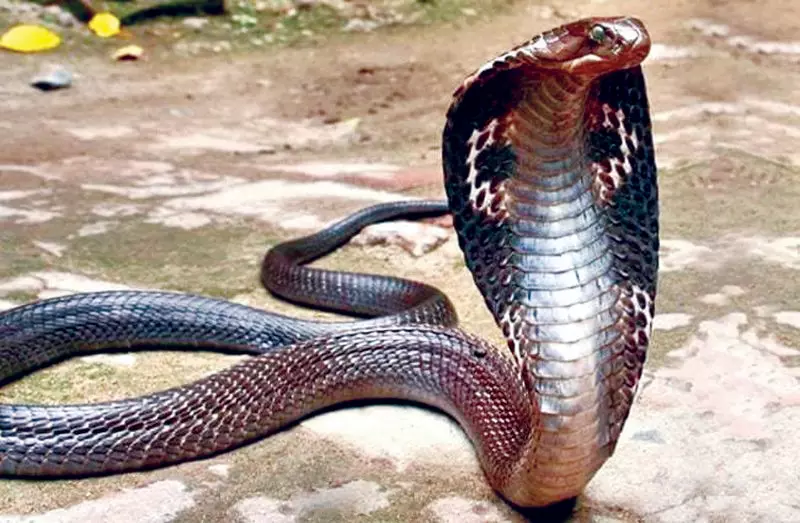
Hyderabad: The city may be on the cusp of discovering a slithery challenge with a study on snakes in the state capital finding that the population of spectacled cobras has been on the rise.
The study, which analysed snake rescues between 2013 and 2022, found that the most commonly encountered snake was the oriental rat snake, which comprised 13 per cent of all snakes caught by rescuers in 2013. By 2022, the rat snake rescues fell to 24 per cent.
The number of cobras, which accounted for 42 per cent of rescued snakes in 2013, rose to 48 per cent in 2022, according to the study, ‘Urban snake ecology revealed through the lens of decadal data on snake rescues in a megacity’, published in the latest volume of the journal, ‘Global Ecology and Conservation’.
The principal author of the study, Avinash C Visvanathan from the Friends of Snakes Society, said “urban landscapes are constantly evolving, becoming conducive for certain species. It is clear from our study that cobras are thriving, while other species may be dwindling.”
“There is a need for increased awareness about snakes, and amidst the changing landscape, we have to ensure greenery and ecological islands,” Avinash said.
One of the reasons why “snakes are thriving” in Hyderabad is the city offers conditions which otherwise do not exist in the natural environment.
According to senior wildlife researchers and scientists, the city offers enough places for the snakes to be in, for instance, drains and crevices. “And then there is the food. There is enough food that is discarded that has resulted in a thriving rodent population, and when snakes, like any other species when food is found in abundance, tend to rise in numbers,” a wildlife researcher said.
One of the biggest factors for snakes to thrive in the city environment is the absence of its natural predators. “We don’t have birds like the crested serpent eagle, or other creatures that feed on snakes. When natural predation is absent, populations of a species not facing this threat will thrive,” he said.
Advocating, “truce with the snakes,” he said, people will have to accept snakes as co-inhabitants of the city rather than consider them as extraneous to urban environments. And catching them in one place and releasing them elsewhere will not really serve the purpose because for every snake caught, there are several others living in the same area which are not just seen, he explained.