Dhoni Not the Only Reason Behind CSK’s Debacle

One of the biggest reasons behind CSK’s decline has been their delayed transition from an ageing core.
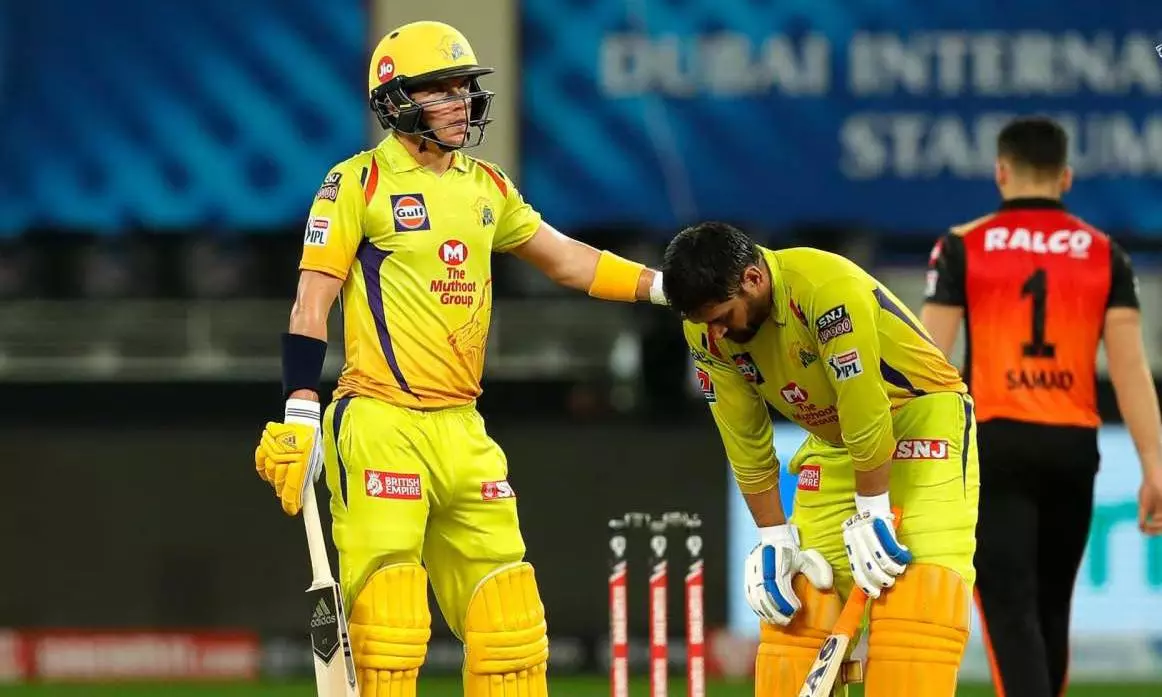
While much of the criticism surrounding Chennai Super Kings’s struggles in recent seasons has been directed towards MS Dhoni and the franchise’s continued dependence on him, the team’s decline since their 2023 title triumph runs far deeper than one individual. From an aging core and inconsistent auction decisions to tactical stagnation and the failure to adapt to modern T20 cricket, several long-term structural issues have contributed to CSK gradually losing the dominance that once made them one of the IPL’s most feared sides.
CSK in decline since 2023
When Chennai Super Kings lifted their fifth IPL title in 2023, it once again reinforced the franchise’s reputation as the most consistent side in IPL history. Built on experience, composure, and trust in proven players, CSK had mastered the art of winning under pressure. However, the seasons that followed gradually exposed cracks within the system. What initially appeared to be a temporary dip slowly developed into a larger issue, as the franchise struggled to evolve alongside the changing demands of modern T20 cricket.
Failure to transition beyond aging core
One of the biggest reasons behind CSK’s decline has been their delayed transition from an aging core. For years, the franchise successfully relied on experienced players who understood pressure situations and fit perfectly into the team’s culture. But as T20 cricket became faster and more aggressive, the lack of younger, high-intensity players began affecting the side. Teams across the IPL started building athletic squads with young players capable of explosive batting and sharp fielding, while CSK often appeared slower in comparison. Their reluctance to move away from senior names created an imbalance between experience and energy.
Inconsistent auction strategy, squad building
CSK’s squad planning after 2023 also failed to deliver the same success it once did. Several auction picks did not provide long-term impact, while the team struggled to build a dependable bench strength. Injuries and poor form exposed the lack of reliable backups, especially in the pace-bowling and finishing departments. Unlike previous years, where every player had a clearly defined role, the team often looked unsettled and uncertain with combinations. Frequent changes in the playing XI further disrupted consistency.
Tactics falling behind modern T20 cricket
Another major issue has been CSK’s inability to fully adapt to the evolution of T20 cricket. Modern IPL teams now focus heavily on aggressive powerplay batting and maintaining high scoring rates throughout the innings. In contrast, CSK often continued with the old-school cricket and a more cautious approach built around preserving wickets and accelerating later. While that strategy had brought success in the past, the current IPL environment rewards fearless batting from the beginning. As teams regularly crossed massive totals, CSK’s batting approach at times appeared outdated and reactive rather than proactive.
Overdependence on MS Dhoni
The continued dependence on MS Dhoni has also played a significant role in the franchise’s complicated transition period. Even in the later stages of his career, Dhoni remained the emotional and tactical center of the side. While his presence brought calmness and experience, it also made it difficult for CSK to fully move into a new era. Leadership transition remained uncertain, and the franchise often appeared emotionally tied to its past identity rather than preparing aggressively for the future.
Decline in bowling effectiveness
Bowling, once one of CSK’s biggest strengths, gradually became another concern after 2023. The team lacked a consistently dominant death-bowling unit, often leaking runs during crucial stages of matches. Their spin-heavy approach, which worked brilliantly at Chepauk, became less effective on flatter pitches away from home. Without enough wicket-taking fast bowlers, CSK frequently struggled to control games when opposition batters attacked aggressively.
Reduced home advantage
For years, Chepauk was considered one of the toughest venues for visiting teams because CSK built their squad perfectly around those conditions. However, as batting standards improved across the league and teams became more adaptable against spin, that advantage slowly reduced. Away from home, CSK looked even more vulnerable, exposing how heavily their strategy depended on familiar surfaces.
Despite the struggles of recent seasons, writing off Chennai Super Kings would still be premature. The franchise remains one of the most successful teams in IPL history and continues to possess a strong cricketing culture. However, the years following their 2023 title victory have clearly shown that experience and legacy alone are no longer enough in modern day T20 cricket. If Chennai Super Kings hope to return to their dominant best, the franchise may now need to embrace a genuine rebuild and a bold generational shift rather than continue relying on past formulas.
This article is written by Divya Sharma, a student of Kristu Jayanti Deemed to be University, interning with Deccan Chronicle.
