A Death that Exposes Fashion’s Dark Side

A young model is dead, and the fashion industry is forced to address a question it has long ignored: how much risk is considered acceptable in the pursuit of the perfect shot? Divyanshu Joshi’s drowning during a location recce in Kerala has exposed concerns about lack of safety standards, insurance cover and accountability in the fashion industry
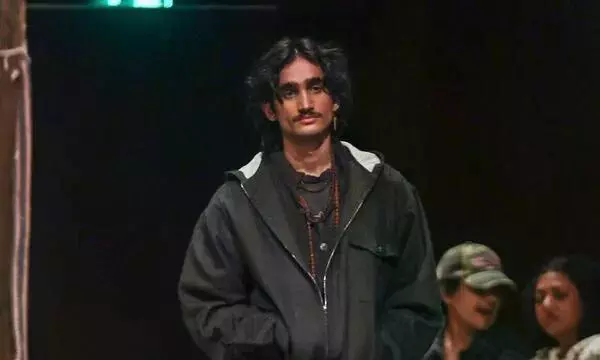
The death of 26-year-old Delhi-based model Divyanshu Joshi has sparked a conversation about safety practices in the fashion industry. Reportedly, Joshi drowned while scouting a location in Kerala ahead of an advertising shoot for fashion label Kartik Research, where he had previously worked as a retail manager. The accident happened at Pettamala, an abandoned stone quarry known locally for its scenic beauty but also for its dangerously deep waters and history of fatal accidents, setting off a debate about the risks models and production crews routinely face while working in remote locations and challenging conditions.
It’s not so glam BTS
Fashion may look glamorous from the outside, but it demands long hours, physical endurance, and constant self-maintenance. Many models are still not paid in proportion to the effort the job requires. Amit adds, “One area that needs urgent attention is model welfare. There should be greater emphasis on formal contracts, insurance coverage, and strict compliance with safety protocols. Secondly, if the shoot is cancelled or delayed, the models should be informed well in time. I also believe companies should augment the pay structure.”
The larger issue is that pay and working conditions in the Indian fashion industry have barely evolved. Most models still earn between `10,000 and `16,000 per assignment, while a handful get upwards of `40,000.
Internationally, even rookie models often earn significantly more and are treated more professionally. Runway model Veer Singh says, “Globally, there are dedicated casting agencies, better infrastructure, clear processes, and a stronger focus on talent rather than networking or social circles. In India, models often work long hours without proper facilities, and rarely receive insurance or adequate safety measures on location shoots. I’ve worked at heritage sites where poor conditions caused nausea and dizziness, but the expectation was to finish the job regardless. Brands will spend crores on celebrity endorsements, yet many top models struggle to earn a sustainable living.”
No structure, no checks
Today, freelance artistes often come together under a production house that organizes them within limited budgets and tight timelines. Though in most cases producers ensure the necessary permissions are obtained and operational precautions taken, these shoots are often not as extensively structured as large-scale celebrity shoots, where dedicated safety protocols and risk management systems are standard practice.
Divyanshu Joshi’s untimely demise highlights the need for the industry to strengthen its approach towards artiste welfare and on-set safety, emphasises Rahul N. Bawankule, founder of aaRBee Talents, Creatives & Production. He says, “Given the evolving nature of production environments and the risks associated with certain locations and activities, it is time for the industry to seriously consider insurance and safety protection mechanisms for all artistes involved. As an agency, we suggest establishing a new framework that mandates adequate safety, health, security, and emergency preparedness measures for every shoot.”
Meanwhile, former model and eco-advocate Jasmine Dawda, feels there are many facts missing in the story, as the incident did not occur during the shoot. She says, “Regrettably, this incident resulted from a lapse in safety precautions and the absence of warning signage in the vicinity. At times, individuals underestimate the importance of local regulations and personal safety, which can lead to tragic incidents. If both parties assume responsibility for prioritizing safety, the industry can prevent such tragedies from occurring in future.”
Lack of basic welfare
Most models in India are not covered by insurance through brands, and safe transportation, especially for women after late-night shoots, is often overlooked. A model’s safety should remain a priority even after the cameras stop rolling, stresses supermodel and actor Amit Ranjan, Founder-of Ar productions. He adds, “In my experience, the biggest difference between many Indian and Western brands is preparation and professionalism. International productions are typically more structured, with clear communication, defined roles, and a genuine focus on creating a comfortable working environment. In India, last-minute changes, delayed schedules, and poor coordination are still fairly common.”
There is a stark contrast between what brands expect from models and how they treat them. Models are expected to maintain six-pack abs, flawless skin, healthy hair, and be camera-ready at all times; yet basic considerations like quality food, hygiene, comfort, and mental well-being are often ignored, remarks model Veer Singh, who has worked with top Indian and global campaigns.
Wake-up call
Final contracts often lack details on insurance and medical health emergencies for models and crew members. Designer Gautam Gupta of the fashion label Asha Gautam, shares, “As far as the [Divyanshu Joshi] incident goes it is very unfortunate. Since the matter is under investigation it will be unfair for me to comment on specifics without knowing the facts. However, as a designer, it is a wake-up call for me to be more judicious in future. Creativity aside, we have to re-think the way we work and plan things. We have been conscious and implemented precautionary measures while working, but we surely have to do much more to avoid mishaps.”
Tragic tale:
· Drowning while filming: According to authorities, model Divyanshu slipped into a deep spiral-pyramid section of the quarry while being filmed. Rescue teams later recovered his body from a depth of around 30 feet.
· Lack of permissions: Local authorities confirmed that the mandatory administrative permissions required to enter and film at the quarry had not been obtained before the shoot took place.
· Rescue efforts: In a statement, Kartik Research said founder Kartik Kumra entered the water in an attempt to locate Divyanshu but was unsuccessful, following which emergency rescue services were contacted.
· A video purportedly showing the drowning has since been circulating on social media.
