From lungis to modern streetwear, anti-fashion movements are proclaiming a return to forgotten identities and sustainable local styles
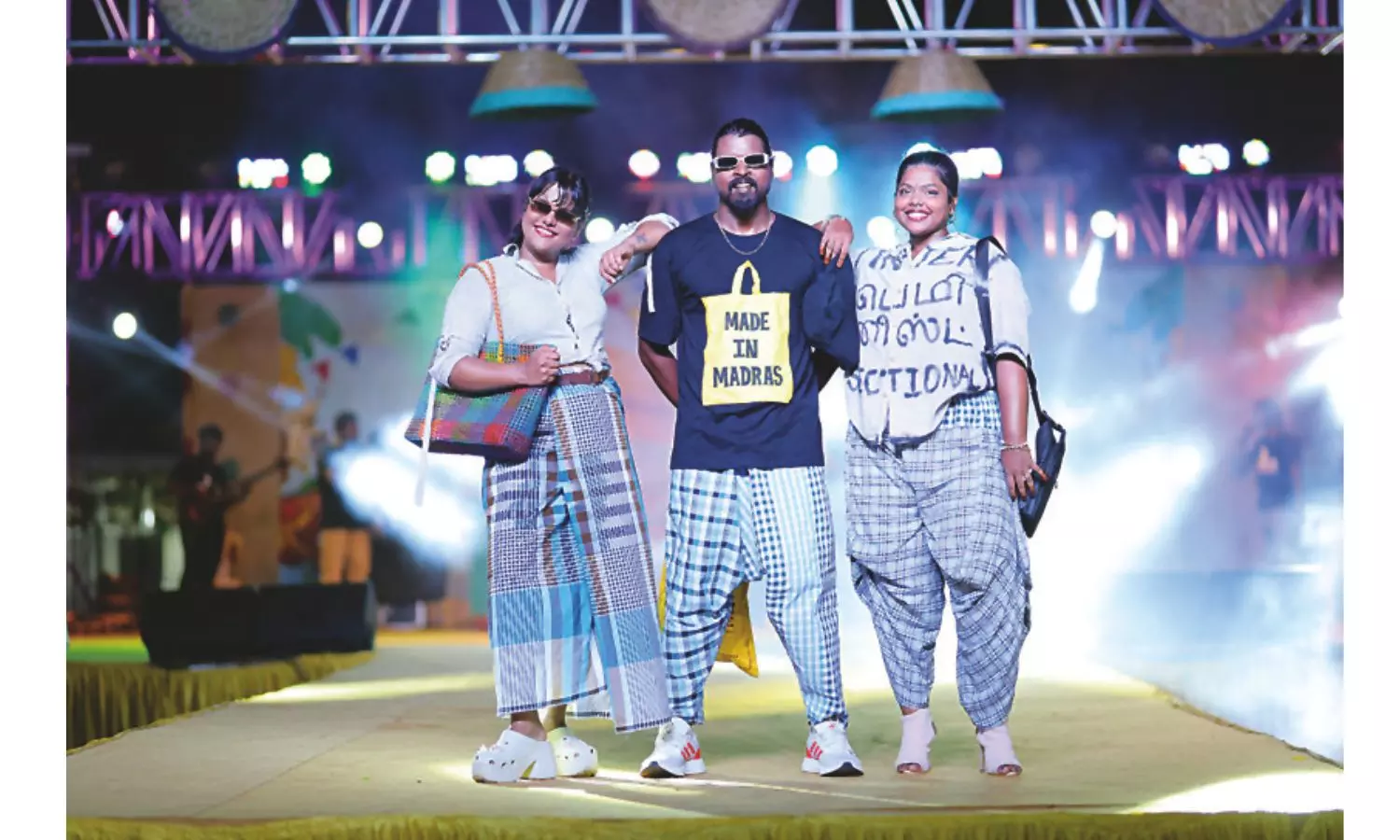
They say fashion labels are for clothes, not people. Many youngsters are opting out of fashion trend cycles and embracing ‘anti-fashion’ styles that don’t cost the earth. A lungi styled with sneakers, chunky T-shirts and old handloom fabrics is increasingly becoming the new fashion language. Garments once dismissed as ‘outdated’ and ‘ordinary’ are recurring through reinterpretation and reimagination. Indian street fashion is beginning to look different now. Tired of fast fashion, young Indians are donning clothes that feel culturally rooted and reject mainstream fashion.
The Anti-Fashion Movement
Challenging the ideas of modernity, identity and class, the growing anti-fashion sentiment is redefining how fashion unfolds in contemporary India. Shakti Shukla, a sociologist, says, “Anti-fashion movements in India are a form of cultural and economic resistance against the globalised and trend-driven fashion.” She looks at it as a “decolonial practice” and adds, “It is the shift of power of definition away from the Eurocentric fashion towards local ecosystems.”
Working-Class Clothes
For decades, Indian fashion has been largely shaped by Western aesthetics. Where looking fashionable meant distancing oneself from local working-class clothing. Indian handloom textiles and local garments started being associated with rurality and labour. In the process, the styling culture became tied up with aspiration, where ideas of modernity and social mobility grew deeply intertwined with Western silhouettes and global trends.
Fashion As Negotiation
For long, fashion in India has extended beyond aesthetics and functioned as a marker of social acceptance. It has existed as a negotiation between aspiration and authenticity. In the process, Indian garments increasingly became equated with informality, while mainstream fashion continues to dictate ideas of sophistication, modernity, mobility and social hierarchy. RV Puruso-thaman, Creative Director, Purushu Arie, says,” A lot of people are dressing not only for self-expression but for negotiation. Negotiation with workplaces, with class expectations, with ideas of sophistication, and with what is considered modern.”
This reflects the relationship between fashion and social acceptance. The power to define fashion has historically been an urban dominance, pushing regional clothing to the margins. As a result, creativity and originality themselves become limited. The constant pressure to align with the mainstream can at times take away the designer's ability to experiment freely. Thereby, fashion increasingly becomes trend-driven and is shaped by consumerism.
Stigma To Selfhood
Purusothaman recalls an incident from the time he was working in Tiruppur and says, “I stayed at a hotel where they had a sign saying: ‘Do not wear lungi in hotel premises to avoid indecency to guests.’ That was one of the earliest real-life incidents that made me consciously aware of how our clothing norms are coded with caste and class-based stigma.”
Wear The Change
Young people are no longer dressing to fit into the global narrative. They are embracing the traditional and culturally rooted clothing to be seen on their own terms. Krish Hariyani, a fashion stylist, says, “People want to dress in a way that actually reflects who they are instead of just following the crowd.” In this sense, anti-fashion becomes a rejection of who holds the power to define it. The dominance of the mainstream is now eventually fading as people choose identity, individuality and expression over consumption and trend cycles.
Wardrobe Rebellions
Indian anti-fashion influencers and labels, through their styling of ordinary clothing, are subtly transforming how India defines fashion. Many brands and designers are encouraging culturally rooted and traditional clothing. They are turning resistance into everyday clothing choices.
Beyond class, gender, and economics play a crucial role in creating discrimination within fashion borders. Ideas of masculine and feminine continue to heavily shape the fashion industry, often reinforcing gender biases. Recounting his days at NIFT, Purusothaman says, “The mens-wear section had the same boring stripes and checks back then. That's when I first shopped for a few outerwear jackets from the women's section, which fit me.”
Further reflecting on the experience, he adds, “I later borrowed a pair of pegged trousers from my female friend. They fit me perfectly. However, I could never slip my phone into the trouser pockets. The pockets were very small and uncomfortable.” Puruso-thaman’s experience extends beyond personal styling and reveals how structured the gendered fashion industry continues to be. Jeans pockets which fit essentials are no less than a luxury within women’s wear, whereas design and experimentation feel limited in menswear, despite offering comfort.
In many ways, anti-fashion today reflects a larger cultural shift centred around reclaiming the long-lost identity and embracing traditions with grace. Hariyani says, “Anti-fashion has created more space for regional textiles, local art forms and culturally rooted dressing.” With growing awareness, people are now turning to clothing that feels more personal and less of a global uniform.
Just Be Yourself
As Purusothaman says, “The best garments are the ones that quietly disappear into the person’s day while still allowing them to feel themselves fully.” A quiet transformation has begun to take shape, where people are wearing their freedom and stitching clothing with memory and individuality, turning every piece into something valuable.
This shift is now not just confined to local streets but is finding space on global platforms. “Today, we are seeing Indian outfits and traditional work being represented on global platforms like Cannes and the Met Gala, which is amazing,” says Hariyani. The recent conversations around Kolhapuri chappals and cultural ownership reflect the growing value of indigenous craftsmanship. What was once overlooked is today being worn with pride and a sense of belonging.