PM Modi’s appeal asking Indians to avoid buying gold for a year has sparked concern among women who still see gold as their safest form of savings. Experts say the issue goes beyond jewellery, touching oil prices, forex reserves, dollar outflow, and pressure on the rupee
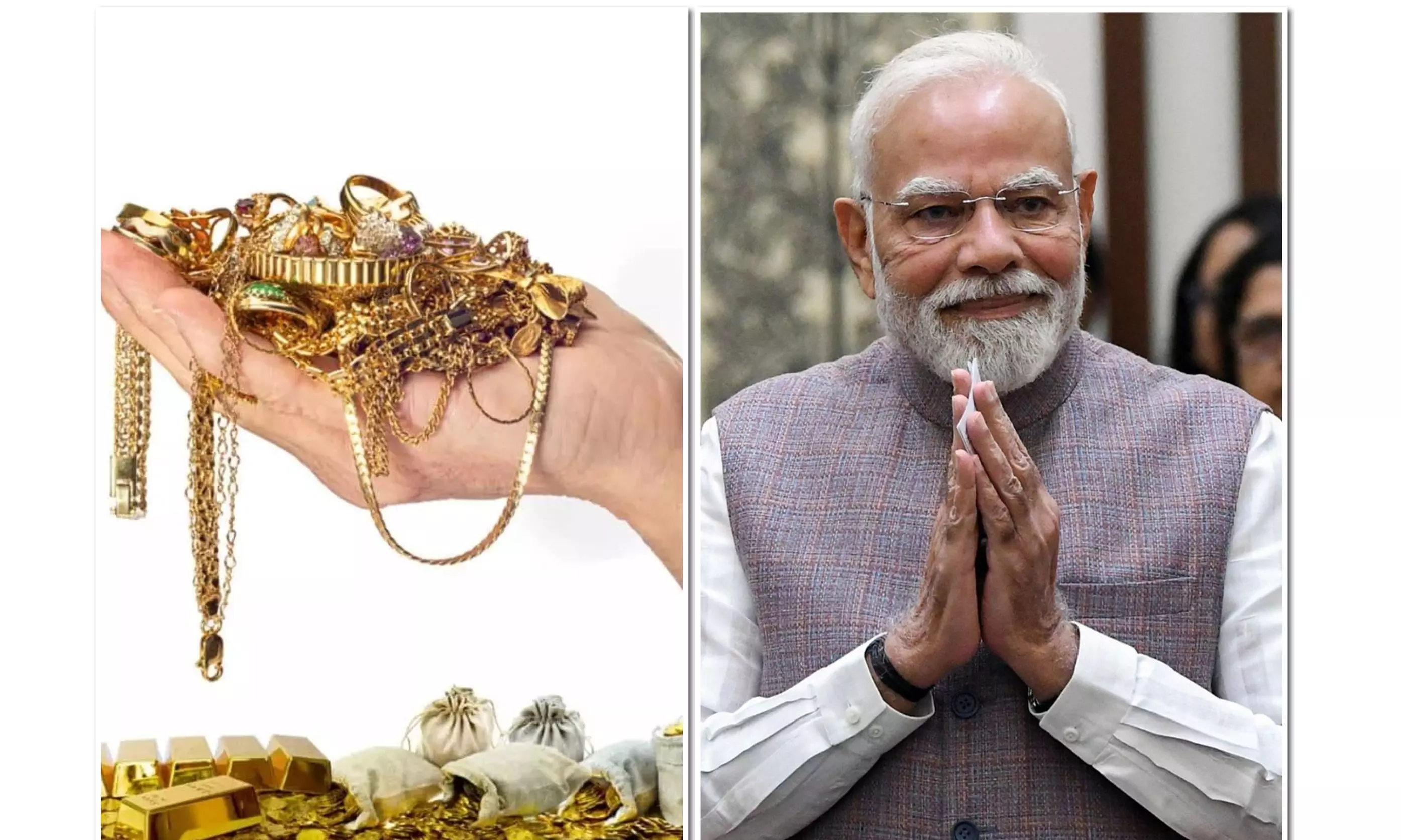
India’s relationship with gold goes far beyond jewellery. It symbolises security, tradition, and emotional wealth. Which is why Prime Minister Narendra Modi’s appeal asking citizens to avoid buying gold for a year has raised a larger question: why is the government suddenly worried about gold purchases? Experts point to rising oil prices, global uncertainty, and pressure on India’s forex reserves.
Oil, gold and the dollar drain
India imports massive quantities of both crude oil and gold, creating heavy dollar outflow. When oil prices rise amid Middle East tensions, India’s import bill surges. If gold imports rise simultaneously, pressure on forex reserves and the rupee intensifies. Dr Kedar Vishnu, associate professor of economics at the Manipal Academy of Higher Education, says this creates a “double import burden.”
“Gold imports mean a large outflow of foreign exchange. High import bills increase pressure on the current account deficit,” he says. “When both crude oil and gold imports rise together, dollar demand increases sharply.” India imported nearly $72 bn worth of gold in FY26, rise from the previous year.
“If we reduce gold imports, the rupee might not depreciate further,” Dr Vishnu says. He adds that while India’s forex reserves remain relatively strong, signs of short-term pressure are visible. RBI data recently showed forex reserves declining by nearly $7.8 bn in a single week. “This is not a crisis situation,” he says. “But there is definitely short-term pressure.”
At the same time, India’s relationship with jewellery is slowly evolving. Darshana Balagopal, founder and CEO of Adaia Lab Diamonds, says younger consumers are becoming more conscious about value and practicality while still seeking emotional connection with jewellery.
“Gold has always held emotional and financial significance in Indian households,” she says, adding, “But consumers today are looking at jewellery differently. They still want luxury and meaning, but are also evaluating sustainability, design, and smarter spending. The conversation is evolving from ‘how much gold am I buying?’ to ‘what value and meaning does this piece bring into my life?’”
Is this also a political message?
Political analyst Rajalakshmi Joshi believes the Prime Minister’s statement goes beyond economics. “A lot of gold buying in India is driven by fear and insecurity about tomorrow,” she says. According to her, India’s dependence on imported gold creates constant foreign exchange pressure while reflecting deeper financial anxiety among households. “India imports almost all the gold it consumes. That creates dollar outflow and contributes to pressure on the rupee,” she says.
Joshi believes the appeal is less about banning gold and more about encouraging restraint. “The Prime Minister is not saying people should stop buying gold for weddings or important occasions,” she says. “The message is about avoiding unnecessary purchases and practising financial discipline.”
A quiet warning
Experts say India’s gold obsession is unlikely to disappear anytime soon. Gold demand remains structural, cultural, and emotional. But the timing of the Prime Minister’s appeal reveals something important: the government is closely watching global volatility, oil prices, currency stability, and import pressure. Because in today’s fragile global economy, every gold purchase is no longer just jewellery. It is also a question of dollars, imports, and economic stability.
‘Gold prices have already peaked’
Policy analyst Mohan Guruswamy, who studies economic and security issues and has held senior positions in both government and industry, says PM Modi’s appeal against excessive gold buying makes economic sense at a time of rising global uncertainty.
“Not investing in gold now is good advice because prices have already peaked. From the national economy’s perspective, bullion is largely a dead investment. Once gold reaches private hands, it stops working productively for the economy,” Guruswamy says.
He argues that gold bonds and “paper gold” are better alternatives because they keep capital circulating within the financial system instead of locking wealth away physically.
Why govts worry about gold imports
· India imports nearly 99% of its gold demand
· Gold imports require heavy dollar outflow
· Rising imports can widen the trade deficit
· Higher dollar demand can weaken the rupee
· Oil and gold together create major import pressure
· Gold demand usually rises during uncertainty
What the World Gold Council says
According to World Gold Council India trends and industry observers:
· India remains one of the world’s largest gold consumers
· Rural demand drives a major share of purchases
· Weddings and festivals remain key triggers
· Gold is widely viewed as a “safe haven” asset
· Demand usually rises during uncertainty
· Younger buyers are increasingly exploring lighter jewellery and alternative luxury categories