India Calls Attacks on Commercial Ships in Hormuz as Deplorable

Speaking at the United Nations Security Council on the Situation in the Middle East, Patel highlighted that the Strait of Hormuz is of critical importance to India’s energy and economic security
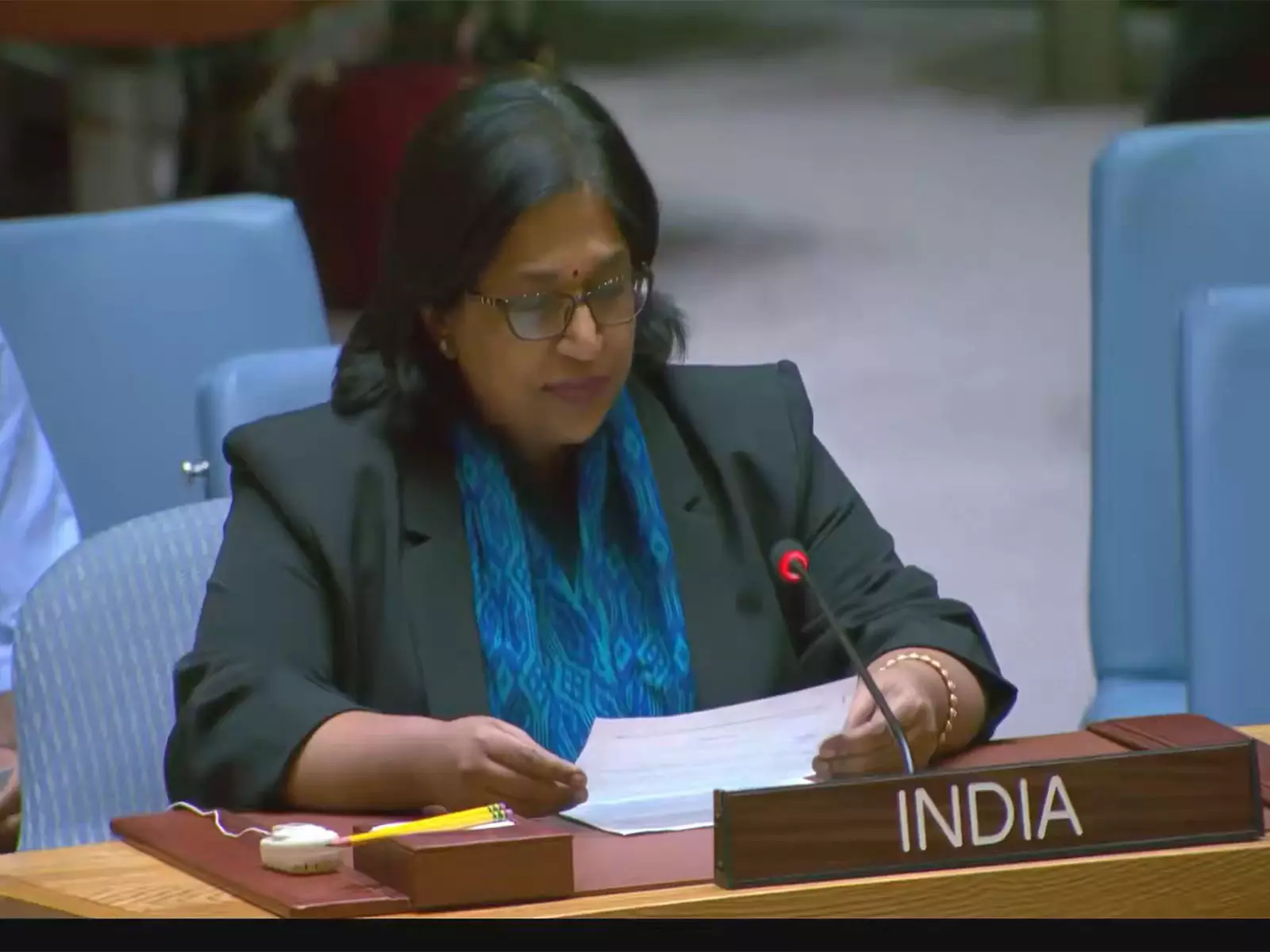
New Delhi: Yojna Patel, Ambassador and Deputy Permanent Representative of India to the United Nations, on Tuesday termed attempts to target commercial ships passing through the Strait of Hormuz as “deplorable.”
Speaking at the United Nations Security Council on the Situation in the Middle East, Patel highlighted that the Strait of Hormuz is of critical importance to India’s energy and economic security. She stressed that commercial shipping must not be targeted in military conflicts and noted with concern the loss of Indian seafarers’ lives during the ongoing tensions.
Patel underlined that international law prohibiting attacks on commercial shipping must be respected. She said that targeting civilian vessels, endangering crew members, or impeding freedom of navigation in the Strait is unacceptable. She also referred to India’s co-sponsorship of UNSC Resolution 2817 and called for the early restoration of safe and unimpeded maritime trade.
Expressing appreciation to Bahrain for convening the debate, Patel noted that recent developments in the Middle East have far-reaching implications for global security, economic stability, energy supplies, food security, and international trade.
She emphasized India’s strong ties to the region, pointing out that nearly 10 million Indians live and work in Gulf countries. Their safety and well-being remain a top priority, she said, adding that India continues to advocate dialogue, diplomacy, and de-escalation since the conflict escalated in late February.
Patel urged all parties involved to exercise restraint, avoid escalation, and prioritize civilian safety. She reiterated the importance of respecting the sovereignty and territorial integrity of all nations.
Addressing the situation in Gaza and the West Bank, Patel expressed concern over the ongoing humanitarian crisis, including civilian casualties and destruction of infrastructure. She said India has been supporting Palestinians through development and humanitarian projects aimed at improving daily life.
Reaffirming India’s position, Patel called for a two-state solution to achieve lasting peace in the region, emphasizing a human-centric approach focused on capacity building and livelihood development.
Turning to developments in Lebanon, Patel condemned attacks on UN peacekeepers serving under UNIFIL. She stressed that such attacks must be investigated promptly and that accountability is essential. She also recalled India’s role in advancing UNSC Resolution 2589 on ensuring accountability for crimes against peacekeepers.
On Syria, Patel reiterated India’s support for a Syrian-led and Syrian-owned political process, alongside continued humanitarian assistance.
She concluded by stating that the Middle East must move away from conflict, emphasizing that its people deserve peace, dignity, and stability. India, she said, remains committed to supporting all efforts aimed at achieving a just and lasting peace.
