Iran Says Hormuz Closed But Sends Team For Swiss Talks

Iran’s joint military command said the closure is Iran’s first step in response to Israel’s continued attacks in southern Lebanon, the semi-official Tasnim news agency reported on Saturday
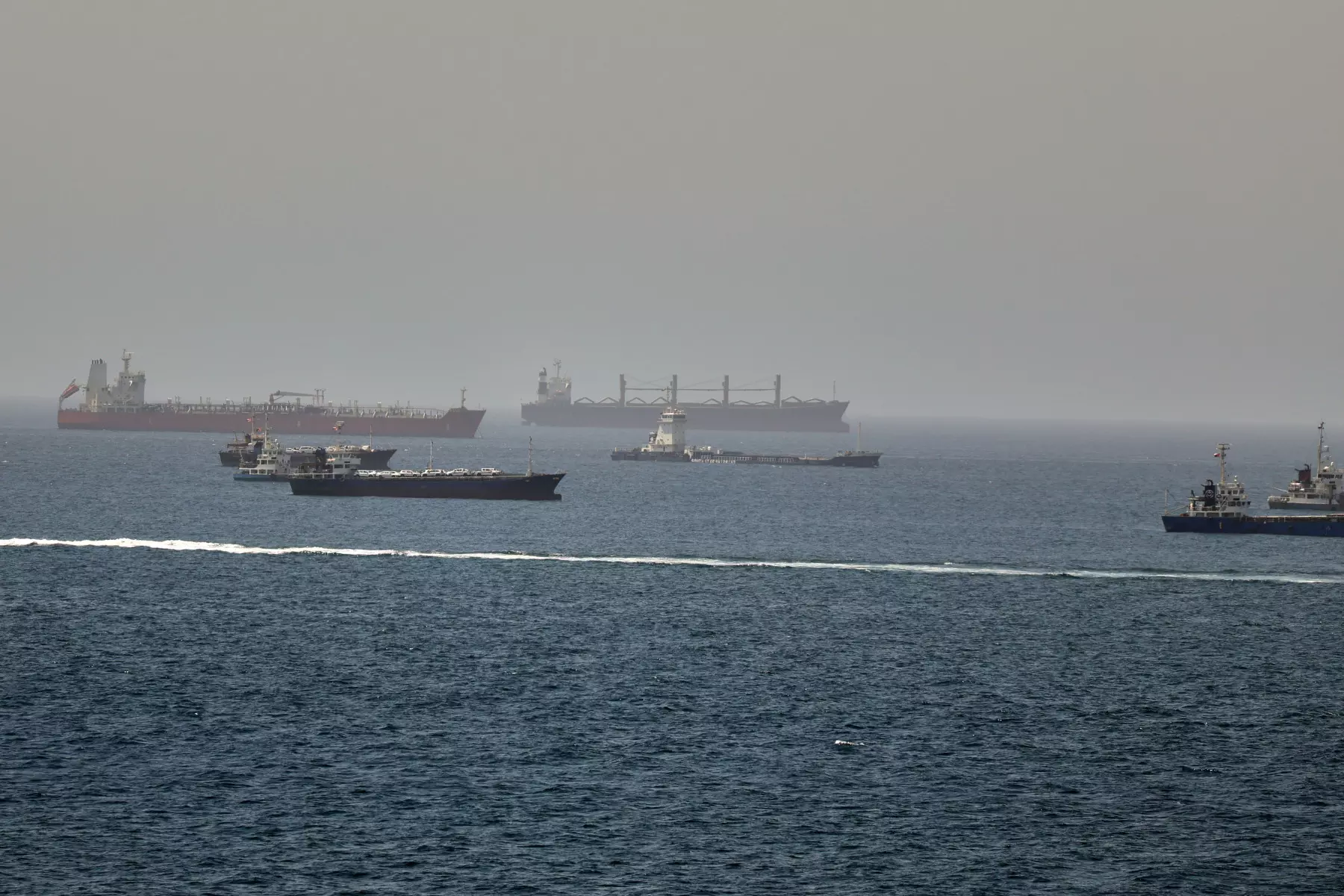
Tehran: Iran said it has closed the Strait of Hormuz for shipping transit due to what it called a violation of the ceasefire by Israel, even as it dispatched a negotiating team to Switzerland for prospective peace talks with the US.
Vice President J.D. Vance told Fox News on Saturday: “I am very confident we can maintain the ceasefire,” he said. “We’re going to give this negotiation a chance.”
Vance, speaking just as Tasnim reported the latest closure of Hormuz, also said the US hasn’t seen any evidence that Iran was still closing down the strait. "I expect that I will leave sometime in the next couple of days, but you know it's always a delicate coordination dance and the diplomatic protocols," Vance said.
He added that US negotiators Jared Kushner and Steve Witkoff had been in Switzerland "for a few hours, dealing with some of the technical elements of this negotiation".
"My understanding, talking to Jared and Steve this morning, is things are going well," he added.
Pakistan's foreign ministry said on Saturday that follow-up technical-level talks between Iran and the US will be held in Bürgenstock, Switzerland, on June 21.
It said US and Iranian representatives would participate, along with mediators from Pakistan and Qatar. It added in a post on X that Pakistan will continue to facilitate the process in its role as mediator.
Meanwhile, ships can consider transiting the Strait of Hormuz along the southern route at any time of day with their signals on, a key naval information group said. There’s no obligation to coordinate with the US navy when sailing through the strait along the coast of Oman, the Joint Maritime Information Center, which liaises between navies and merchant shipping, said in an advisory. That’s in contrast to an update Iran published this week, which said vessels can only transit the waterway with Tehran’s permission.
One oil supertanker appeared to be transiting using the southern route with its satellite signal switched on early Saturday. Significant spoofing and jamming in the area make it tricky to guarantee the veracity of such signals, however. Two Chinese fuel tankers also appeared to be leaving via the Iranian route.
Shipping has been crossing Hormuz using two routes in recent weeks: one by the coast of Iran and another to the south of the waterway by the Omani coast. Iran said in guidance to shippers this week that no ship would cross the waterway without its permission. The middle section between those two routes is believed to have been mined during the war.
Still, even before the US-Iran ceasefire, ships carrying millions of barrels a day of oil were quietly escaping using the Omani route by transiting at night with their satellite signals turned off. In recent days vessels appeared to transit Hormuz using both routes, including earlier on Saturday.
It’s unclear if Iran’s declaration on Saturday would jeopardise traffic using the southern route, but it will likely make more risk-averse shipowners with vessels that have been trapped inside Hormuz for months more wary of doing so. Earlier in the day western naval forces had said vessels using that corridor could cross Hormuz at any time with their satellite signals either on or off.
The start of negotiations over a permanent peace deal with the US had previously been delayed after the fighting in Lebanon intensified. The talks, which were meant to take place in Switzerland on Friday, were pushed off because of those clashes between Israel and Iran-backed Hezbollah militants.
Iran insisted on a ceasefire in Lebanon as part of the interim peace deal finalised with the US this week, and delayed sending a delegation to the talks as a result of the fresh hostilities. On Saturday, Iranian state TV reported that officials were travelling to Switzerland for talks with the US.
The IRGC warned ships not to approach the waterway, citing what it called Israeli "crimes" in Lebanon and a US violation of commitments to establish a ceasefire. It said vessels' security would be at risk if they approached the strait.
Traffic through Hormuz, which before the war handled a fifth of the world’s oil, surged on Thursday after a peace deal between the US and Iran came into effect but eased off again the next day as uncertainty emerged over a safe opening of the strait. The unclogging of supply has the potential to unleash a wave of trapped barrels onto the oil market, and crude prices are now more than 35% lower than their peak at the height of the war. — Agencies