Iran Vows Crushing Attacks On US After Trump Threats

Trump said Iran would continue to face a barrage of attacks in the short term
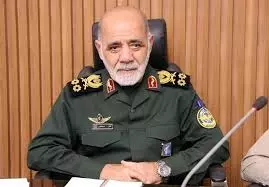
TEHRAN: Iran on Thursday threatened "crushing" attacks on the US and Israel, firing missiles at Tel Aviv after US President Donald Trump vowed to bomb the Islamic republic "back to the Stone Ages".
The war, which erupted more than a month ago with US-Israeli strikes on Iran, has spread throughout the Middle East and roiled the global economy, impacting hundreds of millions of people worldwide.
In a prime-time White House address, Trump said the US was "very close" to achieving its objectives but warned attacks would intensify if Iran did not reach a negotiated settlement.
"Over the next two to three weeks, we are going to bring them back to the Stone Ages, where they belong," said Trump in a 19-minute speech delivered in front of American flags.
Iran's response was immediate, with Israeli air defences pressed into action and police responding to "several" impact sites, as four people were reportedly lightly injured in the Tel Aviv area.
The Iranian military command centre Khatam Al-Anbiya put out a statement carried on state TV warning the US and Israel to expect "more crushing, broader, and more destructive actions".
"With trust in Almighty God, this war will continue until your humiliation, disgrace, permanent and certain regret, and surrender," said the statement.
The latest attacks came as Jewish Israelis were celebrating Passover, which some were forced to do underground.
"This is not my first choice," said a writer who gave his name as Jeffrey, at a meal organised in a bunker in Tel Aviv.
"But at least in the shelter, we can sit here and just ride it out," he added. — AFP
-----------------------------------------------------
Trump Says Iran Will Be Hit Hard For Next 2-3 Weeks
-- President Donald Trump said US forces will keep hitting Iran "very hard" in the next two or three weeks and bring the country "back to the Stone Ages," even as he touted the success of US operations and argued that all of Washington's objectives have so far been met or exceeded.
Live Updates
- 2 April 2026 10:41 PM IST
Rocket of unknown origin hits UN base in south Lebanon: Italy Defence Ministry
The Italian Defense Ministry said Thursday that no injuries were reported and there was only minor damage to infrastructure.
Italy is the second-largest contributor to the United Nations peacekeeping force in southern Lebanon, known as UNIFIL, with some 1,000 to 1,200 soldiers.
- 2 April 2026 10:09 PM IST
Bahrain minister: UN vote on keeping Strait of Hormuz open set for Friday, ‘God willing’
Foreign Minister Abdullatif al-Zayani, whose country holds the presidency of the Security Council, said Bahrain looks forward to “a unified position” from its 15 members in the vote, though veto-wielding Russia and China have expressed opposition.
Al-Zayani, the Arab representative on the U.N.’s most powerful body, accused Iran of threatening the global economy by closing the Strait of Hormuz and restricting international navigation through the waterway.
These actions violate international law and “endanger energy security and food supplies and global trade,” he said.
- 2 April 2026 8:46 PM IST
Israeli advance forces another Lebanese hospital evacuation
Medical and nursing staff were evacuated on Thursday from Salah Ghandour Hospital in the southern province of Bint Jbeil as a precaution over fears of an Israeli ground advance at the western entrance of the city, where the hospital is located, Lebanon’s state news agency said.
The move comes as additional waves of Israeli airstrikes hit multiple areas across Bint Jbeil province, including the city and several nearby towns. - 2 April 2026 8:44 PM IST
UN chief: Middle East on edge of wider war with global fallout
Secretary-General Antonio Guterres urged the United States and Israel to stop the war and Iran to stop attacking its neighbors hours after Trump, in his address to Americans, said U.S. air strikes would intensify and gave no clear date for ending the conflict.
Guterres told U.N. reporters Thursday that Iran’s strangling of the Strait of Hormuz is impacting the daily lives of people around the globe who are now facing rising food and energy costs. - 2 April 2026 7:57 PM IST
Oil tops $110 as stocks fall after Trump vows tougher action on Iran
Stocks slumped and oil prices soared Thursday after President Donald Trump vowed the U.S. will continue to attack Iran and failed to offer a clear timetable for ending the conflict in the Middle East.
The S&P 500 fell 1.1%, with three out of every four stocks in the benchmark index losing ground. The Dow Jones Industrial Average shed 545 points, or 1.2%, as of 9:52 a.m. Eastern. The Nasdaq composite fell 1.6%. Major indexes throughout Europe and Asia also fell.
- 2 April 2026 6:23 PM IST
Iran fires missiles at Israel, Gulf states as Trump signals Mideast war wind-down
Iran fired more missiles at Israel and Gulf Arab states Thursday, demonstrating Tehran’s continued ability to strike its neighbors even as U.S. President Donald Trump claimed the threat from the country was nearly eliminated and predicted the war would end soon.
Iran’s attacks on Gulf states along with its chokehold on the Strait of Hormuz have disrupted the world’s energy supplies with effects far beyond the Middle East. That has proved to be Iran’s greatest strategic advantage in the war. Britain planned to hold a call with nearly three dozen countries about how to reopen the strait once the fighting is over. - 2 April 2026 3:10 PM IST
Attack on Iran's Bushehr nuclear plant would be a 'war crime': envoy to IAEA tells AFP
VIENNA: A US or Israeli strike on Iran's Bushehr nuclear power plant would constitute a "war crime" under international law, Tehran's envoy to the United Nations' atomic agency told AFP on Thursday.
Reza Najafi, Iran's ambassador to the International Atomic Agency, also denied that Tehran had "restarted enrichment" of radioactive uranium following the US-Israeli strikes on the Islamic republic's nuclear facilities in June 2025. — AFP
- 2 April 2026 3:07 PM IST
Iran fires missiles at Israel and Gulf neighbors as Trump talks of winding down Mideast war
DUBAI, United Arab Emirates: Iran responded to U.S. President Donald Trump’s address to Americans on the war with new missile attacks targeting Israel and the Gulf Arab states Thursday, underlining Tehran’s insistence that it rejected Washington’s outreach for a ceasefire while maintaining its grip on the Strait of Hormuz.
Britain planned to hold a call Thursday with nearly three dozen countries about how to reopen the strait, through which 20% of all oil and natural gas traded passes in peacetime. The 35 countries, including all G7 industrialized democracies except the U.S., as well as the United Arab Emirates and Bahrain, signed a declaration last month demanding Iran stop blocking the strait. The call will discuss “diplomatic and political measures” that could restore shipping once the fighting is over.
Washington has insisted that Iran allow ships to freely transit the strait, but Trump this week has said it is not up to the U.S. to force it, and in his address encouraged countries that receive oil through Hormuz to “build some delayed courage” and go “take it.”
In his address, Trump said the U.S. would hit Iran “extremely hard over the next two to three weeks,” while also insisting American “core strategic objectives are nearing completion.”
Iran’s military said defiantly on Thursday that its armament facilities are hidden and will never be reached by Israeli or American attacks.
“The centers you think you have targeted are insignificant,” said Lt. Col. Ebrahim Zolfaghari, a spokesman for the Iranian military’s Khatam Al-Anbiya Central Headquarters.
Just before Trump began his nearly 20-minute address on Wednesday, explosions were heard in Dubai as air defenses worked to intercept an Iranian missile barrage. Less than a half hour after the president was done, Israel said its military was working to intercept incoming missiles.
Sirens sounded in Bahrain, home to the U.S. Navy’s 5th Fleet, immediately after the speech.
Nearly three dozen nations, but not US, to talk about securing Hormuz strait
Following a joint statement in March condemning Iranian attacks on unarmed commercial vessels that called upon Iran to “cease immediately its threats, laying of mines, drone and missile attacks and other attempts to block the strait,” the 35 signatories were to hold a virtual meeting Thursday hosted by British Foreign Secretary Yvette Cooper.
Though the oil and gas that typically transits the Strait of Hormuz primarily is sold to Asian nations, Japan and South Korea were the only two countries from the region that were joining.
“Trump’s message was that the United States can sustain its own economic and energy ecosystem, while countries dependent on regional exports will either have to buy from the United States or manage the Strait themselves,” the New York-based Soufan Center think tank wrote after the address.
“While Trump explicitly thanked U.S. allies in the Persian Gulf for their cooperation and allyship, an expedited U.S. withdrawal without securing the strait will leave many of these countries, whose economies are dependent on energy exports, in the lurch.”
No country appears willing to try and open the strait by force while the war is raging. British Prime Minister Keir Starmer said the group “will assess all viable diplomatic and political measures we can take to restore freedom of navigation, guarantee the safety of trapped ships and seafarers and to resume the movement of vital commodities.”
Bahrain, which now holds the presidency of the United Nations Security Council, has been working to get the world body to address the crisis as well.
Oil prices rise again even as Trump suggests American objectives ‘nearing completion’
Though Iran has allowed a trickle of ships through the strait, it remains largely closed. Iran has also been repeatedly attacking Gulf Arab energy infrastructure, sending oil prices skyrocketing and giving rise to broader economic problems worldwide.
Following Trump’s speech, Brent crude, the international standard, rose again and was at $108 in early spot trading, up nearly 50% from Feb. 28 when Israel and the U.S. started the war with their attacks on Iran.
The rising energy prices and stock market jitters have been putting increasing domestic pressure on Trump, who used his address to offer a defense of the war while also suggesting it was close to winding down.
He acknowledged American service members who had been killed and said: “We are going to finish the job, and we’re going to finish it very fast. We’re getting very close.”
The U.S. has presented Iran with a 15-point plan for a ceasefire, but Trump didn’t say anything about the diplomatic efforts or bring up his April 6 deadline for Iran to reopen the Strait of Hormuz or face severe retaliation from the U.S.
Death toll continues to rise
More than 1,900 people have been killed in Iran during the war, while 19 have been reported dead in Israel. More than two dozen people have died in Gulf states and the occupied West Bank, while 13 U.S. service members have been killed.
More than 1,200 people have been killed in Lebanon and more than 1 million displaced, according to authorities. Ten Israeli soldiers have also died there.
- 2 April 2026 2:37 PM IST
Iran war disrupts US small businesses with shipping complications and higher costs
NEW YORK: The Iran war is making life more difficult for small business owners across the country, who are grappling with shipping complications, higher costs and consumers tightening their grip on their wallets.
A shoe designer is struggling to import its shoes from Vietnam; a pistachio grower has millions of dollars worth of pistachio exports sitting in the water; a home landscaper in Kansas City is stockpiling fertilizer as prices skyrocket; and a Chicago electronics store owner is facing pain at the pump.
Small business owners say the severe supply chain disruptions during the pandemic were worse — but they fear that if the war stretches on for months , it might start to come close.
“The costs are rising, the routes are changing, and capacity is tightening. It’s all happening at the same time, and that’s a perfect storm for small businesses," said Brandon Fried, executive director of the Airforwarders Association, a trade group for U.S companies that move cargo through the supply chain on all modes of transport.
Stranded pistachios The U.S. is the largest exporter of pistachios, followed by Iran, according to the U.S. Department of Agriculture.
At Nichols Farms, in Hanford, California, a fourth-generation owned pistachio grower and processor, chief operating officer Jared Lorraine said exports make up about 50% of business. They ship to Europe, China and increasingly, the Middle East.
The effective closure of the Strait of Hormuz has made it impossible to deliver pistachios to several clients. When the war started, he estimates about $5 million worth of pistachios left stranded in the water, unable to be delivered to customers in Saudi Arabia, Iran and the United Arab Emirates.
“While much of the public attention has been focused on oil, which is significant, really, the destruction of the food system is I think equally as serious,” he said, adding 70% to 80% of food in the Middle East is imported.
When the U.S. bombed Iran on Feb. 28 , Nichols Farms had about $5 million pistachios on ships that got stranded, Lorraine said. They managed to reroute some of the pistachios: one batch was offloaded in Jeddah, in Saudi Arabia, to be trucked to the UAE. Another two loads were able to make it into a port in Oman after being reloaded into a smaller container in India that could make it into that port. But $3.5 million still sits on the water.
"A lot of it has just been in limbo," Lorraine said. "It’s literally been sitting idle for the last three weeks and we’re just saying, OK, what do we do?”
A more expensive route for barefoot shoes Matthew Tran is the founder of Birchbury, a footwear brand based in Los Angeles that makes minimalist — also known as “barefoot” -- shoes. The company makes the shoes in Vietnam and ships to customers across the U.S., U.K., Australia and Canada.
Typically, Tran pays about $3,500 per container shipped out of Vietnam. But that's doubled since the war started to about $7,000 as shippers deal with rerouting and higher insurance costs. The lead time for shipping has increased by three to four weeks, too.
“It’s kind of like a traffic jam,” he said about the shipping time. “So even though it doesn’t seem like it would directly affect me because I’m going from Vietnam to America, it does affect me when there’s more congestion.”
He said supply chain disruption was worse during COVID, when everything came to a standstill. But he's worried about how long the war will last.
"They always say the wars are going to be short, but they’re never short," he said. He worries about customers having less money for discretionary spending since gas prices have surged.
“Customers don’t understand, but also their gas prices just went up, too, right?,” he said. “People just don’t want to spend money at the end of the day because they’re like, ‘Oh man, gas is up a lot.’ Buying another new pair of shoes is secondary to being able to go places with your car.”
Landscaper stockpiling fertilizer Across the country, Jake Wilson owns Top Class Lawn Care in Kansas City, Missouri, taking care of nearly 400 lawns across the city. The closure of the Strait of Hormuz has upended the fertilizer business, since the Middle East supplies close to 30% of global exports of major fertilizers, according to the International Fertilizer Association.
Wilson started his business in 2011 and he's built strong relationships with his suppliers. A day or two after the Iran war started, two suppliers emailed him and told him to expect a spike in prices soon and suggested he make orders ahead of price increases.
Rising prices are a concern since about 70% of his customers lock in a price for a year of lawn care and prepay at the beginning of the year.
The last thing he wants to do, he said, is go back to customers in the middle of the year and say the price of fertilizer increased so he has to ask for more money.
“It’s kind of on me to try to get out ahead of it, the best I can, so I could still try to be profitable while keeping prices where I quoted at the beginning of the year,” he said.
He usually buys fertilizer four times a year, two or three months ahead of the time when he plans to use it, but he's currently trying to secure fertilizer all the way through the fall season and into the end of the year, effectively doubling his normal order.
“I don’t want to wait till summer and go to my supplier and they either say, well, we don’t have any product available or what we do have is now 60%, 70% more expensive than what it was quoted in early spring, or first of the year,” he said.
End of free shipping? Higher gas prices have an electronics store executive considering ending free shipping.
Abt Electronics in Chicago uses on average 25,000 gallons of diesel fuel and 30,000 gallons of gas fuel each month to run more than 650 delivery vans and trucks, according to Jon Abt, co-president of the retailer.
So with gas prices surging, Abt said he’s concerned. Free shipping and free delivery with a minimum order of $35 is a perk that he wants to keep.
“It’s an eye-opening expense, ” Abt said. “It will affect the cost of making deliveries. This will also hit the shipping companies we use for out-of-state deliveries,”
Abt said he hasn’t received the fuel bill for March yet, but for now, he will absorb the cost and see how the market plays out and what competitors do.
He added, “We like delivering things for free, and I think customers expect it." — AP
- 2 April 2026 2:01 PM IST
Iran fires missiles at Israel and Gulf neighbors as Trump talks of winding down Mideast war
Iran responded to U.S. President Donald Trump’s address to Americans on the war with new missile attacks targeting Israel and the Gulf Arab states Thursday, underlining Tehran’s insistence that it rejected Washington’s outreach for a ceasefire while maintaining its grip on the Strait of Hormuz .
Britain planned to hold a call Thursday with nearly three dozen countries about how to reopen the strait, through which 20% of all oil and natural gas traded passes in peacetime. The 35 countries, including all G7 industrialized democracies except the U.S., as well as the United Arab Emirates and Bahrain, signed a declaration last month demanding Iran stop blocking the strait. The call will discuss “diplomatic and political measures” that could restore shipping once the fighting is over.


