Pakistan Says Ready to Facilitate US-Iran Talks Within Days

Dar, speaking after meeting the foreign ministers of Saudi Arabia, Turkey and Egypt, didn’t elaborate on the timeline or the likelihood of peace talks’ taking place
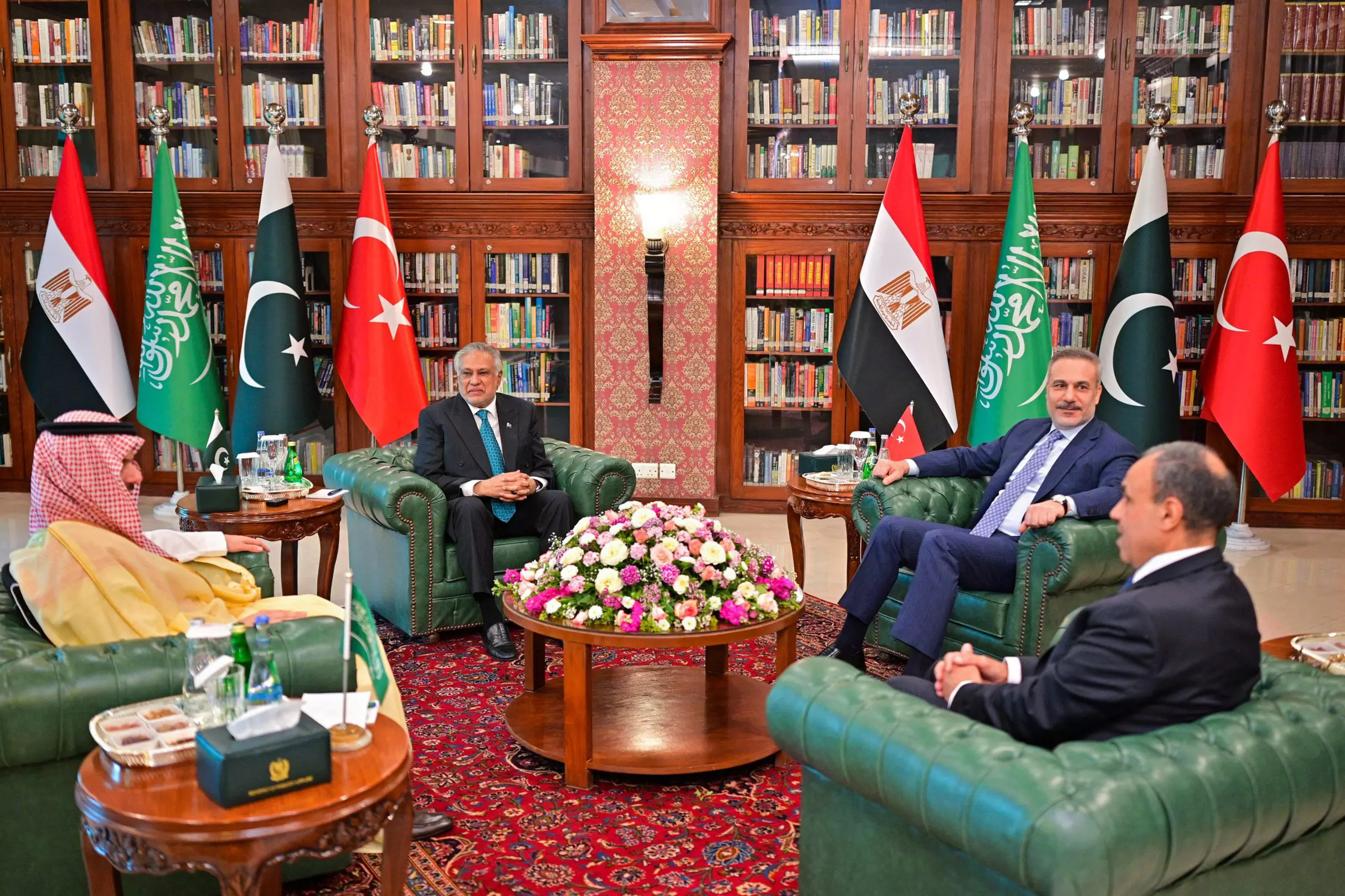
Pakistan’s foreign minister said Islamabad was ready to facilitate peace talks between the US and Iran in the coming days as the war in the Middle East intensified into its fifth week.
“Pakistan is very happy that both Iran and the US have expressed their confidence in Pakistan to facilitate their talks,” Foreign Minister Ishaq Dar, who is also the deputy prime minister, said in a televised briefing on Sunday. “Pakistan will be honored to host and facilitate meaningful talks between the two sides in coming days for a comprehensive settlement of the ongoing conflict.”
Dar, speaking after meeting the foreign ministers of Saudi Arabia, Turkey and Egypt, didn’t elaborate on the timeline or the likelihood of peace talks’ taking place. The ministers called for creating conditions for structured negotiations between the relevant parties, Dar said, and advocated for diplomacy as the only viable path to end the conflict.
Islamabad has “remained actively involved in all efforts and initiatives in bringing this conflict to an end,” he said. “We have remained actively engaged with the US leadership as well in our efforts to de-escalate the situation and finding a solution to the conflict.” Pakistan’s foreign ministry on Monday said the ministers had left Islamabad and the talks had concluded.
Pakistan has emerged as a key player in seeking to broker peace, leveraging ties with President Donald Trump and longstanding bonds with Iran. Pakistan also has a mutual defense pact with Saudi Arabia — which has been targeted by Iran strikes — and Islamabad is motivated to find a resolution to the fighting to avoid being dragged into the conflict.
Neither Iran nor the US has shown much willingness to hold talks. Trump has spoken of his desire for talks but has also, sometimes in the same statement, said he was preparing to escalate the US bombing campaign. He also has sent thousands of additional US troops into the region.
In an interview with The Financial Times on Sunday, Trump said the US could seize Iran’s export hub of Kharg Island, saying he wants to “take the oil in Iran.” Trump said the island could be taken “very easily,” but experts have said such a move could be risky and involve significant US casualties. He also said Iran had permitted 20 Pakistan-flagged oil tankers through the Strait of Hormuz, up from 10 tankers earlier. The Wall Street Journal reported Trump was weighing a military operation to extract nearly 1,000 pounds of uranium from Iran.
The US has sent a 15-point ceasefire proposal to Iran through Pakistan, which Tehran has rejected. Iran is using as leverage its ability to severely disrupt the Strait of Hormuz, a major waterway for gas and oil supplies, triggering a surge in crude prices and gas shortages in Asia. Only a handful of tankers from countries including China, India and Pakistan have been allowed safe passage.
Saudi Arabian Foreign Minister Prince Faisal bin Farhan Al Saud met separately with Pakistan’s Prime Minister Shehbaz Sharif, Dar and National Security Adviser Muhammad Asim Malik on Sunday.
“While reaffirming Pakistan’s full and unwavering solidarity and support with the Kingdom of Saudi Arabia, the Prime Minister appreciated the remarkable restraint exercised by Saudi Arabia amid the current crisis and assured the Saudi Foreign Minister that Pakistan would always stand shoulder to shoulder with Saudi Arabia,” Sharif said in a social media post on X.
The conflict appeared to be widening in recent days. As the US amasses thousands of ground troops in the region, Iranian-backed Houthi rebels in Yemen entered the war by launching ballistic missiles at Israel on Saturday.
Pakistan’s powerful army chief, Field Marshal Asim Munir, has cultivated increasingly closer ties with the Trump administration over the last year, elevating Islamabad’s position as a peacemaker in the crisis.
