US Hits Iran Radar Sites; Trump Says Missile Arsenal Down to 22%

Trump asserted that the United States had "totally destroyed" the Iranian military apparatus
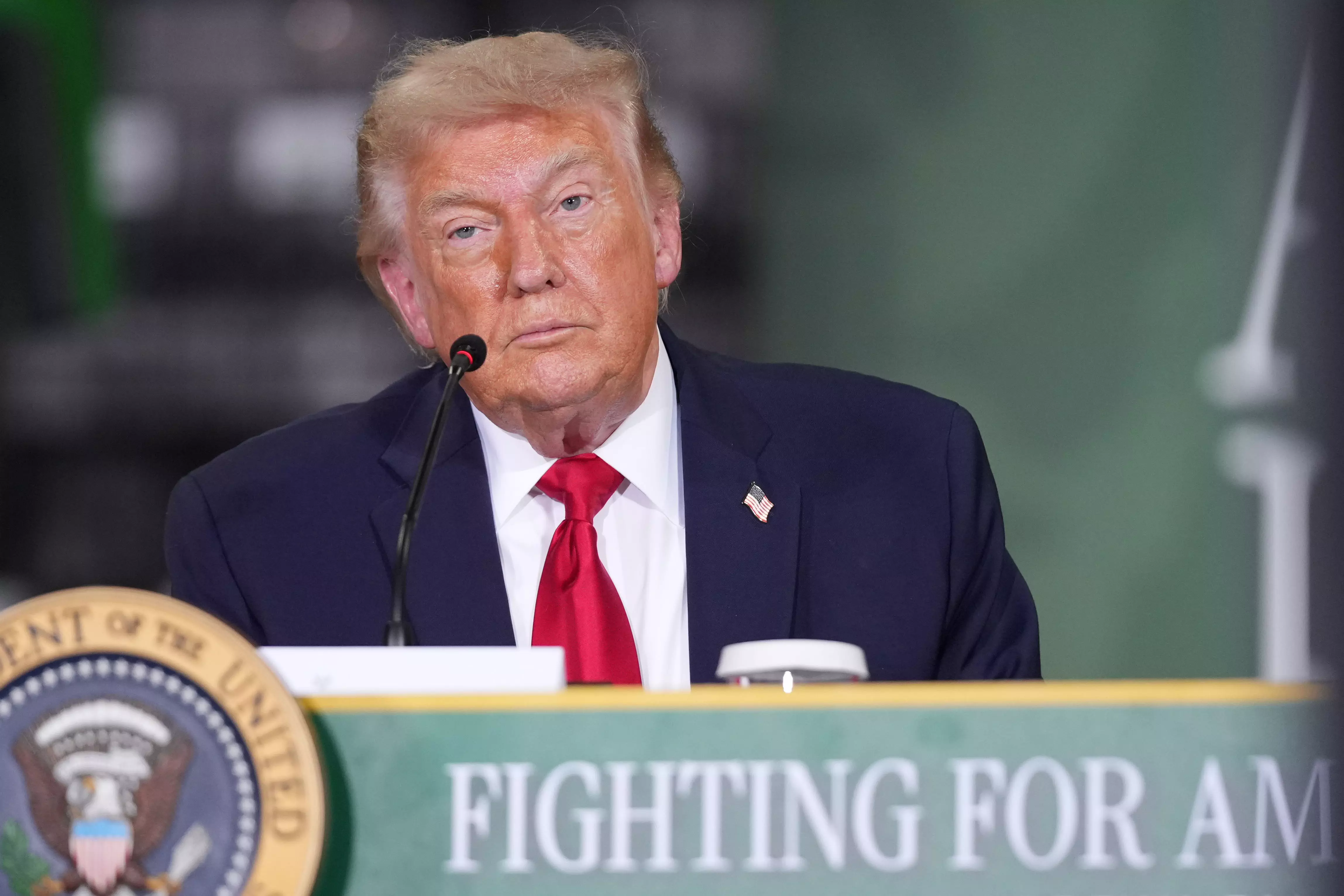
Washington, DC: US President Donald Trump has claimed that Iran's missile capabilities have been severely degraded, saying Tehran now possesses only a fraction of the arsenal it had before recent hostilities.
In an interview with NBC News' Meet the Press, Trump asserted that the United States had "totally destroyed" the Iranian military apparatus. He estimated that Iran retains only a limited portion of its ballistic missile stockpile.
"I would say, percentage-wise, maybe 21, 22 per cent of their missiles," Trump said, adding, "It's a lot of missiles, but it's not what it was when we first attacked."
However, Trump's assessment contrasts sharply with information reportedly shared with US lawmakers by intelligence agencies. According to a New York Times report, congressional briefings last month indicated that Iran had restored operational control over 30 of its 33 missile sites along the Strait of Hormuz and still possessed roughly 70 per cent of its pre-conflict missile inventory.
Trump also expressed confidence that disruptions in the Strait of Hormuz would soon be resolved. Asked about the number of commercial oil tankers escorted through the strategic waterway, he replied, "A lot. I don't want to say how many, but a lot."
Predicting a quick end to the tensions, Trump said, "It shouldn't take long. One way or the other, it's going to get done. And when it's all straightened out, you're going to have oil prices drop down to maybe even lower than they were."
The remarks come as Trump and the Republican Party face domestic political pressure over rising fuel prices ahead of the upcoming midterm elections.
On Iran's nuclear programme, Trump reiterated Washington's long-standing position, saying, "We're having great success. They're not going to have a nuclear weapon. They're in no position to have a nuclear weapon."
Iran has consistently denied allegations from the United States and its allies that it is seeking to develop nuclear weapons.
Meanwhile, Lebanese President Joseph Aoun criticised Iran's influence in Lebanon and urged the Iran-backed Hezbollah movement to abandon confrontation with Israel and embrace diplomacy.
Speaking in an interview aired by CNN, Aoun said, "It's not your country, it's our country. It's not your job to interfere into our country," referring to Iran's Revolutionary Guards.
He accused Tehran of using Lebanon as leverage in its negotiations with Washington, stating, "They are using Lebanon as a bargaining chip in their negotiation with the United States. It's unacceptable."
Tensions have escalated since a March 2 rocket attack on Israel by Hezbollah, which the group said was retaliation for the assassination of Iran's supreme leader during joint US-Israeli operations. Israel responded with extensive airstrikes and a ground offensive in southern Lebanon.
Aoun maintained that negotiations remain the only viable path to peace.
"Hezbollah must understand that there is no other way but to sit and talk, no other way to solve this problem and to save what's left except through negotiation and diplomacy," he said.
Addressing Hezbollah leader Naim Qassem, Aoun remarked, "It's the Lebanese people, they are not Naim Qassem's people," adding that "the majority of the Lebanese people are fed up with war."
His comments came after a ceasefire framework was brokered in Washington between Israeli and Lebanese representatives. The agreement depends on a complete halt to Hezbollah's hostile actions, though it does not require an immediate cessation of Israeli military operations.
Aoun described the moment as "a great opportunity to end the state of hostility between Lebanon and Israel" and said the future of Hezbollah's weapons should be decided by Lebanese state institutions.
"It's the job of the state, but on one condition -- that we remove the root causes of the existence of its weapons," he said, calling for a full Israeli withdrawal and an end to cross-border clashes.
Challenging Israeli leaders, Aoun said, "You need to show some willingness and commitment to end this war. We are willing, we are committed. Are you?"
He concluded that military force alone would not achieve Israel's objectives, saying, "Israel can flatten the whole country, but they will never be able to achieve their objective. They've tried it in Gaza. Hamas still exists."
Hezbollah remains the only armed group allowed to retain its weapons following the end of Lebanon's 1975-1990 civil war, arguing that its arsenal serves as a deterrent against Israeli military presence in southern Lebanon.
US Hits Iran Radar Sites After Drones Target Hormuz
The US military said it shot down four Iranian drones that were launched toward the Strait of Hormuz on Friday and then struck some of the Islamic Republic's coastal surveillance radar sites in response, raising the risk to a shaky ceasefire as the Trump administration ramps up pressure on Iran.
"The attack drones posed an immediate threat to regional maritime traffic," US Central Command said on social media.
The military is enforcing a blockade on Iranian ports in response to Tehran's chokehold on the crucial corridor for global oil and natural gas shipments, which has sent energy prices spiking and posed political problems for President Donald Trump's Republican Party ahead of the midterm congressional elections.
US Central Command said it hit the radar sites, including an island in the strait, "to defend against further attacks."
It was the latest in back-and-forth attacks that have strained the tenuous ceasefire in the war and efforts to reach a deal to extend that truce. Earlier this week, Iranian drones heavily damaged a passenger terminal at Kuwait's main airport, killing one person, wounding dozens and briefly closing the airfield.
Despite the attacks raising new concerns that the ceasefire could collapse, Trump told reporters Friday that "the situation with Iran seems to be going quite well."
"We're going to come out of Iran very quickly and it's going to be very strong one way or the other, whether it's a piece of paper or the very tough way," Trump said at an event with farmers in Wisconsin. "The very tough way is maybe the easier way, but we're going to come out, and your fertiliser prices are going to go way down, just like they were four months ago."
Trump increasingly appears to be boxed in on a conflict that has settled into a holding pattern. US and Iranian negotiators reached a tentative agreement a week ago to extend the ceasefire by 60 days and start a new round of talks on Iran's nuclear programme. But Trump has called for unspecified changes and Iranian officials have shown no public signs of signing off on the deal.
Asked on Friday why it was taking so long, Trump told NBC's "Meet the Press" it was because "it's a very hard thing for them," citing their "great independence" and the fact that "they're strong, they're proud."
"There are things they never thought they'd be doing that they're going to have to do. They've got no choice, and it takes a little while," he said in the interview.
Trump said the Iranians still have 21 per cent to 22 per cent of their missiles.
His administration also has touted the latest ceasefire agreed to this week by the Lebanese government and Israel after US-brokered talks in Washington. However, the Iranian-backed Hezbollah militant group has rejected the agreement and new attacks have put it at further risk.
The Israeli military on Friday struck multiple parts of southern Lebanon and issued evacuation warnings for nine villages, including one that has sheltered thousands of people displaced by the fighting. The strikes killed nine people in six locations in southern Lebanon, the state news agency reported.
The Israeli military said two soldiers were wounded, one severely, in an encounter Friday with militants in southern Lebanon.
The fighting in Lebanon, where Israeli forces have seized large swaths of the south, also threatens efforts to end the Iran war and reopen the Strait of Hormuz because Iran has demanded that any lasting truce extend to Lebanon.
Besides the drone interception in the Strait of Hormuz, the US military said earlier Friday that its forces boarded a sanctioned oil tanker linked to Iran in the Indian Ocean as the United States seeks to prevent Iran from profiting off its oil and other goods.
The US also targeted Iran's energy sector with new sanctions on a group of people, firms and tankers.
