How Trump's H-1B Overhaul Is Changing US Skilled Immigration

10 Jun 2026 11:32 AM IST10 Jun 2026 11:32 AM IST
Introduced in 1990, the H-1B visa program is one of a series of US immigration initiatives created during the 20th century to address specific labor shortages
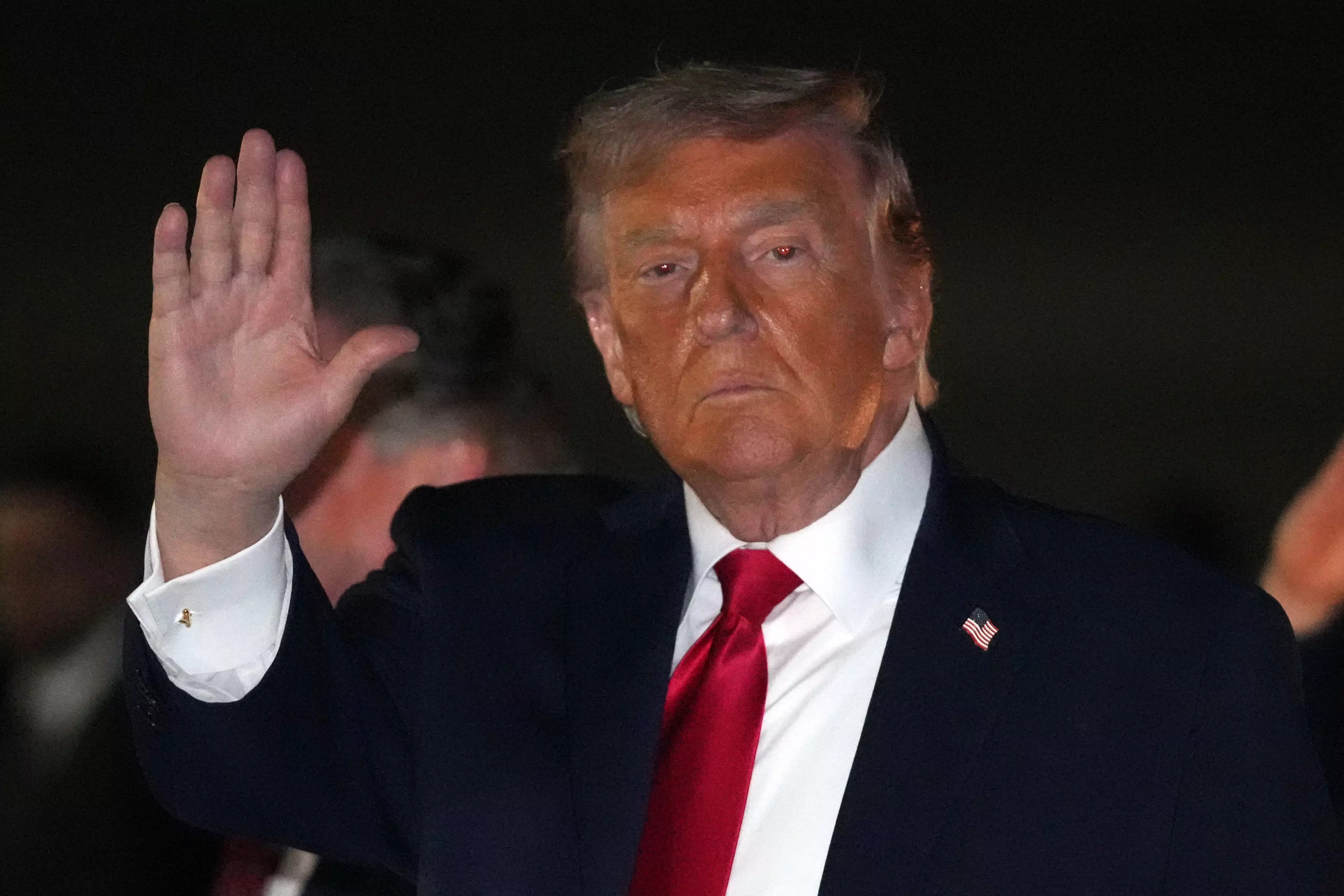
Trump argues that the H-1B, a cornerstone of the employment-based immigration system that allows US companies to hire college-educated foreigners for specialized occupations, has been exploited to displace American workers. (AP)
In addition to ramping up immigration enforcement and deportations in his second term, US President Donald Trump has taken steps to overhaul the H-1B visa program. Trump argues that the H-1B, a cornerstone of the employment-based immigration system that allows US companies to hire college-educated foreigners for specialized occupations, has been exploited to displace American workers.
This spring, his administration ran the first H1-B lottery with results weighted to favor more highly paid workers. Earlier, it imposed a $100,000 fee for new H-1B workers hired from outside the US. On June 8, a federal judge struck down the fee in a ruling the Trump administration said it would appeal.
What exactly is the H-1B visa program?
Introduced in 1990, the H-1B visa program is one of a series of US immigration initiatives created during the 20th century to address specific labor shortages. Others facilitated the employment of temporary farm workers from Mexico during World War II, sheepherders mainly from Spain in the 1950s, and nurses, many of whom came from the Philippines, in the 1990s. Today, employers can apply to bring in foreigners to fill temporary agricultural jobs under the H-2A program and workers for other kinds of temporary jobs, including seasonal work, under the H-2B program.
H-1B visas are used primarily by the tech industry, whose leaders say there is a dearth of professionals with science, math, and computer skills. “Computer-related” occupations accounted for 62% of H-1B approvals in fiscal 2025. Applicants must have at least a bachelor’s degree. The visas are temporary, lasting as long as six years, but they can be extended indefinitely if a company has sponsored a worker’s employment-based green card application for permanent residency in the US.
H-1B Visa Timeline
How does the H-1B program work?
Employers must petition the government for any workers they want to hire on an H-1B visa. New visas issued each year are capped at 65,000 — plus an additional 20,000 visas for those with a master’s degree or higher from the US. Demand from employers exceeds that limit, so employers must register prospective workers in an annual lottery, a process that moved online starting in 2020.
Companies submitted about 211,000 eligible entries for the fiscal year 2027 lottery, according to preliminary numbers shared by US Citizenship and Immigration Services in May, down by more than 38% from the nearly 344,000 eligible entries in fiscal 2026.
Who has used H-1Bs the most?
Companies such as Amazon.com Inc., Microsoft Corp., Meta Platforms Inc. and Apple Inc. employ thousands of H-1B visa holders, and universities and hospitals rely on them as well to recruit lecturers and research staff.
Heaviest Users of H-1B Visas
Tech companies rely on the program to bring skilled workers to the US
The overwhelming majority of H-1B visas go to Indian-born workers, who made up 70% of H-1B visa recipients approved in fiscal year 2025. Chinese-born workers made up about 12% of recipients.
People From India and China Receive the Most H-1B Visas
Percentage of approved H-1Bs in FY 2025 by beneficiaries' countries of birth
For international graduate students in the US, the visa is a key pathway to remaining in the country after finishing their education.
Why did the Trump administration increase fees for H-1B visas?
As of Sept. 21, 2025, new H-1B hires from outside the US became subject to a $100,000 fee on top of previously existing charges, which ranged from about $960 to $7,600 for a single petition. In a proclamation announcing the fee, Trump said that the H-1B program had been exploited by companies to replace American workers with lower-paid foreigners.
Bloomberg News has reported previously that flaws in the system created loopholes that some employers exploited by flooding the lottery with entries. Unlike large tech firms, these companies often use the visa program to hire lower-paid workers — and do so indirectly, through staffing and outsourcing companies that had previously been able to capture about half of the 85,000 new visas allocated each year.
Multiple lawsuits have challenged the fee proclamation, including one brought in Boston by 20 Democratic-led states. They said it exacerbated shortages of teachers at K-12 schools, impeded critical academic research at universities, and worsened staffing shortages in hospitals because those institutions are hard-pressed to pay the $100,000 levy.
In his ruling in the case, US District Judge Leo T. Sorokin said the fee amounted to the imposition of a tax, which encroached on the powers of Congress and violated the separation of powers. Two other cases, including one brought by the US Chamber of Commerce, are pending decisions.
How has the H-1B lottery system changed?
Under the Biden administration, the US Citizenship and Immigration Services overhauled the lottery system in January 2024 to give each worker the same odds of selection after finding that some employers had gamed the system to inflate the odds of winning. That change resulted in a sharp decline in duplicate applications. But the Trump administration said too many of the visas were still going to lower-paid workers, harming the employment of Americans.
The lottery cycle that kicked off in March was the first to replace what had been a randomized lottery for the yearly allotment of new H-1B visas with a process that steers new slots to more highly paid workers. It gives workers greater odds based on where they fall in four wage levels. Workers are entered into the selection pool four times if assigned to the highest wage level, three times if in the third wage level, twice in the next wage level, and only once if assigned to the lowest wage band.
What else does the administration propose?
The Department of Labor proposes to make all employees hired through the H-1B program more expensive for US businesses. Under draft regulations the department released in March, wage floors would increase by as much as tens of thousands of dollars a year in some cases. For example, entry-level software engineers in San Francisco would be paid a minimum of $162,000 under the proposal, up 30% from from the current floor.
What are the arguments for and against the H-1B visa program?
Business groups support the program and say it should be expanded because the quotas on H-1B visas limit their ability to fill labor shortages. Limits on the number of employment-based green cards, meanwhile, keep many workers locked into the temporary H-1B status for years and in some cases decades. In a typical year, 140,000 employment-based green cards are available, and just 7% of those can go to immigrants from a single country. That’s created significant backlogs for countries with high demand such as India.
Supporters of the H-1B program cite research showing that the professionals admitted under the program — mostly workers who moved to the US for college or graduate programs — deliver benefits to the country. They’ve been shown to make more patent applications than their peers and to increase a startup’s chances of obtaining funding and of winning patents. Their innovation and productivity has been shown to lead to lower costs for consumers.
The program’s critics, on both the right and left, have attacked it for undermining employment of skilled US workers.
( Source : Bloomberg )

Next Story