No Longer Sending Witkoff, Kushner To Pakistan For Iran Talks: Trump

Araghchi had met with Pakistani Army Chief Field Marshal Asim Munir and Prime Minister Shehbaz Sharif about what he called Iran’s red lines for negotiations, and said Tehran would engage with Pakistan’s mediation efforts “until a result is achieved.” Iran had said talks would be indirect
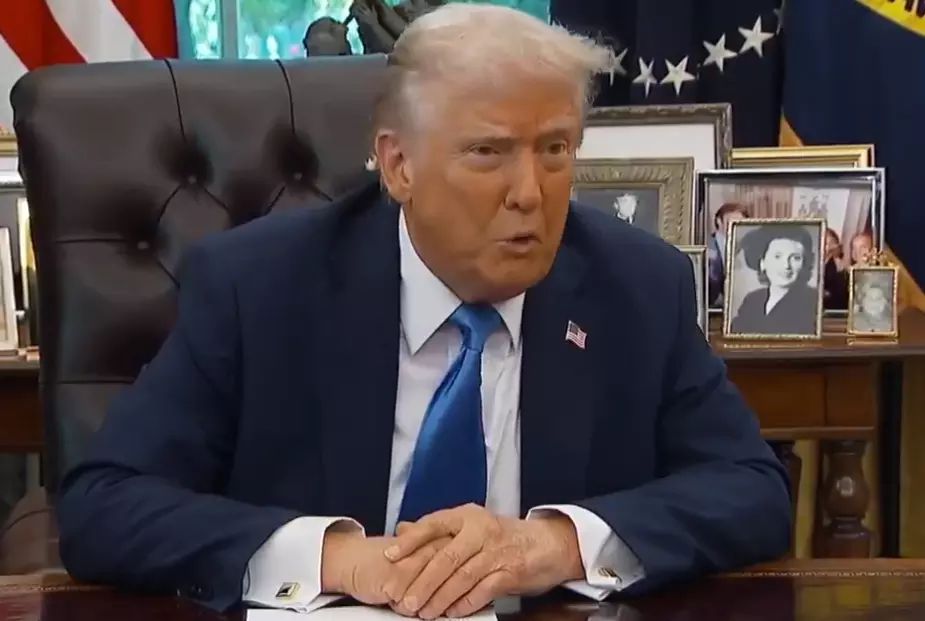
Islamabad: Iranian foreign minister Abbas Araghchi left Islamabad on Saturday after holding discussions with Pakistan's top civil and military leaders, ending the possibility of a second round of US-Iran talks this week. Soon after, President Donald Trump announced that US negotiators Steve Witkoff and Jared Kushner would no longer be going to Islamabad for the talks.
He added that the Iranians can call the US at any time they want. This was supposed to be the second round of talks after the first on April 11-12 ended without a deal. It was understood that Iran conveyed its concerns to Islamabad, with the understanding that they would be conveyed to the US.
Trump told Fox News that it was not worth the US delegation making the 18-hour flight to Pakistan when the US held all the cards in the conflict with Iran.
“I've told my people a little while ago they were getting ready to leave, and I said, 'nope, you're not making an 18 hour flight to go there. We have all the cards. They can call us anytime they want, but you're not going to be making any more 18 hour flights to sit around talking about nothing',” Trump told Fox News.
Araghchi, who arrived in Islamabad late on Friday, met Pakistan Prime Minister Shehbaz Sharif and Chief of Defence Forces Field Marshal Asim Munir, the Iranian Embassy in Pakistan said. Araghchi then headed to Oman on the second leg of his three-nation tour.
“Araghchi met Munir in a formal huddle and discussed matters concerning peace talks with the US,” a senior government official told PTI.
The Iranian delegation later called on Prime Minister Sharif and the two sides “reviewed bilateral matters as well as regional developments,” the Iranian embassy said.
Pakistan's Deputy Prime Minister Ishaq Dar and Army chief Munir were also present at the meeting, where the two sides discussed the situation in the region, the prime minister's office said.
“Araghchi seems to have conveyed 'certain concerns' of Iran to Pakistan, which Islamabad will share with the visiting US delegation upon its arrival. If the US agrees to placate these concerns and give some understanding, then the second round of direct talks will take place between them later in Islamabad,” the official said.
Earlier, Iranian foreign ministry spokesperson Baqaei said that “no meeting” was planned to take place between Iran and the US during the visit of Araghchi, who will also travel to Oman and Russia.
“Iran's observations would be conveyed to Pakistan,” he said.
Araghchi, before leaving for Islamabad, on Friday said that he was embarking on a timely tour of Islamabad, Muscat, and Moscow, and the purpose of his visits is to “closely coordinate with our partners on bilateral matters and consult on regional developments”.
“Our neighbours are our priority,” he said.
Meanwhile, Pakistan foreign minister Dar on Saturday said that Pakistan is facilitating the Iran-US talks and it will continue with efforts to achieve peace and stability in the region and beyond.
Dar, who held a meeting at the Ministry of Foreign Affairs to review the latest developments in the region, underlined that Pakistan's official policy statements on the Iran-US facilitation process are only those issued by official sources, the Foreign Office said in a statement.
“Unnamed Pakistani officials or sources, whether quoted in print or social media, do not reflect Pakistan's official position,” he added.
Dar also advised print and electronic media to refrain from speculative reporting and focus on official statements only.
In a related development, Dar spoke with Turkish Foreign Minister Hakan Fidan and shared developments regarding Pakistan's ongoing diplomatic efforts.
“He emphasised that sustained engagement through dialogue and diplomacy remains the only viable means for promoting peace and stability in the region and beyond,” according to FO.
On Friday night, Dar discussed ongoing diplomatic efforts with Egyptian Foreign Minister Badr Abdelatty, highlighting the importance of dialogue and diplomacy.
“They emphasised the importance of sustained engagement to advance peace and stability in the region and beyond,” the FO said.
Dar has been leading Pakistan's telephone diplomacy and has been regularly talking to the foreign ministers of various countries since the conflict between the US and Iran began.
The first round of US-Iran talks held on April 11 and 12 failed to produce a breakthrough, prompting a flurry of diplomatic efforts by host Pakistan to cool tensions and revive hopes for another round of dialogue.
On Tuesday, Trump extended the two-week ceasefire with Iran indefinitely to give Tehran more time to prepare a unified proposal to end the war, just hours before the truce was set to expire.
Meanwhile, large parts of Pakistan's capital remain under a tight security lockdown for over a week on Saturday.
