Erdogan Warns of Declining Birth Rate, Urges Larger Families in Turkey

Turkish President Recep Tayyip Erdogan has renewed his call for larger families, warning that the country’s falling birth rate poses a serious national concern. Despite long-running pro-family policies, Turkey’s fertility rate continues to decline amid rising living costs and shifting social trends.
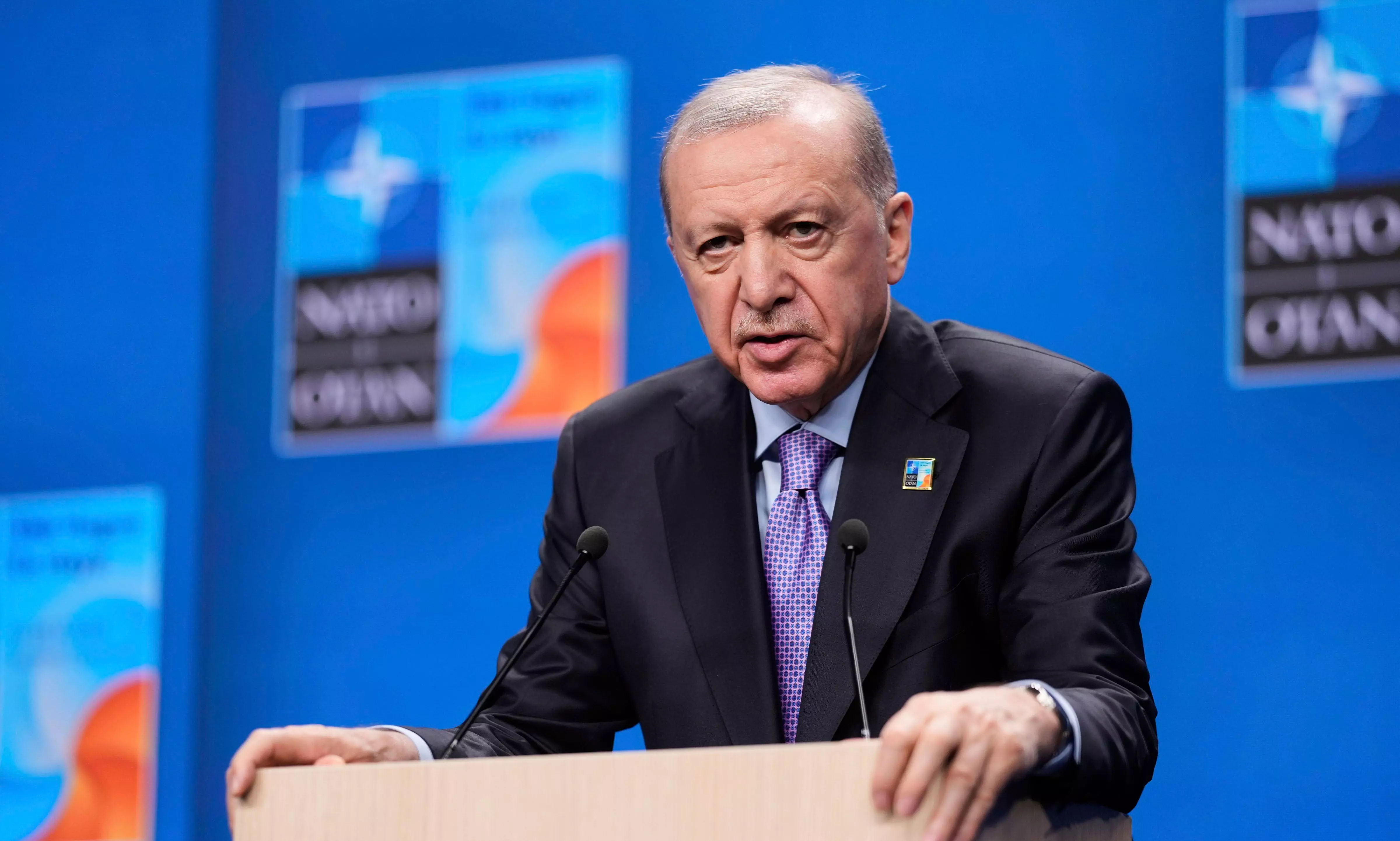
President of Turkey, Recep Tayyip Erdogan, has repeatedly criticised birth control, calling it a “betrayal,” and describing the country’s declining birth rate as a serious national concern.
For nearly 23 years, he has encouraged citizens to have larger families—at least three children or more—and has consistently promoted a traditional family model in which the father is the primary provider while the mother focuses on the home.
“Why not raise at least four or even five children?” Erdogan said recently, arguing that higher birth rates would help Turkey “move into the future with greater strength.”
Despite this long-running campaign, the trend has continued downward. Turkey’s total fertility rate has been declining for more than a decade and is now well below the 2.1 level needed to maintain population stability without immigration.
Demographers attribute the fall to factors seen across many countries, including shifting lifestyles, increased access to higher education for women, and ongoing urbanisation. Many also point to economic pressures under Erdogan’s tenure. Persistent inflation and stagnant wages have made it increasingly difficult for families to afford basic needs such as housing, childcare, and food.
“Food costs are extremely high,” said Cigdem Akyuz, a 41-year-old mother of two in Istanbul. She said she once considered having a third child but no longer sees it as financially possible. “He keeps saying, ‘Have more children! Have three kids!’” she said. “But how can people actually afford that?”
The trend is not unique to Turkey. Countries such as the United States and South Korea are also experiencing declining fertility rates, raising concerns among policymakers that ageing populations could lead to labour shortages, strain pension systems, and slow economic growth.
Analysts say Erdogan’s stance is driven not only by economic concerns but also by a conservative social vision that places emphasis on traditional family structures. Critics argue this leaves limited space for career-oriented women. In 2022, Erdogan illustrated this perspective during a parliamentary exchange when welcoming a new lawmaker to his party. Asking about family size, he responded critically to the idea of prioritising career over children.
“Career is having children,” he said. “We have to increase the numbers.”
Although Turkey’s fertility rate is not among the lowest globally, its decline has been steep. It peaked in 2014, fell below replacement level in 2017, and reached a record low of 1.48 in 2024, according to the latest government figures.
In response, Erdogan has introduced a series of pro-natalist initiatives. The government declared 2025 the “Year of the Family,” and has since launched a broader long-term campaign extending through 2035, described as a “Decade of Family and Population,” aimed at reversing the demographic decline.
