US Court Strikes Down Trump's 10 % Global Levies as Illegal

A judicial panel at the US Court of International Trade determined that the government failed to provide adequate legal grounds to implement the levies under Section 122 of the 1974 Trade Act
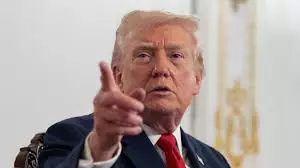
Chennai: The United States Court of International Trade on May 7 struck down President Trump’s 10 per cent global tariffs imposed after the reciprocal tariffs were struck down by the US Supreme Court in February. While the development provides some relief to exporters, the uncertainty remains and India should keep the trade deal on hold till there is more clarity, according to experts.
Section 122 of the Trade Act allows the president to impose import tariffs of up to 15% for a maximum of 150 days without congressional approval to deal with serious balance-of-payments difficulties. The tariffs had been imposed on February 20, 2026, few hours after the Supreme Court of the United States struck down reciprocal tariffs.
The United States Court of International Trade called the tariffs “invalid” and “unauthorized by law,” saying the law was meant for balance-of-payments emergencies, not for broad tariffs aimed at cutting trade deficits.
With both the reciprocal tariffs and the Section 122 tariffs now invalidated by courts, the U.S. tariff system is largely returning to its pre-Trump structure based on standard Most-Favoured-Nation (MFN) tariff rates under the WTO framework.
However, the decision currently applies only to the parties that filed the case — the state of Washington, spice importer Burlap & Barrel, and toy maker Basic Fun!
The tariffs will continue for other importers while the US government appeals the ruling. The court chose not to block the tariffs nationwide at this stage. The court limited relief to the litigants before it rather than issuing a nationwide injunction, a practice sometimes followed by US courts in politically sensitive disputes involving executive authority, said GTRI.
With courts striking down both the reciprocal tariffs and the Section 122 tariffs, the Trump administration is now expected to rely more on targeted trade measures such as Section 301 investigations and Section 232 national-security tariffs. These tools could be used against partner countries for sectors like steel, semiconductors, automobiles, pharmaceuticals, and critical minerals, it said.
While the court decision provides relief for importers and the exporters, the tariff uncertainty remains high. Amidst these uncertainties, Malaysia has already walked away from its trade deal with the US, while several other countries are rethinking trade deal with the US.
“India should wait until the United States develops a more stable and legally reliable trade system before concluding the Bilateral Trade Agreement. The continuing uncertainty around U.S. tariff policy, with major Trump-era tariffs repeatedly struck down by courts, makes any long-term trade commitments by India difficult to justify,” said GTRI.
