Actress Saba Azad's recent hospitalisation due to Cyclospora cayetanensis raises important questions on contaminated food and drinks
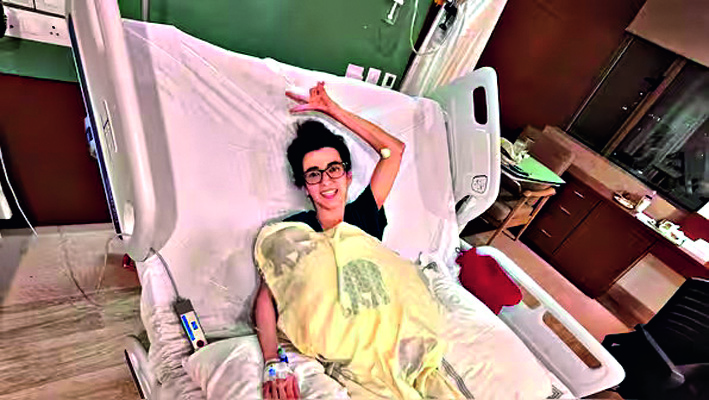
Everybody is familiar with that rumble in the stomach when it’s upset. But things can take a serious turn when you are bogged down by parasites that thrive in contaminated food or drink, particularly raw fruits and leafy vegetables. The recent health scare involving actor Hrithik Roshan’s partner, actor-singer Saba Azad, who was rushed to the hospital due to Cyclospora cayetanensis infection, raises important questions about contaminated food and drinks. Saba lost 4 kg in two weeks.
The Deadly Bug
Taking to Instagram, Saba urged people to thoroughly wash fruits and vegetables before eating. “Worst 14 days of my life. Cyclospora cayetanensis, you nasty piece of work!!” she wrote. The small intestine can get infected with the microscopic, single-celled parasite Cyclospora cayetanensis. This parasite takes time outside the human body to become infectious, unlike common foodborne germs like Salmonella or E. coli; thus, direct person-to-person transmission is unlikely.
Dr Pankaj Sharma, Director of Dept, Robotics, GI minimal access, Bariatric and Laparoscopic, Fortis Hospital, Shalimar Bagh and Founder, Shalya Clinic, New Delhi, explains, “The behaviour of cyclospora differs greatly from that of bacterial diseases.
It can be confusing to both patients and medical professionals because it has a longer incubation period and frequently results in persistent, recurring symptoms. It is more difficult to link a particular exposure to its delayed start and cyclical character.” Patients don’t just have a brief stomach upset. They experience a lingering illness that comes and goes, which can be quite debilitating.
Dr Bimalpreet Mohan, Director and Chief Radiologist, Capital Health Clinic, New Delhi, says, “Cyclo-spora can cause severe dehydration, chronic diarrhoea, and even nutritional deficiencies requiring hospitalisation in patients with compromised immunity. Early identification and tailored therapy are essential because these patients may also have more frequent problems and relapses. For those who are already at risk, the parasite can have a major negative effect on their quality of life and ability to recover.”
Proper Hygiene Matters
Poor sanitation and consumption of contaminated raw produce increase the risk significantly. Dr Roy Patankar, Director, Gastrointestinal & Laparoscopic Surgeon, and Director, Zen Multispeciality Hospital, Chembur, Mumbai, says, “Young children, older adults, and those with weakened immunity (HIV, cancer, or taking long-term steroids) can be at risk of this infection." When it comes to healthy adults, infection can cause watery diarrhoea along with mild fatigue.
In immunocompromised patients, symptoms can be severe and prolonged, with persistent diarrhoea, dehydration, and weight loss, and they may require hospital admission for timely management and care.”
Testing Times
It can be diagnosed through stool tests (microscopy, PCR, or modified acid-fast staining). However, it is missed because routine tests do not detect Cyclospora infection unless specifically requested. So, experts should recommend the tests to rule out this infection. If the infection is detected, then timely management remains key to improving the quality of life of the patient. Management involves antibiotics, rest, and prompt hydration to prevent dehydration. In immunocompromised patients, a longer course of treatment and constant monitoring will help to settle the infection.
Dr Pankaj Khatana, Sr Consultant, Internal Medicine, Marengo Asia Hospitals, Gurugram, says, “Stool routine and microscopy, UV fluorescence and PCR tests are required. It’s frequently missed because oocyst shedding is intermittent and at a low level (multiple specimens, often =3 on alternate days, are needed.”
Food For Thought
Mostly raw, uncooked food, leafy greens, berries, coriander, mint, basil, and salads are the usual culprits. The ‘virus’ spreads through water contaminated with human waste, and when that water touches produce we eat raw, it enters our system. “Wash raw produce properly (soak leafy greens and berries in clean water for 5-10 minutes before eating). Avoid eating raw salads when eating out, especially at weddings. Washing and cooling are the ultimate solution. Drink filtered or boiled water only. And if symptoms don’t go away in a few days, visit a doctor and get a proper stool test done,” says Yash Vardhan Swami, Founder & Transformation Coach, TrainedByYVS.
Stomach-churning Facts
• Cyclosporiasis primarily presents with persistent, watery diarrhoea that can last for weeks if untreated.
• Other symptoms include abdominal cramps, bloating, nausea, fatigue, low-grade fever, and significant weight loss.
• Appetite is often reduced, and dehydration can
become a concern.
• It can easily infect young children, elderly individuals, travellers to endemic regions, and people with weakened immune systems.